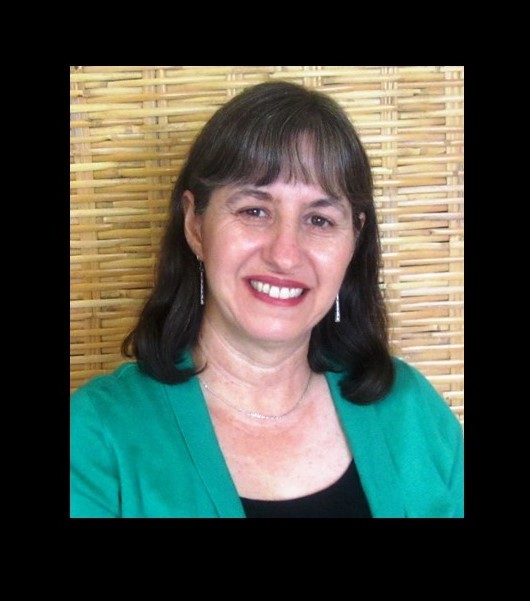
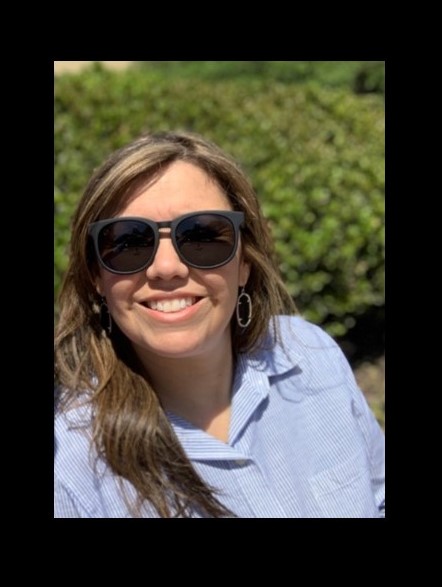
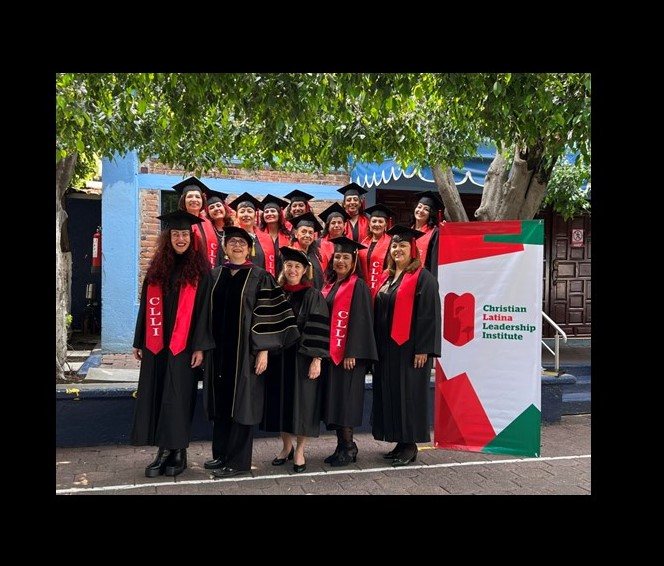
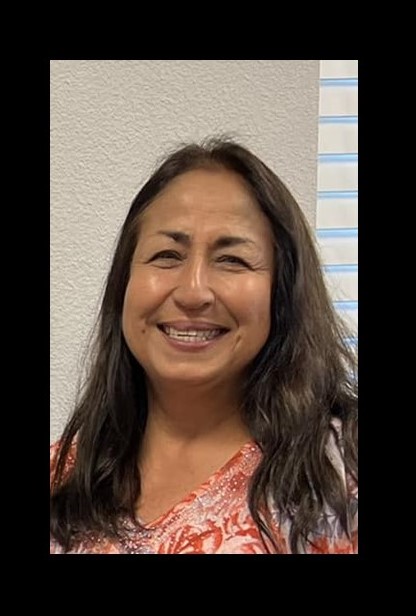
By: Nora O. Lozano

Para leer la versión en español haga clic aquí 

As we close this year, different news networks have been reporting on the major issues of this year as well as the challenges for the upcoming 2026.

As I was watching CNN, the news anchor asked about the major challenges that we are facing today (I do not remember the specific show nor the names of the anchors or analysts). One of the analysts replied that we are struggling with the three H’s: Housing, Health care, and Higher education. She explained that these three issues are affecting the lives of citizens in the United States of America because people in this country are having a hard time with the rising costs of housing (mortgage or rent), health care, and higher education.

If you are a reader from another country, perhaps the three or four issues that you and your neighbors are struggling with are related to other situations that depend on your unique cultural contexts. That may be migration, violence, drug trafficking, gangs, feminicides, or some other important societal issue.

The fact is that all of us will face challenges during this new year 2026. They can be personal or societal.

Going back to my context in the United States of America. It happened to be that all these challenges start with the letter “H”. As I thought about this, I realized that one “H” is missing. It is the “H” for the word Hope.

In my life as a Christian and as a theologian, I have come to realize that hope is such an important and vital element in Christianity. In fact, hope is one of the marks of Christianity. As Christians, we hope to see again our loved ones in heaven; We hope for a better future; We hope that we will overcome our major issues; We hope that difficult relationships will become better; We hope that God will act on our behalf; We hope that our lives will be better because Jesus has promised us an abundant life starting here and now. I can go on and on mentioning how Christianity and hope are so intertwined.

In his essay about Hope, SH Travis mentions that: “To hope means to look forward expectantly for God’s future activity. The ground of hope is God’s past activity in Jesus Christ, who points the way to God’s purposes for his creation” (New Dictionary of Theology, p. 321).

If the ground of the Christian’s hope is based on God’s work as modeled by Jesus Christ, then we should have peace when thinking about what 2026 will bring regardless of what the news networks are saying that is going to happen. We can trust that 2026 is going to be a good year because we know that God has a good plan for us. Now, this does not mean necessarily that we will have an easy year. We may face some difficulties and challenges this year, but the good news is that we will not face them alone because God is always with us.

As Christian leaders, we need to embrace and live this hope that affirms that God is always with us and that God has a good plan for us. This hope should be a mark of our lives as leaders.

Furthermore, as Christian leaders who live in this hope, we must be like Jesus, bearers of this hope. We need to share it in all our circles of influence: family, church, and community. As we think about sharing this hope, let’s go beyond words and ideas, and let’s also live in a way that mirrors Jesus’ life. He connected all his actions to God’s purposes and plans.

As 2026 arrives with all its potential struggles, let’s remember the fourth H – Hope. While the panorama according to the news may look difficult and grim, let’s rejoice that we have a hope that involves a future marked by God’s presence and good plans.

Considering this, let’s enter the new year with hope, trusting the one who holds the future.

Happy and blessed New Year to you and your loved ones!
Nora O. Lozano is executive director and co-founder of the Christian Latina Leadership Institute and has been involved in Christian theological education for more than 25 years.

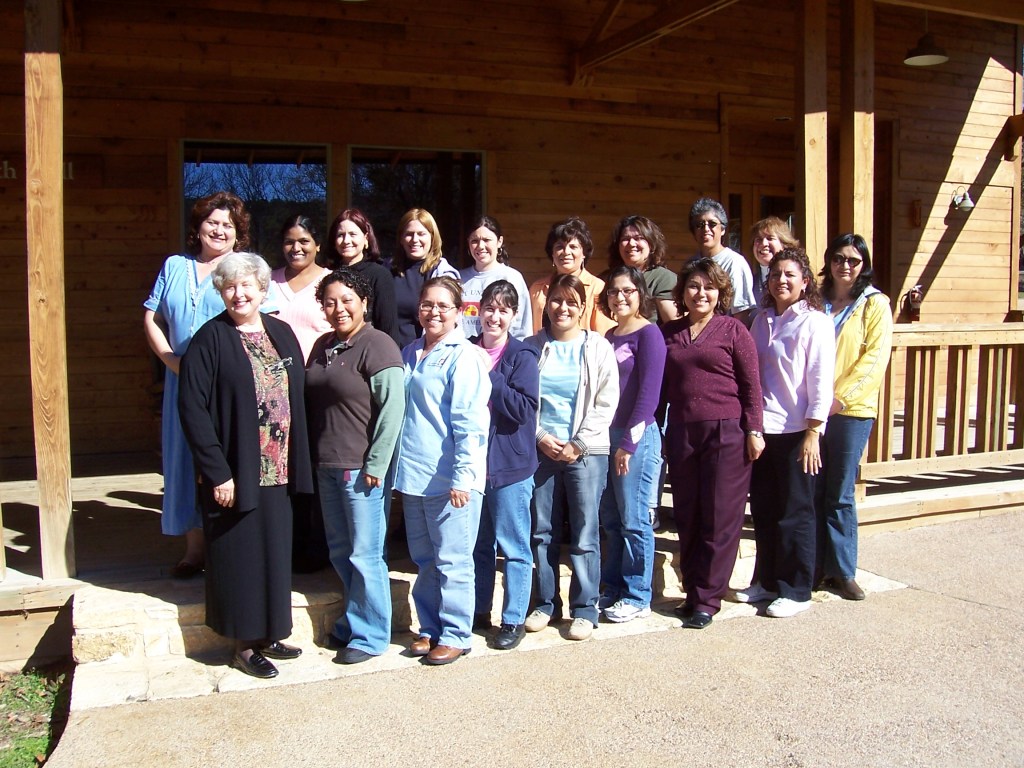
By Verónica Martínez-Gallegos

Para leer la versión en español haga clic aquí 

We are living in times where anxiety is acutely present in our daily lives. And I am not talking about anxiety as a mental illness, but as a preoccupation with the worries of daily life that robs us of peace. Especially in these times of uncertainty and scarcity of food, security, and economic stability. So, how can we avoid feeling anxious about an uncertain future by remembering God’s care and love?

The word “anxiety” comes from the Greek verb miremnao, which means “to be divided or distracted.” In Latin, the same word is translated as anxius, adding the nuance of “to strangle or choke.” This is the origin of the word anxiety. So, in difficult times, anxiety threatens to strangle our lives, leaving us suffocated by fear.

Anxiety, in the long run, drains our resources and leaves us emotionally bankrupt and spiritually paralyzed. For this reason, it is essential to confront it when it arises during difficult times.

Anxiety is nothing new. The Bible speaks extensively about it.

In the parable of the sower in Mark 4, Jesus painted a picture in the minds of his listeners of a farmer sowing seeds in four different types of soil. In that picture, he mentions in verse 7 that some of the seed sown among thorns was choked and did not bear fruit.

Later, Jesus gives his disciples the interpretation of the parable, explaining that the message is quickly overshadowed by the worries (anxiety) of this life, the allure of wealth, and the desire for other things, so that no fruit is produced. Mark 4:18-19.

Here, anxiety springs up like weeds and thorns, growing around the Word of God and choking the life and peace it can offer. In the parable of the seed and the soil, Jesus makes a direct connection between the devastating effects of anxiety and the suffocating grip it creates.

In his book titled Getting Through the Tough Stuff: It’s Always Something! Charles R. Swindoll says that “anxiety is painful disquietness of the mind that feeds on impending (threatening) fears.” In other words, anxiety originates in our minds and frightens us about things that may never happen.

Furthermore, anxiety creates negative effects such as panic attacks and physical and spiritual weakness. Let’s look at some examples of anxiety:

–It makes us doubt God and whether God is good enough to provide for all our needs.

–It stifles God’s goodness in our lives, our faith.

–It prevents us from distinguishing between what is essential and what is secondary, turning us into people who lose sight of what is important. By producing doubts and fears, anxiety causes us to become distracted by the temporary and, at the same time, neglect the eternal

–It makes us think about things that may never happen.

–It is said that more than 90% of the things we worry about will never occur. It robs us of joy and makes us negative. Sadly, we will carry our anxiety to others.

So, is there an antidote for anxiety?

The Apostle Paul gives us encouraging words:

“Rejoice in the Lord always; again I will say, Rejoice. Let your gentleness be known to everyone. The Lord is near. Do not be anxious about anything, but in everything by prayer and supplication with thanksgiving let your requests be made known to God. And the peace of God, which surpasses all understanding, will guard your hearts and your minds in Christ Jesus.” Philippians 4:4-7 (NRSVUE)

If we are currently going through times of anxiety, let’s read Proverbs 12:25 (NRSVUE):

“Anxiety weighs down the human heart, but a good word cheers it up.”

What does Jesus say about anxiety? “Do not worry.” You will not gain anything by worrying.

In Matthew 6, our Lord Jesus gave the remedy for anxiety. Taking into account people’s most common worries, he proceeded to give us a wise illustration for combating this great affliction.

“Therefore I tell you, do not worry about your life, what you will eat or what you will drink, or about your body, what you will wear. Is not life more than food and the body more than clothing? Look at the birds of the air: they neither sow nor reap nor gather into barns, and yet your heavenly Father feeds them. Are you not of more value than they?” Matthew 6:25-26 (NRSVUE)

“So do not worry about tomorrow, for tomorrow will bring worries of its own. Today’s trouble is enough for today.” Matthew 6:34 (NRSVUE)

If we focus on worries and anxieties, we will never know what God truly wants to do in our lives.

The root of anxiety is fear of the future. Knowing that worry or anxiety would be a dilemma we face today, Jesus commands us not to worry and not to let anxiety take root in our emotions, in the high expectations we have of life or people, or in past events. Jesus invites us to put a stop to worrying.

While this time of year can bring us much joy, it can also bring anxiety and worry due to the financial, time, and effort demands we face. If at any point during this time anxiety or worry threatens to steal our joy and peace, let us accept Jesus’ invitation to put a stop to worrying and trust in God’s provision and that He always cares for us.

Rev. Verónica Martínez-Gallegos, M.Div., BCC, ACPE is a certified educator and board-certified chaplain. She also serves alongside her husband who is a member of the pastoral team at First Baptist Church in Duncanville, Texas. Veronica is a CLLI graduate, and serves the Institute as board chair and faculty member.

By Patty Villarreal

Para leer la versión en español haga clic aquí 

‘“…that this may be a sign among you. When your children ask in time to come, ‘What do those stones mean to you?’ then you shall tell them that the waters of the Jordan were cut off before the ark of the covenant of the Lord. When it passed over the Jordan, the waters of the Jordan were cut off. So these stones shall be to the people of Israel a memorial forever…”

Joshua 4:6-7 (ESV)

As you read this blog, we are days away from the CLLI’s 20th anniversary celebration event on October 25 in San Antonio, Texas, birthplace city of the Christian Latina Leadership Institute (CLLI). Twenty years! Little did two Latina leaders who met in 2004 would know that they were to be used by God to plant the seeds for the beginning of an international movement to train Christian women leaders from a Latina perspective.

Briefly, for those who do not know the story of the beginnings of the CLLI, Dr. Nora O. Lozano and I met at the Baptist University of the Américas (BUA). After pursuing higher education, obtaining my license as a Licensed Master Social Worker (LMSW), and serving in other social work fields, I had returned to work for Buckner Children and Family Services. One of my roles for Buckner was to serve as an instructor of social work at the university. With no teaching experience in higher education, Nora was assigned to be my mentor in her calling as a university professor. A friendship soon developed.

Normally, social workers and systematic theologians do not “hang around” with each other. God had other plans. We found commonality as sisters in Christ and as Latina leaders. As leaders in our respective fields, we were sought after to serve on state, national, and international committees, task forces, and boards. As we pondered these invitations and declined some of them, we realized there was a huge need to fill gaps in these areas of leadership. Latinas were needed to be at the table where important discussions took place and decisions were being made that affected churches and communities.

Through much prayer, discussions with each other, and consultation with other Latina leaders in our circles, the seeds of the institute were planted. Dr. Albert Reyes, then president of BUA approved our going forward with this initiative. It took 15 months of preparation to start the first training in January 2007 as an intensive class at the university. Unique to this January term class was that alongside BUA students taking the leadership course for credit, select community-based women were also invited to enroll. These women were church and state leaders. Together, they participated and studied side by side in an intensive weeklong (9 AM – 9 PM) course. Faculty consisted of BUA professors and state/national women leaders. Also unique was that the course was held at Camp Buckner near Marble Falls, Texas with the help, again, from Dr. Albert Reyes, who by then had moved to serve as president of Buckner Children and Family Services. We wanted to create a setting where the students would connect with each other without home responsibilities and where they could concentrate on learning, networking, and resting in a camp setting.

There is so much that can be said about the incredible experience that BUA students, community women, and faculty shared at the evaluation time at the end of the week. Nora and I were blown over by their enthusiastic responses and their insistence on continuing with more material and classes. I can remember it as if it was yesterday, the conversation that Nora and I had on the way back to San Antonio. We knew that this was more than an intensive class. We knew that this movement had to be God’s plan and that God was using us to take it to the next level.

Since then, we became an Institute of BUA and with a group of other Latina leader advisors, expanded the academic program and developed the CLLI curriculum. In 2015, we applied and received a 501©3 non-profit status from the state of Texas. Our advisors became board members. Now within these 20 years, we have formally trained leaders in cohorts located in the United States of America in Texas and North Carolina, in Mexico in Monterrey, Metepec, and Mexico City, and in Barranquilla, Colombia.

As co-founder, I write this teary eyed. I am humbled. In the back story of these verses, Joshua had instructed leaders from the 12 tribes of Israel to each take up a stone from the middle of the Jordan River while the priests held the Ark of the Covenant during the crossing of the river. The stones were to serve as a remembrance to the Israelites regarding God’s powerful actions, faithfulness, and provision.

My tears come from the remembrance of my symbolic “stones”, the countless women who have been students and graduates of the CLLI trainings. The privilege of hearing their stories then and now. Stories of empowerment because of the classes and connections they have made with the women they have met, both faculty and fellow students. I have witnessed their journey of discovery of freedom from stereotypes and a release of bondage that as a woman they are not a second-class citizen in God’s kingdom. Many stories with a “Si Se Puede” encouragement and motivation where CLLI students take courage to pursue schooling and higher education, to identify or fine-tune their calling in the church or secular world, to develop new friendships and sisterhood, and to nurture a stronger relationship with God.

All this because of a divine appointment 20 years ago that God orchestrated; a connection between two Latina leaders who operated in different circles. It was risky because we challenged many norms in creating the CLLI but God had already “parted the Jordan River” and said “Adelante”! And we followed.

Thank you, God, for your faithfulness and provision as we continue the journey of the Christian Latina Leadership Institute. Thank you also to all of you who have supported this ministry with your prayers and resources. You are also a part of this story and we also celebrate your faithful support.

Finally, we are grateful for all the CLLI students and graduates who have been a part of the CLLI trainings. Thank you for entrusting us with your leadership education and development.

As we continue with the celebration of these 20 years of service, we are also looking forward to seeing the great things that God will do in the future with this ministry.

We invite you to join us in this ministry as we anticipate the next 20 years of transforming women’s lives in the name of Christ. Please consider including us in your prayers, as well as contributing with financial resources. To help us reach our fundraising goal of $20,000, please click here: https://www.christianlatinaleadershipinstitute.org/friends-donors

Adelante in God’s name!

Patty Villarreal, LMSW, is CLLI Co-Founder and faculty member. After working 43 years as a social worker, she retired and continues to serve on volunteer basis in different church and community ministries.

Boldness is a Choice

Christian Latina Leadership Institute

By Anna Rodriquez

Para leer la versión en español haga clic aquí 

“Have I not commanded you? Be strong and courageous. Do not be frightened, and do not be dismayed, for the Lord your God is with you wherever you go” (Joshua 1:9).

In addressing political and social challenges, demonstrating boldness serves as a measured stance against apprehension and negativity. It involves articulating one’s perspectives despite uncertainty, embracing change, and steadfastly supporting personal values and aspirations. Such courage originates internally rather than from external encouragement.

This principle guided my response to a recent situation. Recently, I received an invitation from a former client to meet for breakfast and reconnect. I hesitated, wondering if I could balance my commitments, but I realized that stepping out of my comfort zone aligned with my values. Although my initial inclination was to decline, the genuine enthusiasm in their voice prompted me to accept.

The ladies had thoughtfully planned a breakfast so we could reconnect and share stories about their successful children and growing families. When they thanked me, I responded that all honor belongs to God, adding, “You did the hard work; I did the heart work.” I reminded them that boldness means taking risks and acting with courage, especially when facing uncertainty.

I praised the women for embracing discomfort by trying new things, speaking up, and tackling intimidating tasks. Boldness is not about being loud or reckless; it is choosing to speak up when silence is easier, expressing yourself authentically, and saying yes to uncertainty despite fear.

While driving home after breakfast, I received a call from my youngest daughter. She discussed an experience previously mentioned in her women’s group regarding her husband’s health. He had not been feeling well and was admitted to the emergency room, where the medical staff identified a 99% arterial blockage; he was on the verge of a heart attack. Doctors recommended a stent procedure. Before the procedure, her husband reported feeling anxious. My daughter remembered a phrase that prompted her to pray for him. Afterward, he appeared calmer and successfully underwent the surgery.

My daughter told me that during those moments, she felt my voice—her mother’s encouragement—at the core of her being, inspiring her to act with courage. She recalled hearing me pray assertively over various situations and, when confronted with fear, she understood what steps she needed to take.

As we continued our conversation, my daughter put the cherry on the cake when she shared that after sharing her bold prayer, the ladies’ group have now implemented “teaching their daughters” to pray bold and pray out loud with courage and faith.

Boldness is not a trait reserved for the few, nor an innate quality, it is a skill that anyone can cultivate and develop. By choosing courage over comfort, embracing risk-taking, and purposeful action, individuals can create new possibilities and opportunities for themselves and those around them.

Boldness is a quiet rebellion against fear. It is a declaration that your voice, your dreams, your presence—matter. So be bold. Not because the world demands it, but because your soul does.

Furthermore, boldness represents a measured defiance of fear. It is a clear affirmation that each person’s voice, aspirations, and presence have inherent value. It is important to pursue boldness, not due to external pressures, but because it aligns with one’s inner convictions.

As Latina Christian leaders, we are often turned to by members of our communities during their darkest and most challenging moments. In these times of despair, encouraging them to be bold and loud against the fear that tries to overwhelm them becomes a powerful testimony of unwavering faith and trust in God’s authority. This courageous response reflects our deep conviction and shows others that we serve a living, attentive, and responsive God.

When we choose to be bold and to lift our voices in faith, we inspire those around us to believe in the impossible, stand firm in truth, and approach the throne of grace without hesitation.

Anna Rodríquez serves as a CLLI board member, and graduated from the CLLI in 2010. She has worked in the field of social services for more than 25 years, and has master’s and bachelor’s degrees in public administration from the University of Texas, Odessa, Texas.

The way we see

Christian Latina Leadership Institute

By: Eva Martínez

Para leer la versión en español haga clic aquí 

As a prisoner for the Lord, then, I urge you to live a life worthy of the calling you have received. Be completely humble and gentle; be patient, bearing with one another in love… Be kind and compassionate to one another, forgiving each other, just as in Christ God forgave you. (Ephesians 4: 1-2, 32 NIV)

As women called to leadership by God, we soon realize that our service takes place among others; It is a service in relation: “with one another.” In this context, the way we see other people such as our coworkers, leaders, or members of our churches and our own families is very important. Gazing is not just a physical action. It is a disposition of the heart; it is a way of perceiving the situations we experience and the people around us.

You have probably seen this image before. It is a famous optical illusion known as My Wife and Mother-in-Law. It was originally drawn by British cartoonist William Ely Hill and published in 1915 in Puck magazine, with the caption: “They are both in this drawing—find them.”

It is an example of a reversible figure: depending on how you look at it, you can see either a young woman looking to the side or the profile of an old woman. What do you see? If you only see a young woman, you would have a hard time understanding the description of someone who sees an older woman. But both women are in the image, even though our eyes see only one of them. Maybe you are one of those people who see both images. Maybe with some more time and effort or help from a friend can you shift from one perspective to the other? The important thing is to recognize that both are there.

This interesting exercise can help us reflect on the importance of how we perceive the people we interact with daily and how our “perspective” can be a tool to positively (or negatively) influence their development. In my ministry, I have worked for many years on behalf of people with intellectual disabilities. Through this, I have had the blessing of meeting valuable people who have taught me a great deal. For example, the importance of focusing on strengths rather than weaknesses, of believing in the individual and seeing them not as passive recipients of aid but as citizens who can contribute to society with their talents. How we treat them and encourage the development of their potential will depend on our perception of them.

How do we view the people we interact with? Is it a perspective that focuses on their talents and potential or on their shortcomings and limitations?

Ephesians 4 invites us to live in a manner worthy of our calling, and that involves adopting a perspective transformed by the gospel. Having a restorative gaze. Paul presents us with a path for our leadership, leadership in relation: the path of love, humility, gentleness, and patience. “Bearing with one another in love” he tells us. It is not an exhortation to passivity, but to compassion. The word “bearing” here is not to resign ourselves, but to remain steadfast in love, even when the other person is difficult or challenging. For when we look harshly at others, we forget that we too need grace, every day.

To look with compassion is to see beyond, like when we, with more time and effort, can see the other woman in the picture; it is to remember that the other person is also in process. That they have internal struggles, wounds we do not see, fears that perhaps even they do not understand. Just like it happens to me.

To look with compassion is to see the person with the eyes with which Christ has looked at us. And it is in this context that Paul ends the chapter by saying, “Be kind and compassionate to one another.” Repeating this about the existence of one another, giving the idea of ​​diversity where some most likely had different ideas than others. And where a perception was needed not only of compassion but of challenge, of invitation to growth and development. “Forgiving each other, just as in Christ God forgave you.” Forgiveness is not born from a momentary feeling, but from a decision sustained by the memory of the cross. When we remember how much God has forgiven us, our desire to condemn weakens, and our capacity to accept and restore is strengthened.

The compassionate gaze and the gaze of challenge to be better are fueled by the security of knowing we are loved by God.

Dear friend in leadership: The Lord has not called on us to build walls born of the harshness of our outlook, but to open paths of possibility and reconciliation. We are not alone in this task. The Holy Spirit is working in you and me to transform our way of seeing others. Today we can ask the Spirit to teach us to see with the eyes of Christ: eyes that see beyond the wounds, that hope for the best, and that bless.

Eva Martínez has a bachelor’s degree in psychology with a master’s degree in mental health and intellectual disabilities. She is the coordinator of Strengthened and Inclusive Families, Effeta ABP, an institution that seeks to promote the inclusion and rights of people with intellectual disabilities and their families. She is a CLLI Monterrey graduate (2018), and serves as a CLLI board member. In addition, she serves with her husband, Joel Sierra, in the pastorate of Jiréh Baptist Community, Monterrey, Mexico. She is the mother of 4 adult children, Andrés, Luz Daniela, Samuel, and Miguel.

By: Verónica Martínez-Gallegos

Para leer la versión en español haga clic aquí 

Transitions are significant changes or events that move you from your comfort zone to a place where you must begin anew in unfamiliar territory. Life presents us with moments when, in order to move forward, we must leave behind what we know, for example: a meaningful relationship, work and colleagues, a special place and friendships, even a church and beloved brothers and sisters.

It is not easy, and not everyone experiences it. I’ve met people who were born in a place and never left their city, or who have worked their entire lives in one job.

One state is not better than the other. Staying in one place for a lifetime brings stability, and some people prefer that. Moving from one place to another has its benefits, such as starting over, meeting different people, and shedding accumulated belongings. However, transitions, no matter how positive, are always accompanied by grief for the loss of what is left behind.

I am sharing this topic because transitions have been a part of my life. I have experienced them on more than one occasion. The most recent transition was when my husband and I were moving from North Carolina, where we lived for almost 30 years, with the exception of two years when we were away. During these 30 years, we also served in several meaningful ministries.

In every change we have experienced, the most important thing is knowing how to listen to God and understand God’s will. Looking back on all the times we have had to enter a period of transition; I can safely say that God was guiding us.

For me, listening to God means being intentional in my communication through prayer. Prayer, for me, is speaking directly and sincerely to God about my desires, doubts, fears, afflictions, disagreements, and frustrations. I have practiced writing my prayers in a journal for many years. The most important conversations with God in my life are recorded there. From time to time, I read through some of my past journals and rejoice in remembering everything I have lived, and how I have experienced God in my life.

The Bible speaks much about transitions. For example, the people of Israel experienced what it was like to live in transition. For forty years, the Lord led them all the way through the wilderness. Another example is Elisha, who had to go through stages of transition where God guided him from one place to another (1 Kings 17:1-9).

Furthermore, the Bible helps us understand transitions. Proverbs 16:9 states, The human mind plans the way, but the Lord directs the steps (NRSVUE). According to this verse, our lives do not belong to us; they belong to the Lord, and only God will establish our paths.

You may wonder how to know God’s will. Something very meaningful to me is experiencing God’s peace. Isaiah 26:3 has been an important passage in my life: You will keep in perfect peace all who trust in you, all whose thoughts are fixed on you! (NLT).

Feeling God’s peace is of utmost importance to me because transitions can become wilderness. However, God has a purpose in everything that happens. God wants us to be transformed in the process of change, so that we are not the same people before and after a transition.

When we hear someone say that God is leading them to go somewhere else, it often seems difficult to explain and perhaps even to understand, both for the person themselves and for those around them. When this happens, it is because God has already been working long before in the person’s life and in the upcoming place. God often uses situations to make us uncomfortable and help us visualize beyond our comfort zone.

The truth for me is that God has never moved me from one place to another without having better plans (Jeremiah 29:11). God has planned the exit and the entry, and everything has flowed without a hitch. For me, that is what gives me peace—knowing that things are not forced and that God opens a path in an amazing way. These are the events and details that we know only God can accomplish.

Perhaps you are going through a transition and you need to make a decision. My questions would be: Have you prayed about it? How has God spoken to you through God’s Word? What has God said to you? Do you have peace in making the decision to move? Knowing that God is with you will give you the peace to move forward.

When you pass through the waters, I will be with you, and through the rivers, they shall not overwhelm you; when you walk through fire you shall not be burned, and the flame shall not consume you (Isaiah 43:2).

Rev. Verónica Martínez-Gallegos, M.Div., BCC, ACPE is a certified educator and board-certified chaplain. She also serves alongside her husband who is a member of the pastoral team at First Baptist Church in Duncanville, Texas. Veronica is a CLLI graduate, and serves the Institute as board chair and faculty member.

The Winning Side

Christian Latina Leadership Institute

By: Gabriela Sanchez

Para leer la versión en español haga clic aquí 

As Christian leaders in our respective ministries and personal lives, we are bound to encounter new paths full of uncertainty, face long-lasting challenges, and lead others during difficult seasons in life. In these turbulent moments, we may attempt to rely on our own strength and wisdom; however, the story of Joshua 11 reminds us that true victory is achieved not on our own, but in aligning ourselves with God’s purpose for us. Joshua 11 tells us about a time when King Jabin of Hazor strategically formed a massive coalition of kingdoms to face Israel:

“All these kings came out to fight. Their combined armies formed a vast horde. And with all their horses and chariots, they covered the landscape like the sand on the seashore.” Joshua 11:4

Despite being outnumbered and appearing to be at a huge disadvantage, Joshua remained on God’s side, trusted in God’s promise, and followed God’s instructions as he led Israel into battle. This powerful story reminds us of three important truths for facing our own battles today.

1. Remaining on God’s Side Gives Us Confidence and Removes Fear

When Joshua learned of the massive alliance of armies formed to battle Israel, it was natural to feel afraid. Yet God spoke to Joshua:  

“Then the Lord said to Joshua, ‘Do not be afraid of them. By this time tomorrow I will hand all of them over to Israel as dead men. Then you must cripple their horses and burn their chariots.” Joshua 11:6

God reassured Joshua in the midst of uncertainty. When facing unprecedented and uncertain situations in life, we can access the ultimate source of security and strength in God’s promise. Fear that once paralyzed us loses its strength when we focus on God’s promise. As women leaders, we are often called to make difficult decisions, face insurmountable situations, or step into the unknown. But God reminds us, “Do not be afraid.” Being on God’s side is our source of confidence and strength. When we align our hearts and actions with God’s, we can live with bravery, knowing that God goes before us.

2. Being on God’s Side Helps Us Remain Persistent as We Battle with a Sense of Purpose

Victory rarely comes without persistence. One detail about this passage that brought my attention was the fact that the Israelites did not simply win a single battle or stopped fighting after realizing that their enemy began to retreat. They pursued their enemies relentlessly, driven by the confidence that God was fighting for them.

“And the Lord gave them victory over their enemies. The Israelites chased them as far as Greater Sidon and Misrephoth-maim, and eastward into the valley of Mizpah, until not one enemy warrior was left alive.” Joshua 11:8

This was far from being a passive victory. It required bold action, resilience, and unshakable faith. When we are on God’s side, we are empowered to keep moving forward, even when the journey is long and the obstacles seem unattainable. Our sense of purpose is renewed because we know our efforts are aligned to a higher purpose.

As women leaders, persistence is often required in our ministries, workplaces, and families. There will be seasons when progress feels null or slow. In these moments, remember to move forward with perseverance. Do not give up and continue to trust God.

3. Remaining Obedient to God’s Will Ensures Victory

An important lesson from Joshua 11 is rooted in the power of obedience. Joshua’s victory was not the result of military superiority or elite battling skills. The victory was the result of careful obedience to God’s instructions.

“And Joshua did as he was told, carefully obeying all the commands that the Lord had given to Moses. So Joshua conquered the entire region—the hill country, the entire Negev, the whole area around the town of Goshen, the western foothills, the Jordan Valley, the mountains of Israel, and the Galilean foothills.” Joshua 11:15b-16

Obedience is not always easy. It requires humility, surrender, and a willingness to follow God’s lead even when we may not fully understand God’s plan. Joshua obeyed ALL the commands that the Lord had given. With no exceptions and without cutting corners. This passage teaches us that obedience is the key to unlock God’s victory in our lives.  Lastly, as leaders in our communities, it is essential to model obedience to those around us and those who we have been entrusted to lead. Doing so can become a powerful testimony of our trust and faithfulness to God and inspire others to do the same.

Joshua’s story is not an ancient and forgotten story. It is here as a living promise to those who align themselves with God’s promise. While writing this blog, I was reminded of a story that happened during the Civil War. In the heat of battle, one of President Lincoln’s advisors asked if he prayed for God to be on their side. The president responded with “Sir, my concern is not whether God is on our side; my greatest concern is to be on God’s side, for God is always right.”

When we choose God’s side, God grants us victory. The battles we face in our ministries, workplaces, and personal lives are very different from the one found in Joshua 11 however, God’s promise remains unchanged. 

I invite you to reflect on the following questions: what battles are you facing today? How can you align yourself with God’s side in battle? How can you serve as a reminder of God’s promise to others as they battle a difficult time in their lives?

In conclusion, I encourage you once again to remember: We must always strive to be on God’s side, because God’s side is always the winning one.

Gabriela Sanchez is a CLLI graduate and serves as CLLI Board member. Sanchez is also a graduate from UNC Charlotte with a bachelor in business administration and Wake Forest University with a master in business administration. Sanchez resides in Charlotte, NC with her husband Erick and their son Liam. In addition, she serves in the media ministry at her local church La Voz de la Esperanza Baptist Church.

By Carolyn Porterfield

Para leer la versión en español haga clic aquí 

Some Gospel stories are memorable, like Jesus feeding the five thousand in John 6:1-15. Initially, I thought its main point was Jesus feeding the hungry out of compassion. However, a deeper look reveals a leadership lesson valuable for personal growth.

This story exemplifies leadership development. Jesus had chosen twelve men as his team to continue his mission after he was gone. He needed them to understand and carry out the mission he entrusted to them.

In this story, Jesus knew he wanted to feed the crowd following him. He asked Philip, “Where shall we buy bread for these people?” Philip remarked that the cost was too high to accomplish what Jesus intended.

I understand Philip’s situation. I once managed a creative team with expensive ideas, and my initial response was often “We don’t have money for that,” which stifled their creativity and hindered our mission. What if Jesus had agreed with Philip and sent the people away?

Andrew brought a boy to Jesus who had five small barley loaves and two fish. Considering the large crowd to feed, Andrew questioned the adequacy of this small amount. Have you ever had a similar experience as a leader? You have some resources, but they seem so inadequate for the mission.

A nonprofit organization in California aimed to provide food and housing for the homeless. Resources were limited. A large project was initiated to construct a new facility, but some city and neighborhood leaders raised objections that could halt the project. A considerable amount of money was required to finish the building, and there was a strict deadline that had to be met, or the project was finished.

During an emergency board meeting, fund-raising suggestions were repeatedly rejected until a member proposed a different option. He said he had seen what man could do. Now he wanted to see what God could do. The people prayed and went home. The next morning God provided just what was needed. The building opened, and the mission to feed and house the homeless continued.

On a grassy knoll in Galilee, Jesus’ team saw what he could do. He took what was offered, gave thanks for it, and instructed the disciples to give the loaves and fish to the people. There was more than enough with twelve baskets of barley loaves left over.

This story outlines three important aspects for leaders to understand. 1) God’s work 2) done God’s way 3) will have the necessary resources God will provide. Remember, you are carrying out the tasks God has entrusted to you. God has given you talents, skills, experiences, and relationships that shape you into the person God has created you to be.

Sometimes you might feel inadequate, like Philip who doubted his ability to secure the needed funds, or Andrew who offered loaves and fish but lacked faith it would be enough. 

Jesus took what seemed inadequate in the eyes of the disciples and gave thanks for it. Too often we focus on what we think we lack instead of acknowledging what we have. Give thanks to God for all God has given you – your mind, talents, skills, spiritual gifts, and passion to help others and bring lasting change. Offer all of that to God so he can bless it.

As a young college graduate, God called me to go to Japan to share the gospel. Not knowing the language or culture was compounded by feelings of inadequacy. One morning in desperation I told God why I should not be in Japan because of all the things I was not and could not do. God gently reminded me to lift my eyes to him because he was the maker of heaven and earth. God told me I was his workmanship, created in Christ Jesus, to do the good things he had already prepared for me to do. I looked around at the beautiful countryside and thought of the wonderful Japanese people. If God could do that, he could take my “loaves and fishes” and use them to share the gospel.

My prayer of desperation turned into a prayer of thanksgiving. God took what I offered, blessed it, and it was enough. God showed me where to use my talent for singing and playing the guitar to share the gospel in churches, at a nursing school, and the community center where I worked. God wanted me to use my ability to type as a doorway to teach typing and disciple a new believer. God used my spiritual gift of teaching to bless my ESL students. When we do God’s work God’s way, God will provide the resources we need to do what he has asked of us.

What is that seemingly impossible thing God is asking of you in this season of your life? Are you willing to give God what you have and trust him to bless it for his glory and the good of others? You never know. God may want to use you to help feed five thousand people.

Carolyn Porterfield lives in Irving, Texas and serves as the chair of the CLLI Academic Committee. She loves watching God use people to do his work. 

By Patty Villarreal

Para leer la versión en español haga clic aquí 

During this season, Christians celebrate the life, death, and resurrection of the Lord Jesus Christ. My church follows the liturgical Christian calendar. Thus, during Palm Sunday, the children march up and down the sanctuary aisles waving fronds of palms commemorating the victorious entrance of Jesus into Jerusalem prior to his death.

I recently watched this depiction of Jesus’ victorious entrance on the big screen at a movie theater. I am an avid fan of The Chosen series. Right now, I am following the current part 5 series – “The Last Supper.” It was with tearful joy as I watched this display of open adoration of our Lord. What that scene must have been like if we had been able to witness it!

However, not everyone was celebrating. Many misunderstood the meaning of what this signaled in God’s plan for God’s Creation. It was the beginning of the end of Jesus’ life on this earth. Life that showed us how much God really loves us and that Jesus’ ministry was one of reconciliation, unifying ourselves with God.

One of the events that happened after the triumphal entrance in Jerusalem was the Last Supper. At that time, Jesus said that another would come to help us. He was referring to the Holy Spirit, the indwelling of the third person of the Godhead. At Pentecost, the beginning of God’s next plan, the work of the Church and the Christian movement began, under the power of the Holy Spirit.

And it still continues.

When the Easter Sunday celebration cantatas and plays end; worship services are over; church and/or family picnics are done; egg hunts are completed and “cascaron smashes” are washed out of your hair and all is said and done, what then? The work of the message of Easter continues.

As we continue with this sacred work, I would like to offer a reminder and a blessing:

The reminder – We are the recipients of the Great Commission. The work of the Church continues. As Christ followers, we are to serve as ministers of reconciliation. One of our CLLI graduates, Jana Atkinson Morga, recently introduced me to a book, The Lives We Actually Have: 100 Blessings for Imperfect Days by Kate Bowler and Jessica Richie. One of my favorite blessing sections is an excerpt from “for when you are tired of broken systems” (pp. 124-125):

“Oh God, how blessed are we who cry out to you: Empower us to see and name what is broken, what is ours to restore. Guide us to find coherent and beautiful  alternatives that foster life, hope, and peace. Help us to use our gift with one another in unity. Blessed are we who choose to live in anticipation, our eyes scanning the horizon for signs of your kingdom – heaven come down – as we wait.”

Jesus invites us to join in his ministry of reconciliation: “Then he said to his disciples, ‘The harvest is plentiful, but the workers are few. Ask the Lord of the harvest, therefore, to send out workers into his harvest field”’ (Matthey 9:37-38 NIV). Jesus calls us to be these workers who are needed to harvest the field as we offer in his name alternatives that foster life, hope, and peace.

The blessing – We are busy leaders. Our role as “influencers” and our tasks of leadership keep us pretty active. Besides the specific calling and ministry God has given us, many of you, I know, are burdened in your spirit to find the lost, to heal those broken in spirit, to feed the hungry, to free the oppressed, and to bring peace to all. It is a holy burden and a holy privilege. We are blessed to be His messengers of His Love. We get to “influence” others and lead others towards the road of reconciliation by proclaiming the good news that Jesus paid for our sins and for that of the entire world.   

 As Jesus’ messengers, every day, in every way, in all we do and all we say, the work of Easter continues.

¡Adelante in the name of Jesus and in the power of the Holy Spirit!

Patty Villarreal, LMSW, is CLLI Co-Founder and faculty member. After working 43 years as a social worker, she retired and continues to serve on volunteer basis in different church and community ministries.

By Marcela Ordaz

Para leer la versión en español haga clic aquí 

This year I celebrate my 44th birthday with the certainty that I would not exchange the energy of my 20s for the wisdom and determination of my 40s. Every decade shapes and strengthens us, and today more than ever, I know that women are called to lead with purpose.

We have seen women break barriers and occupy spaces where they did not have a voice before: prime ministers, executives in large industries, women in key positions both at the Vatican and in many Protestant denominations, and community leaders who transform realities. The message is clear: we do not need to fight for our place, we just have to prepare because the world is already changing, and we are changing with it.

This year, the Christian Latina Leadership Institute (CLLI) celebrates 20 years of empowering women who have taken the reins of their destiny, under God’s direction, and have decided to prepare and strengthen themselves in order to lead.

Our purpose remains steadfast: to equip more women with tools to lead in their communities, churches, and professions. As part of this year’s celebrations, one of our goals is to reach $20,000 in donations during 2025, but the real goal remains to boost the growth of each woman who decides to prepare for her calling. It is not just about taking a seat at the table; it is about changing the conversation and creating new opportunities.

God’s power is perfected in our weakness, and in that truth, we find the strength to keep moving forward. It is not about proving anything to anyone, but about recognizing that what you have achieved is a gift and a responsibility that inspires other women, young women and girls to believe that they can, too.

During these 20 years we have heard many inspiring testimonies that invite us to move forward. We want to share some of these testimonies with you.

Alondra Bustamente – CLLI North Carolina:

Starting the CLLI training was the best decision! The classes have been very edifying, helpful, and a blessing to me! Having been raised in an environment where women were seen as inferior, the CLLI classes have taught me about women’s value, dignity, and calling. Now, my goal is to share this knowledge with other women who face a similar experience as mine.

Vania A. López – CLLI Metepec:

Taking the CLLI courses has helped me to dissipate a great fog that affected my life, and to confirm that God has great plans for me. Each of the classes has filled my heart with order, understanding, and peace. I can only express gratitude for being in this privileged place of study.

Sara Vargas – CLLI North Carolina:

CLLI has helped me so much in my formation as a leader. It is a training that encompasses the struggles of women, both from a gender and ethnic perspective. Being a leader represents much responsibility, and the CLLI is precisely there to educate and prepare the leader within us.

Rosario Gutiérrez Dorantes – CLLI Ciudad de México:

For a long time, I prayed that God would reveal my specific ministry. CLLI came as an answer to this prayer. It helped me discern my gifts and the best way to use them. Although CLLI’s main focus is leadership, the education is holistic as it includes all areas of life. For this reason, today I am a better leader for God’s glory. Thanks to all the people who support this ministry because they are helping me to achieve God’s purpose for my life.

As we reflect on these 20 years, we are so grateful for all the testimonies of transformation and empowerment that we have heard among the members of the CLLI community. At the same time, we look forward to what God will continue to do in the members of this community.

God continues to call us to transform ourselves and serve God better. Are you ready for your moment? What is the next step you will take on your path to more influential, productive, and effective leadership?

Marcela Ordaz is a CLLI graduate and serves as a CLLI faculty member. In addition, she is passionate about organizing industrial events, has served as Sales Director at FABTECH Mexico since 2005, and as host of the Industrial Talks LA podcast. She is committed to promoting education, training, and empowerment, especially for women in non-profit organizations.

By Ana Castellano

Para leer la versión en español haga clic aquí 

During the month of February in many countries Valentine’s Day, also known as the day of love and friendship, is celebrated. While it is true that this month offers us the opportunity to celebrate those we love and thank them for their presence in our lives, this month also offers an opportunity to reflect on the theme of love.

As a Christian, I have often read the chapter on love found in 1 Corinthians 13. In doing so, I have asked myself the question of how to apply in my life this concept presented by the Apostle Paul, especially verses 4 through 8:

“Love is patient, love is kind. It does not envy, it does not boast, it is not proud. It does not dishonor others, it is not self-seeking, it is not easily angered, it keeps no record of wrongs. Love does not delight in evil but rejoices with the truth. It always protects, always trusts, always hopes, always perseveres. Love never fails…” 1 Corinthians 13:4-8 (NIV).

This text comes after a long exposition on how to serve in the local church using our gifts with humility, avoiding pretending or believing that we are better than other people. In this essay, I want to reflect on how I understand this passage and how I apply it in my life. I invite you to reflect with me.

I want to start with the idea that love is patient. An important lesson I have learned in ministry is to be willing to pay the price. I have learned that there will be people who are not going to like me, including people in the local church. These sisters or co-workers can become stumbling blocks in my ministry. I recognize that winning them over can be very difficult. These experiences help me not to feel more or superior to other people, but to be more careful when speaking or acting. Many times, I have cried, I have distanced myself from people, but I have learned to ask God: What do you want to teach me with this?

I use this question that I have asked myself personally as a tool in my ministry. When I see a sister in trouble, I encourage her to ask God what God wants to teach her today.

Love is kind, it does not envy. As a child of God and a leader in God’s ministry, I must be kind to other sisters and to my co-workers. I must not envy or speak harshly of people behind their backs. If I have something against someone or I do not like their attitude toward me, I should talk to that person and ask them if I did something wrong to them. I admit that sometimes there are people who have been angry with me, and I have not even realized. So, I have learned to listen more than talk. I did not do that before. Also, I used to brag about everything I have studied and my degrees, as if that kept my heart full. The truth is that Christ is the only one who must fill my soul. So, we must ask ourselves every day: Who fills my heart? And based on your answer, you can make the necessary adjustments.

Love does nothing wrong; it does not get angry; it does not hold grudges. I remember that when I was not a Christian I used to say: “The one who does it to me pays for it.” Sisters, even today I have a constant struggle not to get irritated. The good thing is that I can now control my anger faster than before. One of my most constant prayers is that God will help me to be a blessing to others. I have not achieved it one hundred percent, but I am continuing towards the goal. Day by day, step by step, there I go. God’s Word has really helped me to change my ways. This part of love has cost me more than others, but I continue to seek to praise God, one day at a time. Is it something that is difficult for you too?

There is a lot of injustice in this world. I watch the news and sometimes I want to cry because of the things that happen and how many people abuse others without any compassion or kindness. In my work, too, day by day I hear stories of abuse in different ways. I have cried with people as I listened to their stories. At the same time, I am very happy with those people who improve their living conditions. Justice is something God expects of me, and it is something I must learn to do every day.

Love never ceases to be. Love is the greatest privilege we have. God is love (1 John 4:8); and because we have known God, we possess the ability to show a love closer to God’s than the love shown by the world. Love according to the world is full of envy, grudges, boasting, and conceit. It is a supposed love that does improper things, seeks its own benefit, is full of irritability and resentment, rejoices in injustice, endures nothing, believes nothing, does not suffer, expects nothing and will end.

If we want to be leaders who reflect Christ, we must show other people love according to God and not according to the world.

This love according to God is what will give us credibility as Christian leaders. The Bible is clear in saying that we can have all the most precious gifts, the best abilities, but if we do not show God’s love in what we do, what we do is like a loud, clanging noise in the ears of God and the people around us.

A little later this chapter alludes to the idea that when we are children, we do the things of children. However, now that we are grown-up, we must do the things of grown-up people (1 Corinthians 13:11). If we have matured in the Lord, let us do the things of the Lord, not the things of the world. This passage from 1 Corinthians 13:4-8 teaches us this very thing, to be and act as mature daughters of God in the process of sanctification.

I invite you to be ready to use this concept of love that the Apostle Paul left us and to improve our application of it in our daily lives. May God bless us and help us on our way to the common goal: to serve as Christ did until we can see Him face to face.

Ana Castellano was born in Venezuela and is married to Roberto Jiménez. Together they have three children, Abigail, Naomi, and Daniel. She is a CLLI graduate (2014) and works with children ages 6 to 17 in a mental health clinic. Her husband is pastor at Trinity Baptist Church, and together they work to bring the Gospel to other people. Ana and her family live in San Antonio, Texas.

By Nora O. Lozano 

Para leer la versión en español haga clic aquí 

As I kept reflecting on the beginning of a New Year and the opportunities that are ahead of us for the next 11 months, I learned about the recent plane crash that happened close to the Washington D.C. Reagan Airport where 67 people were killed. This plane crash inevitably reminded me about another air crash that also happened in January, but 5 years ago. In this other accident, the basketball player Kobe Bryant, his daughter, and seven other persons were killed. These nine people were traveling in California, by helicopter, to a basketball game. Suddenly they had an accident, and all of them passed away.

Every time that something like this happens, my social media gets inundated with messages of surprise, as well as messages regarding the fragility of life, and how we need to center ourselves in the important things that matter the most. When something like this happens, many people think about the need of expressing our love to those who are important to us, as well as the importance of seizing the moment. Why? Life is fragile. We do not know if we will have another opportunity to hug and kiss a loved one. We do not have a guarantee that we will be here on this earth tomorrow, nor that the people whom we love will be with us tomorrow.

One of the verses that I hear often in these situations is Psalm 90:12, “So teach us to count our days, so that we may gain a wise heart.” The message is very clear: take advantage of the opportunity that you have right now because tomorrow is not guaranteed. Be wise with the time that you have on this earth, because you do not know when it is going to end.

This message can be applied to all areas of life. I think that easily we can mediate on this text and add: Teach us to count our days (and opportunities and blessings), so that we may gain a wise heart. Today, I want to invite you to think about all this in the context of the CLLI community.

What are the things that you/we have right now at CLLI? What are the opportunities that we should value here at CLLI? Opportunities that we should not take for granted because they are not guaranteed in the future.

First of all, consider the opportunity to be involved in an educational setting, whether as a CLLI student, faculty, or coordinator. We cannot take that for granted. Do you know how many people around the world would love to be learning in a classroom? However, they cannot because maybe their country is experiencing war or a natural disaster, or they have to work many hours to support their family, or they have to spend their days finding food, water, or shelter just to survive.

As a CLLI student, you are studying and learning because people are investing in you. Most likely a generous CLLI donor is giving so that you can have a scholarship and study in your particular site. We cannot take that financial support for granted. So, take advantage of the opportunity that you have right now.

Maybe right now you have the support of your spouse, children, parents, or other family members. Do not take that for granted. We do not know for how long we will have them with us.

This is the time that God has given you, take advantage of it right now. Seize the moment to nurture your relationship with God, to obtain knowledge in your physical or virtual classroom, to learn through your assignments and experiences with your CLLI group, and to nurture your relationship with your CLLI sisters. Seize the opportunity, use it in the best way. Make the best of the time and opportunity that you have right now.

God has given us many gifts, and God expects that we will be like the “good and faithful servant” in the parable of the Talents in Matthew 25. God expects that we will use these gifts in the right way so that they may be multiplied for God’s purpose and glory.

While the tragedies of these people who died in these plane and helicopter crashes are extreme cases, and hopefully this will not happen to us, the Bible always challenges us to be good stewards of the ordinary and extraordinary gifts that we have received, the big things and the small things.

So, pay attention, look around you, appreciate what you have, be thankful for it, and use it in the best way. In the case of CLLI students and students in general, I invite you to realize that getting an education is a gift. It is a privilege. Do not take it for granted. Thus, I invite you to be a good steward of the opportunity that you have received. It may never come back.

And the same applies to all the rest of the readers who are not students, regardless of the stage of life where we are in, we should also pray: Teach us to count our days (and opportunities and blessings), so that we may gain a wise heart.

A New Year lies ahead of us. Let’s ask God for a wise heart that is full of gratitude and ready to seize the moment!  

Nora O. Lozano is executive director and co-founder of the Christian Latina Leadership Institute and has been involved in Christian theological education for more than 25 years.
Para leer la versión en español haga clic aquí

Every year, we have the opportunity for a new beginning. We hear this trite phrase at the beginning of each year, although in reality, we have a new beginning with the dawn of every new day. However, we tend to think we can only start again at the beginning of a new year.

We could change our way of thinking by setting new goals at the beginning of a new day, week, month, or each quarter of the year. It could be a more practical way of achieving short and long-term goals. If you could start something again in your life, what would that project be? What if we started from the inside out? We all have internal conflicts and ways in which we relate to others that we would like to improve.

A couple of years ago, I discovered the work of psychoanalyst Karen Horney. Through her constructive theory, I started a new beginning, an interior cleaning of my thinking. Horney proposes three basic concepts: the basic evil that begins when basic needs are not met in childhood, which develops into basic hostility and causes basic anxiety to arise, which each person combats in three ways: approaching, confronting, and distancing from people.

These three ways of relating to others have two sides and they connect to how we think about ourselves and what we have internalized. Horney also proposed the self-awareness of the real self. When a person loses awareness of their real self and lives with the perception of an ideal self or a despised self, these thoughts leave no room for the person to live in their authenticity, which is where the potential for growth or self-realization can be found.

With the ideal self, one thinks of illusory perfectionism, and the internal message is “I should be…, or believing that ‘I am.’” In the despised self, one thinks of false or negative self-evaluations; the internal message is, “I am not good enough.”

For example, the person who moves close (approaching)to people tends to be a people-pleaser, and the internal message is, “If you love me, you won’t hurt me.” Some of the internal needs are affection and approval. People who move close to others identify with the despised self. They try too hard to please others to feel loved.

The person who moves against (confronting) others tends to be hostile, and their internal message is, “If I have power, no one can hurt me.” Their internal needs are control, recognition, admiration, and achievement, and they identify with the ideal self. They try too hard to appear strong and not vulnerable.

The person who moves away (distancing) from others tends to be individualistic, cold, and distant, and the internal message is, “If I withdraw from others, no one can hurt me.” Some internal needs are self-sufficiency, independence, and perfection, and they vacillate between the despised self and the ideal self. The individual tries too hard for what they “should be” and suffers from thinking they will never be good enough.

However, there is a positive side to these three ways of relating to others. For example, reaching out creates friendly relationships, confronting equips us for resilience and boundaries, and distancing gives space solitude and healthy detachment. Only when these behaviors become compulsive and unrealistic is there a danger of unhealthy internal conflict.

Reflecting on what this theory of the real self teaches, in my theology, I understand that I am who God created me to be (Psalm 139:13). God created me to be my authentic self and live doing good (Ephesians 2:10). Regardless of whether I grew up in a family unit where my needs were or were not met, as an adult woman I am responsible for my behavior. My parents gave me what they had with the resources they, in turn, received. I am accountable for bringing every thought to obedience to Christ (2 Corinthians 10:4-5). I can punish myself by thinking about what I should be or by believing I do everything perfectly. However, it is difficult to live in a mindset that goes to both extremes.

I have also understood that we all use the three ways of relating to others depending on our position of power. For example, I would not move against my boss unless it was due to an injustice. However, I may move against others when I am unaware that I am in a position of authority. That is why self-awareness is important. An example of this would be how we treat our children, especially when they are minors, or how we treat the waitress when we do not receive the treatment, we believe we deserve.

Returning to the initial question, if you could start over by reflecting from within, how do you relate to others? Do you do it in a healthy way or by seeking to satisfy an unmet internal need? I invite you to reflect. It is always possible to change and strive to be the best version of yourself. God created us to do good, and this begins with us. This new year offers us an opportunity to start anew. Let’s make good use of it!

“‘…Which commandment in the law is the greatest?’…‘You shall love the Lord your God with all your heart and with all your soul and with all your mind.’ 38 This is the greatest and first commandment. 39 And a second is like it: ‘You shall love your neighbor as yourself.’ 40 On these two commandments hang all the Law and the Prophets.” (Matthew 22:38-40 NRSVUE)

Rev. Verónica Martínez-Gallegos, M.Div., BCC, ACPE is a Certified Educator and Board-Certified Chaplain. She also serves with her husband who is the senior pastor of La Voz de La Esperanza Baptist Church in Charlotte, North Carolina. Additionally, she serves at the CLLI in multiple capacities: Board member, coordinator of CLLI in North Carolina, and faculty.

Seeking God’s Will?

Christian Latina Leadership Institute

By: Margarita Garcia

Para leer la versión en español haga clic aquí

Have you ever wondered if you are doing the will of God for your life? Or asked, what does God want me to do in this season of my life? 

I have. In fact, I spend a good amount of time thinking about this. What is the will of God for my life? Is the choice I just made God’s will? Should I do something differently? Am I listening closely to what God has to say or am I leaning on my own understanding? These are questions I wrestle with, and maybe some of you feel the same way. 

The apostle Paul made it clear in 1 Thessalonians 5:16-18 when he said, “Rejoice always, pray continually, give thanks in all circumstances; for this is God’s will for you in Christ Jesus.” The apostle focuses on three things that are the will of God: joy, prayer, and gratitude. When I read this verse I love the simplicity of the words, but the message he is giving is not simple at all. The apostle is asking for something that I think is very hard to do. 

By definition, joy or rejoicing is a feeling of great pleasure or happiness as a result of something good happening in your life. This sounds reasonable, of course I can rejoice when good things happen. But what if the ‘not so good’ is happening in my life and finding joy or rejoicing is not fun anymore? If we look at it from a biblical perspective, rejoicing is not about finding happiness the way we see it in today’s world. It is about finding contentment or satisfaction regardless of what the external circumstances are. The apostle was writing to the Thessalonians during a time of persecution. He was encouraging them to continue growing in their faith and telling them what to do in response to the opposition they were facing. You can say that is easier said than done, and I would agree with you. However, the apostle does not stop there and gives them a second key that includes prayer. 

When rejoicing in the Lord does not make sense, prayer does. The apostle said to “pray continually.” He knew “rejoicing always” would be tough, so he told them to always pray. The core of the Christian faith is prayer. When we pray, the unexpected happens. We are empowered to grow in faith, our heart takes a posture of total dependence on the Lord, we are able to love despite the circumstances, and we can give grace because we received it through the sacrifice on the cross. Prayer does not always change circumstances as we most like it, but it changes our heart. We rejoice even in difficult times.  

Lastly, I am so glad the apostle Paul included gratitude in this short verse. Gratitude does not always come naturally for me. Some days I have to force myself to be thankful. I know it is challenging, especially when life takes an unexpected turn. But just like rejoicing, gratitude is an attitude of the heart. Our heart responds in gratitude when we rejoice in knowing that God is in control. God’s plans are better than ours and nothing takes God by surprise. I know I can trust God wholeheartedly and “give thanks in all circumstances.” 

Going back to the initial question, what is the will of God for us in this season of life? To rejoice, even when external circumstances get difficult because God brings us through. To pray at all times because that is where our hearts find rest. And to give thanks knowing that God is not finished with us yet. God has a perfect plan for you and me!

Margarita Garcia is a Bilingual Coordinator for Kaufman ISD. She has a Master’s in Education from Dallas Baptist University, Dallas, Texas. She is a CLLI Texas graduate, CLLI East Texas coordinator, and CLLI Board member. In addition, she serves along with her husband pastoring CLife Church Kaufman en Español. 

By: Norvi Mayfield, Verónica Rodríguez Navarro, and Nora O. Lozano

Para leer la versión en español haga clic aquí

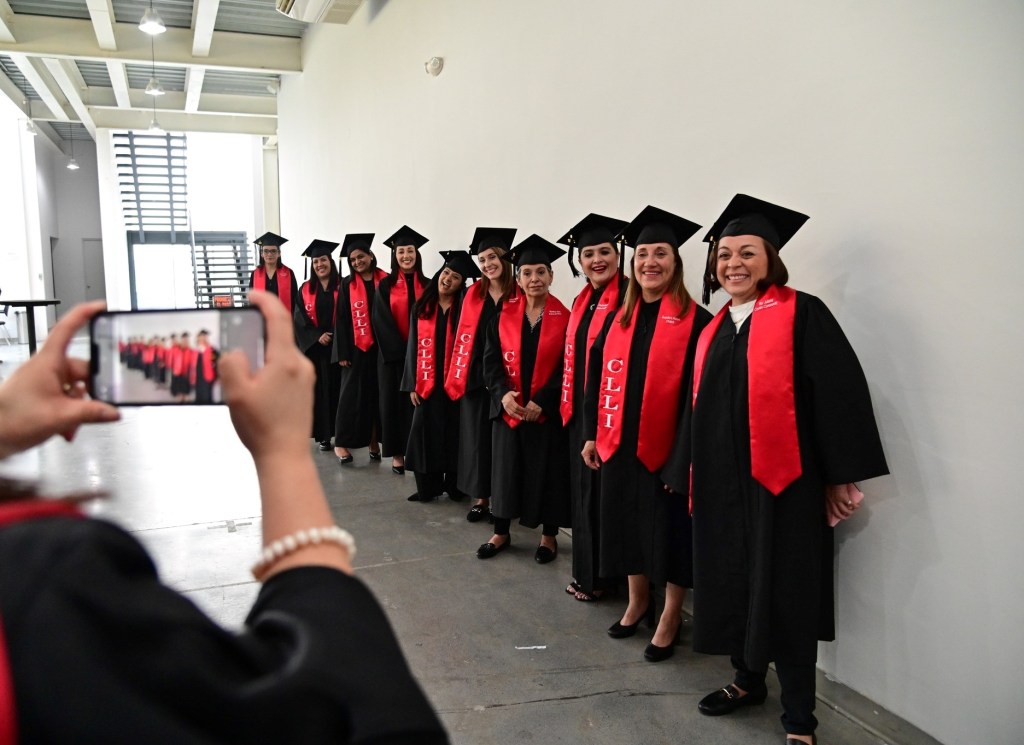
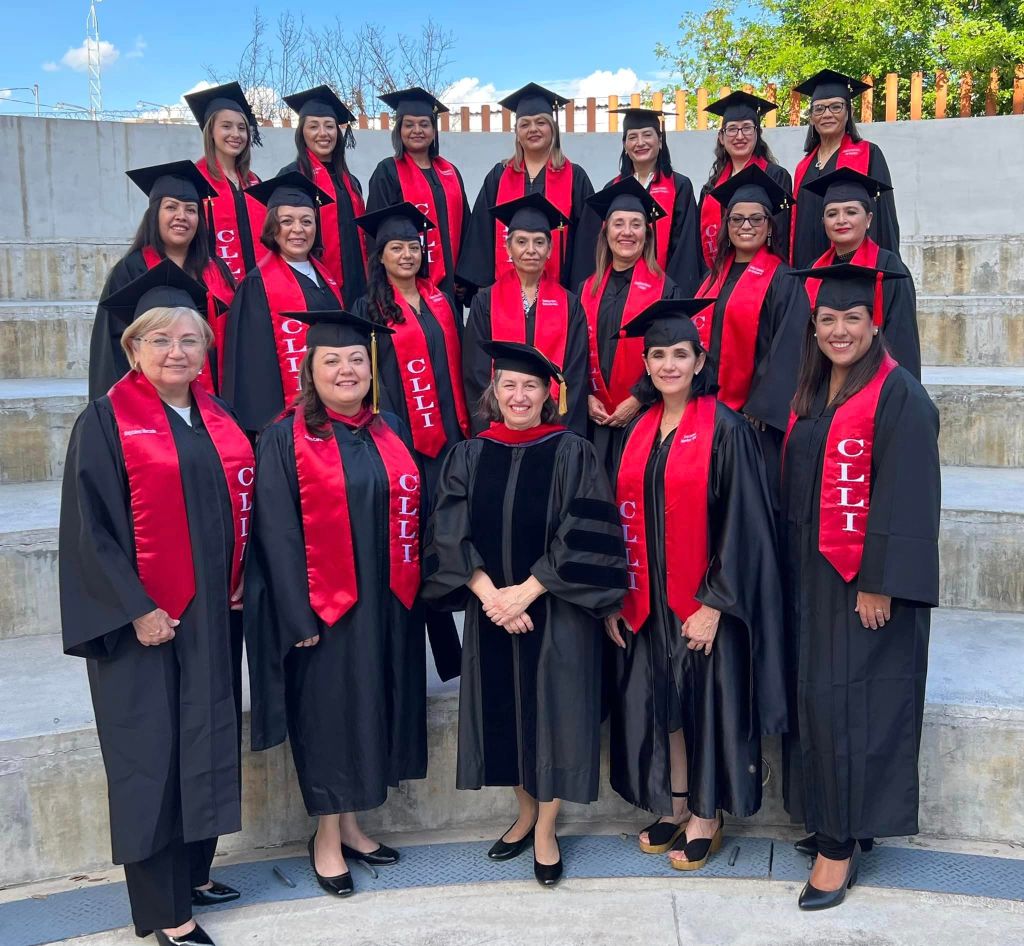
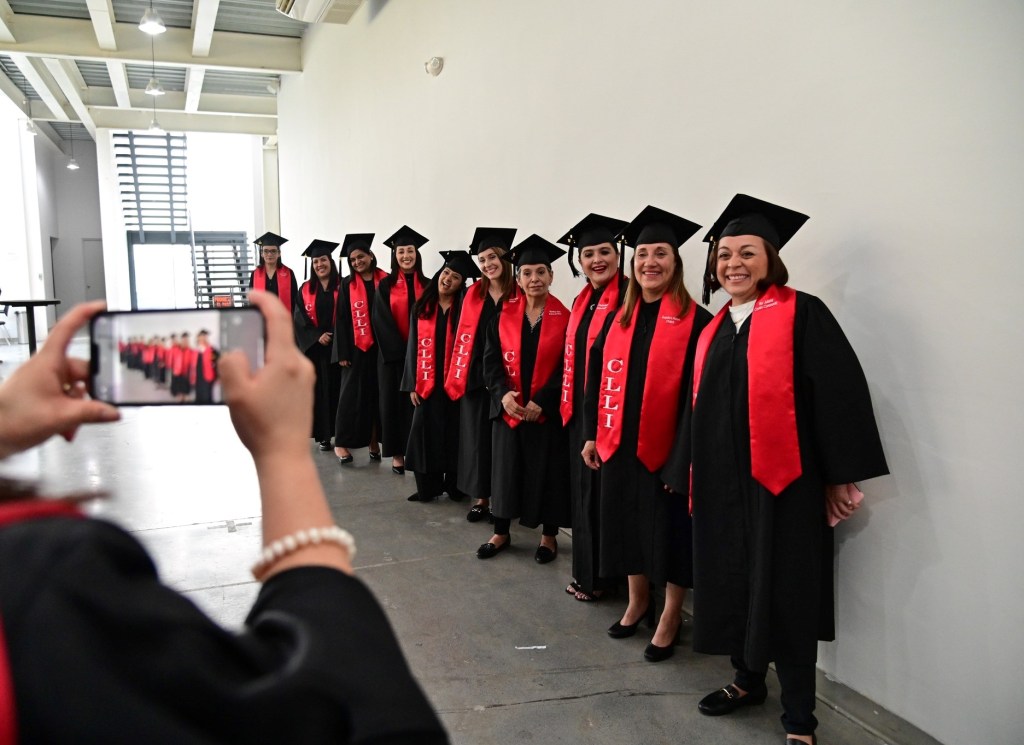
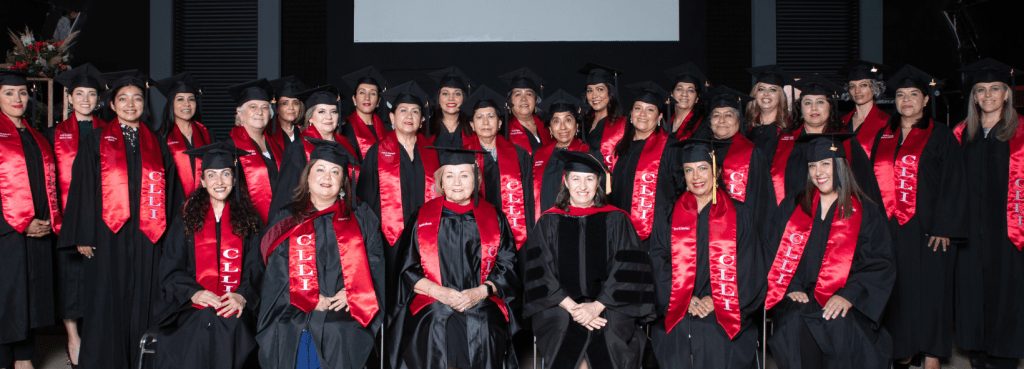
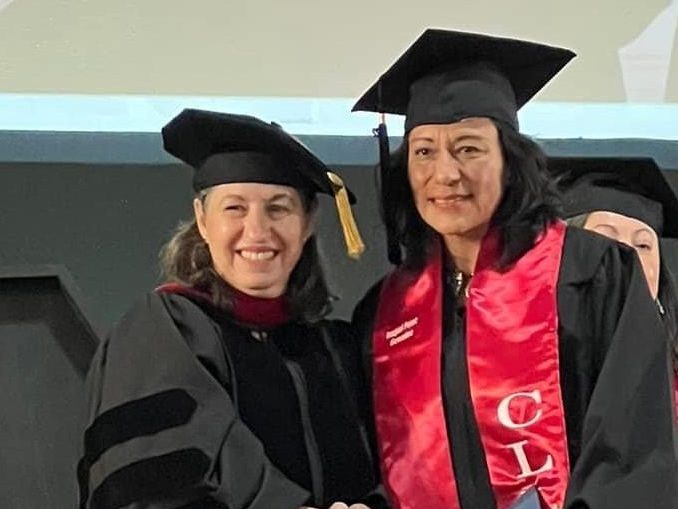
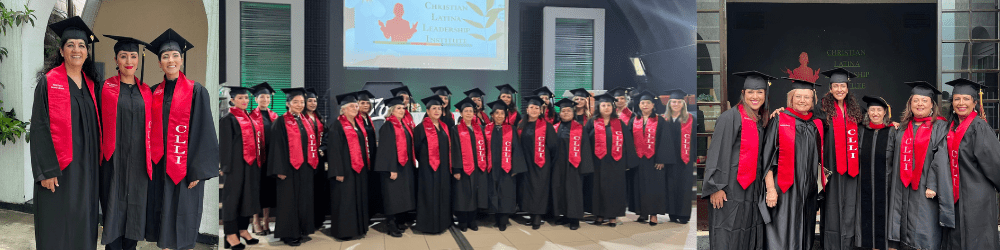
Graduations are such glorious and celebratory events. Those who believe and support education, at any level, hold in their hearts the hope that all the students will graduate, and that as they close an educational cycle, they will start a new path that will benefit them as well as contribute to the common good in our world.

CLLI is no exception. We hold closely the hope that as our students walk across the stage to receive their certificates, they are not only taking a certificate in their hands, but a wealth of knowledge and experience that will allow them to continue a process of transformation of themselves, as well as their families, churches, and communities. 

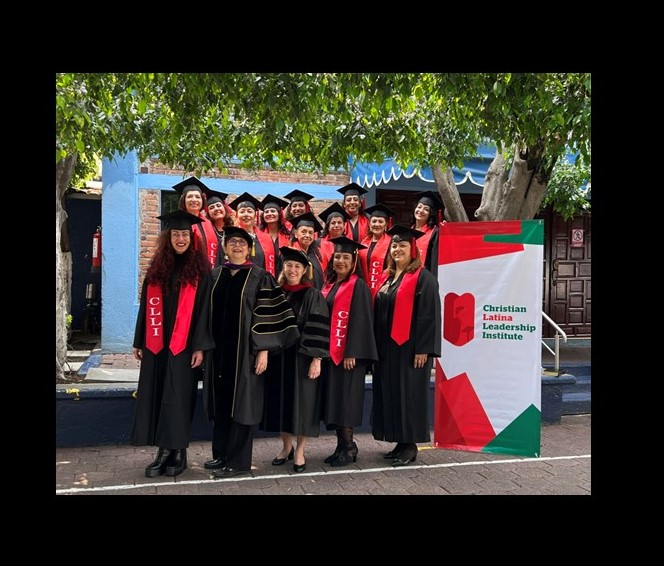
Recently, we lived this experience in the CLLI Mexico City graduation, and we want to share it with you. Thus, I asked two of our CLLI leaders who were instrumental in this graduation to share their perspectives regarding this important event.

Verónica Rodríguez Navarro, CLLI Mexico City Coordinator and CLLI graduate (Monterrey 2022), shared the following:

The first CLLI Mexico City cohort was an answered prayer of the leaders who believed in what God could do in and through them. As I remember the first session where we met the group, I remember faces that reflected doubt, expectation and disbelief of whether this program was for them or not. I also remember others hungry to discover what they would find at the end of this training. For some, the path became long to travel when, in the midst of trials, illnesses or discouragement, the end seemed unattainable, but God gave the encouragement that each of them needed in order to finish successfully.

For many, the support of their families was the key to reaching their goal. Listening to the testimonies of how their husbands, children, and sometimes even grandchildren encouraged them to finish, shows that this program not only empowers those who participate in it, but also touches their families by inviting them to participate in the life plan of these women. The purpose of transformation thus transcended from the graduates to their families.

As expected, the graduation celebration was full of emotional and significant moments for each of the students. We saw their faces shining with satisfaction and gratitude for the goal achieved. Furthermore, we feel the presence of God embracing with affirmation the new generation of Latina leaders in Mexico. Each prayer and song became a declaration of hope for this new stage they were experiencing. This event surely marked the lives of the graduates, but also of the people invited to the celebration.

Norvi Mayfield, CLLI graduate (Texas 2019) and CLLI supporter, also expressed her experience at the CLLI Mexico City graduation:

I thank God for the opportunity to share with you all the glorious things God is doing through CLLI. I have the honor and privilege of having visited three different chapters of the CLLI: Monterrey, Metepec and Mexico City. In my recent participation in the graduation in Mexico City, I heard the testimonies of transformation of several women who came with low and damaged self-esteem. I want to share two stories that really impacted me. When I met these two women at the beginning of the training, they said almost nothing because they felt that their opinion or words were worthless. They were hurt by the system and had doubts about whether the CLLI would treat them the same way, that is, without giving them the value that Jesus really gives to women.

One of these students shared how she was devalued in her family in relation to her opinions, tastes, desires or plans. However, through her studies at CLLI she was healed from the inside out and was able to find a sense of freedom. This transformation was felt in all areas of her life and allowed her to reclaim her space for a full life in her family and in society.

This is one of the gifts that the CLLI curriculum brings. A curriculum that presents a sound Christian theology that presents Christ and the transformation He can bring to the lives of human beings. Although this curriculum is at the university level, it is presented in an understandable way that touches the daily lives of women, at whatever educational level they are at or stage of development in their life. Seeing this student in the last class and during graduation expressing her opinions with great eloquence and confidence reminded me of the biblical miracles of healing. At that moment I was also witnessing a contemporary miracle. Glory to God!

On the other hand, I was also struck by the testimony of another student, a 75-year-old woman, who previously had not had much opportunity to study. At the beginning of the training, she was a quiet and self-conscious woman, and at the end of the training she also became an articulate woman, who stepped onto the platform with her shoulders upright. After receiving her certificate, her son hugged her, expressing a great gesture of joy and pride. With this, we saw that the transformation of this sister also reached her family, because if she could do it, her son and her entire family could do it too. This is something big, because by seeing it, we are witnessing the transformation of an entire family and perhaps in the future, of an entire country.

With these testimonies, I want to share with all the people who contribute to the CLLI with their time, prayers, work, or resources, that the transformation that the CLLI offers, in the name of Christ, is real and concrete. We really get to see the lives of transformed women who are transforming their environments.

The other important thing about investing in CLLI is that the investment in transformed lives can be seen in the present. I have been involved in different ministries and missions for 35 years, and I have never seen a ministry like this where you can see, right now, the exponential development of local leaders. The solid evidence proving the achievements of this ministry cannot be denied. So, I want to invite you to support the CLLI because it will be a great blessing for the women who take the training, but also for you because you will be witnessing in the present the transformation of women, their families and future generations.

What can we say before these testimonies? Glory be to God! Truly, we celebrated a graduation, but so much more. We invite you to join us as we continue with our goal of transforming women’s lives in the name of Christ. As Verónica and Norvi expressed so well, you will witness the transformation of women’s lives, and the lives of their families, churches, and communities in real time. What a gift! To learn more about this ministry and ways to support it, please visit  https://www.christianlatinaleadershipinstitute.org/ or write to clli@cllinet.org

Norvi Mayfield, CLLI graduate (Texas 2019) and CLLI supporter, is a Consultant in the area of missions and non-profit organizations. Verónica Rodríguez Navarro, CLLI Mexico City Coordinator and CLLI graduate (Monterrey 2022), is Director of Hudbé School of Music and Ministerial Training, as well as Minister of Worship at Bethel Baptist Church in Mexico City. Dr. Nora O. Lozano is CLLI Executive Director.

By: Anna Rodriquez

Para leer la versión en español haga clic aquí

“You need to be a teacher.” My mother would strongly suggest after observing my passion to help people. However, after listening to her, I would not entertain the thought of becoming a teacher. Now, if my grandmother were the one who said I needed to be a teacher, then most likely I would have been a teacher. 

It is not that I do not listen to my mother’s suggestions, but my grandmother, who lived next door, influenced my life in such an impactful way. She was my hero and role model of Latina leadership. A significant portion of who I am and how I serve the community is because of her influence. I inherited this gift of serving from my grandmother at an early age. My heart sings whenever someone says, “You have your grandmother’s heart.”  

As I reflect on my journey It brings joy to my heart when I recall the precious moments spent serving within the people-helping profession, and how my grandmother inspired me to serve others. As a child, my grandmother would include me in conversations of the importance of The Golden Rule: Do to others as you would have them do to you (Matthew 7:12).

She demonstrated The Golden Rule in her conversations and actions by preparing meals for sick neighbors, taking people to their medical appointments, and helping in crisis by utilizing her critical thinking strategies, making a way out of no way so that everyone’s basic needs would be met. Following her example eventually led to me participating in community service, which would become my career. 

Recently, I was offered an opportunity to return to school and earn a master’s degree in Social Work (MSW), opening up the way for me to become a Licensed Clinician Social Worker. (LCSW). When I started thinking about my age, I was skeptical about returning to school. I thought this is the time I should be planning my retirement, not looking for more to add to my plate! After trying to convince myself that I did not need to work on another degree, I remembered my grandmother’s voice. Her words to me were, “Where there is a need there is a way.” All those times she served others with me by her side paved the way for me to pursue a path where I could be a voice for the vulnerable.      

The field of social work is a fast-pace environment that requires a lot of hard work, unfortunately, there are many times when social workers are put in difficulty situations with the responsibility to find solutions. In my experience, working in the social work arena has had many challenges. I currently reside in the Permian Basin of West Texas. There is a limited number of non-profit organizations offering social services. Most of these organization have a dire need for therapists and social workers. I recently read a quote, “If variety is the spice of life, then social work is one of the hottest careers around.” 

The Code of Ethics plays a significant role in this profession. It is an outline of best practices in maintaining licensure. When I study this Code of Ethics, I am reminded of the Holy Spirit, the Spirit of truth who guides us into all the truth (John 16:13), and who invites leaders to live with honesty and integrity. The ultimate goal of the social work profession is to enhance human well-being, help meet basic needs by paying attention to the context of the client, and empower the vulnerable, the oppressed and those living in poverty.  

This passion of serving others that started with my grandmother has continued throughout the years. At the same time, there continues to be a shortage of licensed professional counselors and Masters-level social workers. These two realities intersected as the university I will be attending offered a scholarship in behavioral health to address the growing need. I intend to work hard on successfully completing the program and serve as a role model to those who come behind me while also, paying tribute to women who paved the way before me. I will be forever grateful to my grandmother who sparked the fire in my heart to serve others by being a woman after God’s own heart.  

In our community we have a common saying, ¡Sí Se Puede! (Yes, we can!). I invite you to go and inspire others to become the best that they can be for the well-being of our communities and for God’s glory. 

Anna Rodríquez serves as a CLLI board member, and graduated from the CLLI in 2010. She has worked in the field of social services for more than 25 years, and has master’s and bachelor’s degrees in public administration from the University of Texas, Odessa, Texas.

By: Becky Klein

Para leer la versión en español haga clic aquí

How quickly summer flies! Where did it go? It was only yesterday that school let out and students and parents were anticipating some family vacation time; more play time for the kids; summer camps and sleep overs, and many other planned summer activities. And undoubtedly, each year seems to pass by more quickly than the previous one.

As we transition from summer to the academic rigors of school, it’s incumbent on ourselves (as parents, family members, teachers, youth leaders, and coaches) to reflect on how we have been teaching our children the fundamentals of leadership principles. Regardless of age, and on whatever road our children choose to travel, they will all lead at times and follow at others. And there is nothing weak or unrighteous about being a follower. Lest we forget, Jesus considered himself a follower. In the Gospel of John, Jesus says, “I do nothing of my own accord but only what I see the Father doing” (5:19). He also says that he is not giving commands, but rather delivering them on behalf of the Father. Jesus’s purpose on Earth was to follow the will of the Father, even if it meant his own death. He wanted his disciples to imitate him in this way.

Yet all young people, your children and those of others, will encounter demanding times and uncertain days ahead. It is during those times that we want our children to be ready and armed with leadership skills to endure, prevail, and overcome the mayhem and madness that sometimes encircles us. We cannot choose the times in which we live. However, as Gandalf said in J.R.R. Tolkien’s Lord of the Rings, “All we have to decide is what to do with the time that is given to us.” 

Whether a faithful follower or a strong leader, it all begins with one primary moral character: Trust. Leaders should be instilling trust in their followers, and followers must be trustworthy to communicate and execute on the leaders’ directives. A trusted follower doesn’t just perform the task of following but is authentically embracing and swallowed up in his leader’s calling. Similarly, a real leader inspires trust and action among followers.

I have been enriched by my colleague Les Csorba who wrote a book 20 years ago entitled “Trust: The One Thing That Makes or Breaks a Leader”.  In his book, Les describes leadership as “a character in motion with trust as its fuel”.  He also describes how the most influential leaders are: 1) purified in the fires of their own suffering; 2) shaped by mentors, individuals who are willing to build their lives into others; and 3) called for a purpose that transcends personal ambition.

Ultimately, teaching and learning are one. When you teach, you are further deepening your own understand of that which you impart to others. You are also learning what is resonating or not with others and assessing what approaches are hitting the mark with your audience. At the same time, when you are learning, the best way to assimilate your new understanding is to, in turn, share it with others. Teaching and learning are a reinforcing loop.

So, whether it is play time or school time, what are we teaching and learning about Trust such that it will mold our children into faithful followers and inspiring leaders? It is important for us to be self-aware about how we are exemplifying daily the importance of trust in ensuring the strong bond between leaders and followers. One of the best ways to begin is simply to remember what God said in Proverbs 3:5-6, “Trust in the LORD with all your heart, and do not lean on your own understanding. In all your ways acknowledge Him, and He will make straight your paths”. Amen.

Becky Klein, Esq. Attorney, Principal of Klein Energy, LLC., an energy consulting company based in Austin, Texas. She is a member of the CLLI faculty and the CLLI board of directors. Juris Doctor from St. Mary’s Law School, San Antonio, TX. Master of Business Administration from MIT Sloan School of Business. Master of Arts in National Security Studies from Georgetown University. Bachelor of Arts in Human Biology from Stanford University, Stanford, CA. 

By: Verónica Martínez-Gallegos

Para leer la versión en español haga clic aquí

What happens when you say yes to God? What I have heard in response to this question is, “What am I going to do if I say yes to God?” I remember this phrase as if it were written in my mind and heart since God used it to get my attention a long time ago. This was the phrase with which I responded to God’s calling to ministry at 19 years old. When the preacher made the invitation, he repeated that phrase with special emphasis. I heard the preacher speak with an assurance of his own life experience, “The how is God’s, the yes is yours.”

Recently the women’s ministry at the church I belong to studied Kay Warren’s book, Dangerous Surrender: What Happens When You Say Yes to God. Warren recounts her journey as a leader and everything she has experienced since saying yes to God. Reading this book comes with a high risk. If you decide to read it you will be confronted with your privileges, fears, prejudices, and humanity. But you will also be invited to have a unique and very personal experience.

It has been three decades since I said yes to God. Just as the preacher spoke with tenacity and conviction that in his life God had taken care of the how, so it has been with me. Today I can say with the same emphasis, the how is from God. Going to seminary was my first how. Everything else is history.

Dear leader, I do not know what God is calling you to do. What I can assure you is that God has a good plan for you, and not of evil (Jeremiah 29:11). Perhaps, like Kay Warren, God is calling you to step out of your comfort zone to serve a specific group of people. All people have a purpose in life, with unique life experiences, with spiritual abilities and gifts (1 Peter 4:10). You have a unique way of being and leading that God can use supernaturally. But the yes in response to that specific call from God to your life corresponds only to you.

We are concerned about how we are going to fulfill our calling and that is normal. I asked myself. How am I going to go to the seminary? I’m so young, I don’t have money. Who is going to support me? In less than two months, God not only gave me tuition for my first semester, God even gave me the suitcase to put my clothes in to embark on that journey of no return. That is how special God is. I would never be able to finish telling everything that God has provided in my life. God’s only expectation from me was yes. Yes, I am willing to go wherever you call me. I know it can be scary. I am not telling you that you have to leave everything and go away like me. Just trust God’s process in your life.

The life of Esther shows us a biblical picture of responding to God’s call. She could have said no to God’s invitation. In fact, her uncle Mordecai warned her, “For if you remain silent at this time, relief and deliverance for the Jews will arise from another place…” (Esther 4:14a NIV). If Esther had not answered yes, she would have missed out on the blessing of being the Divine instrument that God used to save God’s people.

Another biblical character who shows us the how of God is Mary, the mother of Jesus. What would have happened if she had answered no? God would have looked for someone else.

Likewise, God has a specific task for you that no one else can do but you. What will you answer?

Why do you think God has invited you to collaborate with this CLLI movement? Isn’t your participation in this program already a yes? Now, wait for what God will do in response to your yes, and trust that God has the how.

Rev. Verónica Martínez-Gallegos, M.Div., BCC, ACPE Certified Educator and Board-Certified Chaplain. She also serves with her husband who is the senior pastor of La Voz de La Esperanza Baptist Church in the same city. Additionally, she serves at the CLLI in multiple capacities: Board member, coordinator of CLLI in North Carolina, and faculty.

By Adalia Gutiérrez-Lee

Para leer la versión en español haga clic aquí

When celebrating Father’s Day some days ago, I once again remembered this famous phrase from my father, Rolando Gutiérrez-Cortés. I am sure that I am not the only one who remembers my dad saying “Don’t go back even to gain momentum.” Many other people also remember my dad using this phrase because his joy and optimism were contagious. I, not only — “owe” him the genes I inherited from him, but also the countless occasions in which he encouraged me to keep going; to finish what I had started; to not give up; and, to not think that — no matter how difficult the circumstances were — I lacked sufficient strength, ability, or resources to face any situation.

This injected me with confidence! I thank him for so many teachings that have guided me in my personal life and as a leader!

Listing in a few lines the learnings about family, ministry, personal life, faith, vocation, church, theology, missions or many other topics that I received from my father, would be fruitless. However, I want to share here some of his phrases that highlight his human quality, his unwavering faith, and his passion for always seeing the positive side of things.

Dad always explained his way of thinking to help us, his daughters and his son, learn to make wise decisions. He said that, when the reasons for making decisions are verbally expressed at home, the opinion of the entire family helps to consider all the variables, form principles, and make the best decision at the time.

Dad said that the two great things that my mother and he were going to bequeath to us were: our faith in God and completing our degrees. These were the two great tools that were going to help us, support us, and direct us throughout life.

Dad also urged us to recognize that no matter what profession we studied, our vocation was to serve God and people. And that the profession was only an instrument to fulfill our vocation.

My father encouraged me to continue my postgraduate studies in the United States after I finished my degree as a medical doctor. I felt my calling to continue preparing myself to holistically help people with fewer economic resources so that they too could enjoy mental, physical, and spiritual health. However, I reminded him that my English was limited or almost non-existent and his idea of ​​me studying in English was not going to work.

I took the English exam and, as expected, I did not meet the language requirements to do my postgraduate degree. Despite this, upon seeing the results, my dad said: “You won’t have any problem learning English. You haven’t gotten there yet, and you already had more than half of the answers correct.” And the rest is history. I ended up studying in the U.S. and met my husband with whom I have been sharing life and ministry for many years. Wow, my dad always saw the glass as half full!

Dad said that “being optimistic” was not “not being realistic,” but rather “a way of visualizing and optimizing the resources we have, in order to achieve our goals and dreams.”  That “one step in time, taken at the right time, means finishing on time and with success.”

His phrase “don’t go back, not even to gain momentum” was frequently accompanied by his other favorite phrase “sursum corda” “up hearts!” It was his way of repeating to us over and over again: May our spirits not fail, may our faith not fail, God is faithful and sustains us at all times.

Dad was a pastor his entire adult life*. He said that “desk” theology isolated and not contemplated within the community of faith did not reflect a vibrant, contextualized, hope-filled faith. He said that our “study” of God should be in community, in order to avoid falling into a theoretical faith, full of doctrines and lacking the transcendence that as the People of God and the Body of Christ we should have in the world.

He said that throughout his 38 years of marriage to my mother, he experienced “the mystery of sameness.”  He called us his theological virtues: my sister Edna was his faith, my brother Gustavo his hope, and I was his love. So, when our youngest sister was born, in our childish innocence, we asked him in anguish, what would she be? And he called her Eunice to assure us that she would be his victory.

Over the years, all of these phrases have become a pillar in my personal, ministerial and leadership life.

Last year I wrote a blog for CLLI about my mom and I concluded it with an invitation to think about motherhood more broadly. Today I want to extend a similar invitation. This time I invite you to contemplate fatherhood in a broader sense – in the context of biological, adoptive, spiritual, emotional, and intellectual fatherhood. What father figures have manifested in your life for which you can thank God? In what ways can you inspire and encourage others like only a father can?

Up, hearts! May all our lives be for the glory of God.

Adalia Gutiérrez-Lee serves as the International Ministries Area Director for Latin America and the Caribbean, American Baptist Churches, and served in different capacities within the Board of Directors of the Christian Latina Leadership Institute (CLLI).

*Editor’s note: Dr. Rolando Gutiérrez-Cortés, Adalia’s father, was a brilliant pastor, theologian and leader, recognized worldwide for his pastoral work and theological articulations. To learn more about his life, click here to read this article available only in Spanish.

By: Nora O. Lozano

Para leer la versión en español haga clic aquí

At the beginning of this month, we had a wonderful gathering at the CLLI North Carolina. Veronica Martínez-Gallegos, CLLI NC coordinator, hosted a brunch for members of the three different CLLI North Carolina cohorts (2012-15, 2016-2018, and 2022-2024). CLLI graduates, and former and current students gathered to reconnect with each other and narrate CLLI stories.

As we ate delicious Honduran and Salvadoran food, we heard stories of how the CLLI training had made an impact in the lives of these CLLI North Carolina sisters. Somone shared about how after taking the CLLI classes, she was inspired to go back to school to obtain her BA. Another one shared regarding the impact that the class on Boundaries had in her life, and how after learning to say “no” and to set healthy boundaries, her life changed so much for the better.  Someone else shared about making a special effort to be able to graduate, and how this changed her perception of the things that she could do and achieve in life. It was a wonderful time of remembering and celebrating God’s blessings in the lives of these CLLI North Carolina sisters and the CLLI as an organization.

After hearing with gratitude these powerful stories, I shared about the importance of being grateful for the many blessings that we received during the CLLI training: knowledge, transformation, empowerment, friendships, and new beginnings.

I shared how in the Bible, every person who was the recipient of a blessing did not receive this blessing only for him or herself, but also for the sake of others. These biblical characters were blessed to bless someone else. Furthermore, I mentioned that this biblical witness of blessing others applies today, as much as it did yesterday, to all of God’s followers.

One of my privileges as CLLI Executive Director is to invite people to join the CLLI in accomplishing its mission: To provide an academic seed-bed for the development of Christian women leaders from a Latina perspective. This invitation may take different facets. During this event, and as a part of a larger campaign to secure resources to continue blessing other women with the CLLI training, I invited all the participants to become CLLI donors.

I spoke about the importance of generosity in the form of blessing the next generation of Latinas and Latinas-at-heart who are ready to start their education at the CLLI, but are prevented due to lack of financial resources. I emphasized that all these blessings that we received during the CLLI training need to move us to action. They need to move us to bless someone else with generous hearts.

Generosity is an important value in the Bible. God rejoices with the hearts and acts of generous people:

“And do not forget to do good and to share with others, for with such sacrifices God is pleased.” Hebrews 13:16 (NIV).

Furthermore, the Bible promises blessings for the generous people:

“A generous person will be enriched, and one who gives water will get water.” Proverbs 11:25 (NRSVUE)

Henri Nouwen in his book The Spirituality of Fundraising describes that when a person in need and a person who can give meet in their need and action to give, they are meeting “on the common ground of God’s love.” As one gives and the other one receives many good things are accomplished. Nouwen affirms: “When those with money and those who need money share a mission, we see a central sign of new life in the Spirit of Christ.”

As we launch a larger campaign later in the year to invite CLLI graduates, students, and the larger community to join the CLLI in its mission and work, I want to invite you to meditate with gratefulness on all the blessings that you have received and the values of gratitude and generosity. Furthermore, I want to invite you to express this gratitude and generosity, blessing a ministry like the CLLI.

The ministry of giving is an important one in the body of Christ. It is an opportunity to participate in the larger work of God in this world. Henri Nouwen highlights: “…In ministering to each other, each from the riches that he or she possesses, we work together for the full coming of God’s Kingdom.” 

At the CLLI, we are doing our part in joining God’s work in the full coming of God’s Kingdom. We invite you to join us and to bless Christian women as they develop their leadership skills with the goal of transforming, in the name of Christ, their lives, families, churches, and communities.

For more information on supporting the CLLI’s mission, please write to clli@cllinet.org or visit: https://www.christianlatinaleadershipinstitute.org/friends-donors

Nora O. Lozano is executive director and co-founder of the Christian Latina Leadership Institute and has been involved in Christian theological education for more than 25 years.
By Carolyn Porterfield

Para leer la versión en español haga clic aquí

The word “trust” evokes memories from my childhood. I had a terrible habit of lying. “Did you practice the piano today?” “Oh, yes!” What I failed to reveal was that the practice time was about five minutes, not the required thirty. I will skip other examples although there are many.

Lying broke trust with my parents. They could not believe what I told them. When I finally came to my senses and realized lying was not such a smart idea, I began to tell the truth. The problem was that my parents still did not believe me! I had to work to rebuild the trust I had broken. It was not easy and took time, but eventually I was once again trusted by my parents.

This childhood experience was a precursor to a valuable lesson. Trust is foundational in every relationship, whether it be family, friends, work, church, or school. It takes time to build trust but only seconds to destroy. It is tested every day through intentional and unintentional words and actions, small betrayals and large. 

Building Trust

No person walks into a position of leadership and automatically has the trust of those she leads. Building trust begins with you. How do you do that? 

Show who you are by your actions, not just your words. One leader with whom I worked was always gracious and respectful in meetings. Even when discussions grew tense or there was clear disagreement, my friend never wavered in showing respect to others.

Get to know the people you lead in both formal and informal settings. Talk about what trust means to each person. Lead the group in developing their own definition of trust and refer to that often. 

Use your leadership power for the good of those you lead. When those you lead know you are looking out for their best interests, trust grows which increases creativity, productivity, and loyalty. I have known leaders who reduced their own salaries when budgets were tight so their employees could have raises or better benefits.

Understand the benefits of trust. I am a big collegiate women’s basketball fan. I have listened to many of post-game interviews and almost every player and coach talk about the trust their team has in each other. They acknowledge they might not be the fastest, most talented team but the energy trust creates is palpable which enables these women to reach amazing goals and achieve the impossible.

Breaking Trust

Trust is powerful yet fragile. Because we are human, we will all experience betrayal either as the one betrayed or the one who betrayed another. The hardest thing about betrayal is that it most often comes from those you know and love, not strangers. Small, subtle, and unintentional things can break trust just as easily as bold, blatant, and intentional words or actions.

Whispers behind closed office doors. Breaking confidentiality. Lying to a spouse. Playing favorites. Prayer requests that sound more like gossip than genuine concern. All these things are betrayals. It is easy to think of other examples, isn’t it?

In graduate school, I was in classes requiring group projects. I disliked them intensely because I knew there would be one or two people in the group who would not do their part. Bottom line: I did not trust them, and this was before I even knew them personally! I had had such bad experiences with prior group projects that I did not give new groups a chance.

There is a huge cost to pay when trust is broken. People build barriers around themselves, hoard their knowledge, refuse to interact with others, or even quit contributing entirely. This impacts the energy, passion, risk taking, and creativity of the team. How can you accomplish the work or achieve the mission if you are not able to trust and believe in others? Everyone loses when trust is broken. 

Rebuilding Trust

At a time in my leadership journey when I experienced deep betrayal, my counselor recommended I read Trust and Betrayal in the Workplace by Dennis and Michelle Reina. I dug into the book looking for ways others had betrayed me and broken my trust. I discovered that but also found ways I had betrayed people. That was tough to face. I also learned ways trust can be rebuilt through hard work and perseverance.

Rebuilding trust begins with you. You may not have control over what happened to you, but you do have control of how you will handle betrayal. A first step is to honestly acknowledge what happened and the feelings you have. A friend, pastor, or counselor can be helpful in this process. I remember asking several times, “What really happened here?”

It is easy to blame others, but you need to accept your responsibility in what occurred. As I evaluated what had taken place, I came to see how my words and actions had contributed to a dysfunctional workplace. I was not blameless like I wanted to believe.

Forgiveness is crucial if trust is to be rebuilt. There is such power in forgiveness. I do not adhere to the statement that forgiveness means forgetting. It does not. But when you truly forgive another, you are no longer held captive to what happened. Forgive others. Forgive yourself. Then you can let go and move on.

Trust Matters

Over my forty years of leadership, I have seen how trust can help organizations flourish. I have also seen the damage caused by broken trust. I am still learning not to ignore the warning signs but to pay attention and try to address what is testing trust. I have both failed and succeeded but hope I am a better leader for the lessons learned through it all.  May it be true of you as well.

Carolyn Porterfield currently serves as Faculty, Board member, and Chair of the Academic Committee of the Christian Latina Leadership Institute. She is passionate about developing and empowering women as leaders. 

More than a ring…

Christian Latina Leadership Institute

By: Margarita Garcia

Para leer la versión en español haga clic aquí

“And now these three remain: faith, hope and love. But the greatest of these is love.” 1 Corinthians 13:13

As we celebrated Valentine’s Day last week, I was reminded of my ring’s story. When my husband and I celebrated our 10th anniversary, he gifted me a ring. He chose a beautiful white gold ring with two stripes of diamonds perfectly lined over the top of the band. When I saw it, I immediately fell in love with it.

I wore this ring almost every day for ten years. Until one day, I noticed that it was missing a diamond. I don’t remember how or when I lost it. I was so used to wearing my ring that I would put it on my finger every morning without paying much attention to it. It was such a daily routine that I did not realize that at some point throughout those years I had stopped looking at its beauty. 

When I noticed the missing diamond, I felt differently towards my ring. I did not like it any more. I wore it a few more times, but I was so aware of the void left by that missing diamond that I despised it. I was so conscious of the empty space that it made me think others could notice it, too. It bothered me to see it because it was incomplete and imperfect. I remember feeling upset for being so used to it, that I did not even notice my precious stone was gone. 

I wanted to remember. Had I lost it at work, when I was focused on my duties? Did I lose it at home when I was spending time with my family? Or did I hit it against something harsh and did not see it falling out of its place? Maybe if I remembered, I could go back and look for it. If I found it, I could get it repaired. A jeweler could place the precious rock back in its place and make my ring whole again. But I was unsuccessful. There was no memory to trace. Unfortunately, I had ignored it and now my ring was broken, incomplete, and despised by me. 

I could still choose to get it fixed. A replacement stone would go in the empty place. It would be a different rock that perhaps would not exactly belong, but my ring would probably look stunning again. I could wear it without feeling ashamed, and if it looked imperfect it would be harder to tell. But even then, my heart would still know the diamond was not the original make. I wrestled with this thought for quite a bit until a new option came to mind: leave it as it was.  

To my surprise, I decided not to fix my ring. I realized that I did not want a replacement to cover that space because it also had so many memories and stories to tell. I realized that my ring was more than just a band. It was also a reflection of the struggles, the perseverance, and the unending love that sustained us through the years. The empty space in my ring reminded me that in marriage there will always be something to fix, fill, or work on.

Furthermore, when I look at my ring now, I also think of our hearts always longing for more. This applies to all human beings, married or not. No matter who you are, everyone experiences an emptiness that can only be satisfied by the Lord. No relationship, accomplishment, or possession can take God’s place because God is the only one meant to make us complete again through Christ. God is our firm foundation, and Jesus is the most precious rock on which we can stand.  

Today when I look at my ring, and see the empty space where that diamond should be, my eyes happily wander in gratitude as I see its splendor because what I received was a greater gift. It was God’s gift of faith, hope and love that remain no matter what (1 Cor. 13:13). This gift has been manifested in many of the wonderful things my husband and I have experienced so far, but the most beautiful one is that it has united us as one.

Margarita Garcia is a Bilingual Coordinator for Kaufman ISD. She has a Master in Education from Dallas Baptist University, Dallas, Texas. She is a CLLI Texas graduate, and has served as CLLI East Texas Coordinator. In addition, she serves along with her husband pastoring CLife Church Kaufman en Español. 

Para leer la versión en español haga clic aquí

One of the aspects of our lives that takes up a significant portion of our time is: work. It is no secret that our work demands much from us, and at times, we even face situations that are beyond our control. Sudden reorganizational changes in our workplaces, challenging work relationships, or overworking, for instance, can have a negative impact on multiple areas of our lives.

How can we use our work as a means to live out our faith?

Working for God

As Christians, our faith is not something we can pack into a suitcase and leave outside the door before entering our workplace. In my opinion, it is of utmost importance that our faith permeates every corner of our daily lives. According to the most recent data from the U.S. Bureau of Labor Statistics, the average employee in the United States works 1,892 hours per year. Since work is something very important that takes up much of our time, it is illogical to think that our spiritual life can be isolated from our work life.

In the book of Colossians, Paul encourages us to focus on God in everything we do, including how we carry out our careers, regardless of who may be benefitted. The reason is that it is truly God whom we serve.

Whatever you do, work at it with all your heart, as working for the Lord, not for human masters, since you know that you will receive an inheritance from the Lord as a reward. It is the Lord Christ you are serving.” Colossians 3:23-24 (NIV)

This passage encourages me to find purpose and satisfaction in what I do in my career, even when performing tasks and obligations that may be monotonous or not so enjoyable. Personally, this profound truth reshaped my understanding of work and helped me realize that my professional vocation is another avenue through which I can serve God.

Embracing the original design of work

“Thus the heavens and the earth were completed in all their vast array . By the seventh day God had finished the work he had been doing; so on the seventh day he rested from all his work.  Then God blessed the seventh day and made it holy, because on it he rested from all the work of creating that he had done… The Lord God took the man and put him in the Garden of Eden to work it and take care of it.” Genesis 2:1-3, 15 (NIV)

Many of us may perceive work as a punishment or consequence after Adam and Eve’s disobedience to God (Genesis 3:17-19).  However, the passage mentioned above (Genesis 2:1-3, 15) introduces work in the Garden of Eden, a paradise. As Timothy Keller, author of the book Every Good Endeavor (p. 21) explains: “…God not only worked to create but also to care for His creation.” In verse 15, God instructs Adam and Eve to continue his work by cultivating and taking care of the garden. This passage invites us to renew our perspective on work and see it as part of God’s original design for all of God’s creation, and not as just a means to income.

Our faith as an ethical compass at work

In today’s hyper-competitive work environments, being a “shark” or “win at all cost” is often rewarded and perceived as a necessity to career advancement. However, our identity in Christ rescues us from the self-sufficiency and pride that may be rooted in our desire for accomplishment, titles, or pursue of elevated salaries. I want to clarify that I am not referring to workplace environments where healthy competition leads to positive outcomes such as innovation and efficiency. Remembering that the center of our lives is God, calls us to carry out our work with integrity in order to delight God and not human beings.

“Finally, brothers and sisters, whatever is true, whatever is noble, whatever is right, whatever is pure, whatever is lovely, whatever is admirable—if anything is excellent or praiseworthy—think about such things.” Philippians 4:8 (NIV)

While our coworkers may be grappling with frustrations and ethical instabilities, we, as Christians, have the gift of having at our disposal the compass par excellence that guides us towards what is noble, right, pure, lovely and admirable. I invite you to give thanks and glory to God for the skills God has entrusted to you and to use your gifts and abilities in a responsible manner that emphasizes God’s glory.

Now that we are at the beginning of a new year, I challenge you to reflect over the next few days on: what actions or attitudes you can employ to turn work into a means through which you can expand your service to God and those around you?

Gabriela Sánchez is a CLLI graduate and serves as CLLI Board member. Sánchez is also a graduate from UNC Charlotte with a bachelor in business administration and Wake Forest University with a master in business administration. Sanchez resides in Charlotte, NC with her husband Erick where she serves in the media ministry at her local Baptist church La Voz de la Esperanza.

Christmas all year long?

Christian Latina Leadership Institute

By: Patty Villarreal

Para leer la versión en español haga clic aquí

 As we near the end of 2023, many of us have already been looking at 2024. Some are already operating in a 2024 mode with scheduled meetings and upcoming travels throughout the year. Many of us want Christmas to last all year long!! Is this possible?

Yes, it IS Christmas all year long when we remember that Jesus is the reason for the season. He came and lived on this earth to remind humankind, the most treasured creation, that God loves us and because of that Jesus challenged us to live with an attitude of Hope, Peace, Joy, and Love (a dominant theme in our worship songs). God’s desire is to tell others about His love and reconciliation. “All this is from God, who reconciled us to himself through Christ and gave us the ministry of reconciliation” (2 Corinthians 5:18)

At church, last year our choir director included in their repertoire during the Christmas season, a song written by Howard Thurman, “When the Work of Christmas Begins”.  Those of you who know me, can see my attraction to this theme. It has strong elements of recognizing needs and going beyond benevolence but into social justice. It reads,

“When the song of the angels is stilled, when the star in the night sky gone, When the kings and princes are home, when the shepherds are back with their flocks, then the work of Christmas begins.”

“To find the lost, to heal those broken in spirit, to feed the hungry, to free the oppressed, to rebuild nations, to bring peace among all peoples, and to make a little music with the heart, and to radiate the light of Christ. Every day, in every way, in all we do and all we say. Then the work of Christmas begins.”

I hope you were able to celebrate Christmas with loved ones, those related to you by blood, those related by the Spirit in Christ, and with those outside your community. I hope you delighted in much food, fellowship, along with the church and school plays, Christmas dramas, and cantatas. But now, as the lyrics remind us “the work of Christmas begins.”

For several reasons, not everyone was able to experience “Happy Holidays.” Some had no control over this. Some, because they have not heard the true message of redemption and reconciliation were not able to celebrate the Joy of the season.

Telling the Story, and in particular your Story of Hope, Peace, Joy, and Love, is an active mission of all followers of Christ. Telling the Story goes hand in hand with the demonstrative side of redemption and reconciliation, quoting once again…. “To find the lost, to heal those broken in spirit, to feed the hungry, to free the oppressed, to rebuild nations, to bring peace among all peoples…”

My challenge to you, dear reader, is to decide what demonstrative acts throughout the year will continue your part on the “work of Christmas.” As we ponder this, we must follow Jesus in his public declaration of His mission statement:

“The Spirit of the Lord is on me, because he has anointed me to proclaim good news to the poor. He has sent me to proclaim freedom for the prisoners and the oppressed free, to proclaim the year of the Lord’s favor” (Luke 4:18-19).

Perhaps, you may already be involved in your ministry of reconciliation! Or maybe you have doubts as to where you should focus this year to be an influence in reconciliation in the lives of your family, your church, or other individuals. Ask the Spirit of the Lord to guide you to what tugs at your heart and will bring delight to Him. It might be a new adventure in getting involved in a reconciliation ministry or you might be fine-tuning the one you are already involved in. Whichever way, continue to be the blessing you already are! Adelante!!

¡¡Feliz Año Nuevo!!

Patty Villarreal. LMSW, is CLLI Co-Founder and faculty member. After working 43 years as a social worker, she retired and continues to serve on volunteer basis in different church and community ministries.

By: Veronica Martinez-Gallegos

Para leer la versión en español haga clic aquí

We just celebrated Thanksgiving in the United States of America. This is a celebration that is part of the history of this country. Our Thanksgiving tradition originates from the first English immigrants who shared with the Native Americans a fall harvest feast and gave thanks to God.

Without a doubt, this should not be the only day where we express gratitude to God. We live in a culture that is characterized by ingratitude. Even when we pray, we begin with our requests to God, instead of our worship to God. Instead, we ought to first praise God and focus on God’s love and faithfulness. The result of this is God’s peace and strength as we remember that God has been and will continue to be on our side. Being grateful should be our lifestyle.

The psalmist wrote, “I will bless the Lord at all times. I will constantly speak his praises.” (Psalm 34:1 NLT) King David wrote this psalm of gratitude for divine protection after Abimelech, also called Achish, cast him out of his presence because David pretended to be insane so that he would not kill him (1 Samuel 21:13-15). God protected David, and he recognized God’s care: “I sought the Lord, and he heard me and delivered me from all my fears” (Psalm 34:4). In this psalm, King David teaches us how to focus our gratitude on God instead of focusing on our doubts, fears, anxieties, anger or impatience. Gratitude to our Creator is an antidote to life’s uncertainties.

Gratitude to God increases our faith as we remember God’s faithfulness during difficult or painful times. And remembering how God met our needs in the past helps us trust that God will be with us in the future. Gratitude encourages our spirit as we worship God for his goodness. Gratitude is a habit and a spiritual muscle that must be exercised. When we go through times of uncertainty or pain, gratitude becomes most difficult. Thanking God for difficulties is hard, but if we do it, we will begin to see situations from God’s perspective, and our trust in God will grow. Ralph Waldo Emerson highlights the following:

Cultivate the habit of being grateful for everything good that comes to you and give thanks continually. And since all things have contributed to your advancement, you must include all things in your gratitude.”

Emerson’s call resonates with me. Without a doubt, we have all been through much this year, and I, personally, have found that the more I consciously focus on gratitude, the more I see good things around me. Furthermore, I also see where the not-so-good things have taught me important lessons. This allows me to be grateful for these experiences as well, although I may not express that gratitude immediately.

Although King David had already demonstrated it hundreds of years ago, research has now shown that having an “attitude of gratitude” shifts attention from oneself to the world around you. It is a mental, physical, and spiritual change that makes a person more present in their daily lives. Practicing gratitude creates opportunities for both the person and those around them to experience joy and appreciation.

Let me share with you how God has invited me to learn to practice the habit of gratitude. And God really has a good sense of humor. We recently moved to a new house. Three days before the move, an industrial sewing machine that was sitting on the floor accidentally tipped over and fractured the big toe on my right foot. The pain was terrible! I remember that during the first two hours of pain I asked God, why me? And why now and at this precise moment when we must move? I had a conversation with God, and I heard God’s voice telling me: “This is not the right question, Veronica. The question is not “why”; it is “what for”. And you know the answer.”

That led me to think about another action that, as leaders, we know we must practice in our daily lives: Patience. However, we do not like to exercise it very much, and therefore sometimes it becomes something absent in our life. I wonder if we often say that we have patience, but the truth is that we have patience if things go the way we want and if everything is under control. But the moment things go off plan and get out of control, patience escapes us. It is then that patience no longer seems so pleasant to us.

My experience of physical pain and the initial question I asked God about “why”, instead of “what for”, led me to reflect on my tendency to be self-reliant. I have a habit of wanting to do things with my own strength and in my own way. Otherwise, I am fearful that things will not turn out well. God confronted me with my impatience at that moment, and led me to this passage in Colossians 3:12:. 

Since God chose you to be his holy and beloved people, you must clothe yourself with tender compassion, kindness, humility, gentleness, and patience.”

In this passage, the Holy Spirit told me what my soul and spirit needed and invited me to clothe myself once again with patience. It is hard to explain, but it changed my perspective when I started thanking God for caring for me.

I was able to recognize that the accident could have been worse if my foot had been broken, but it was only the toe. Although it is true that I lost the independence of driving my vehicle for six weeks, God took care of me, and my husband was my driver for those six weeks.

You may identify with me. As a leader, you plan things that do not go as you thought they would, and you feel frustrated. James 1:2-3 (TLA) invites us to be happy when we go through difficulties because that is when patience is exercised. Patience makes us better people, and more grateful for everything.

I am truly thankful for the fantastic team God sent my husband and me to help us with the move. The answer to the “what for” of my accident was to accept the help that my ego otherwise would have shunned. I am grateful because it allowed me to exercise gratitude and patience. “Giving thanks to God in any circumstance. This is what God expects of you, as Christians” 1 Thessalonians 5:18 (TLA).

We are close to finishing 2023. Over the next few weeks, will you join me in finding a moment or two each day to appreciate the things that contributed to our lives this year, the things that brought us joy as well as those that were not so pleasant?

Rev. Verónica Martínez-Gallegos, M.Div., BCC, ACPE Certified Educator and Board-Certified Chaplain. She also serves with her husband who is the senior pastor of La Voz de La Esperanza Baptist Church in the same city. Additionally, she serves at the CLLI in multiple capacities: Board member, coordinator of CLLI in North Carolina, and faculty.

Categories: Blog

Unveiled Faces

Christian Latina Leadership Institute

By: Christina Rodriguez

Para leer la versión en español haga clic aquí

I was in my thirties, and I remember introducing myself to other women at the CLLI training and retreat years ago. As the years passed, I would introduce myself differently each time. I evolved into different leadership roles, titles, and whatever ministry endeavor I was involved with at the time. I would also share about my family and the circumstances that brought me to a women’s leadership community like CLLI.

Something happened in my life after the age of forty. There was a shift in my self-awareness. I began to understand more about how I processed information and how I reacted to things. I started to question the things I perceived to be true. My academic journey led me from a conservative institution to a more progressive one. I began to wrestle with my faith and at times felt childish for allowing myself to be tossed by every wave of doctrine or ideal. I was 45 and I needed to “grow up.”

The COVID pandemic forced the world to stay inside, be still, or, in my case, be bored.

I found myself thinking existentially about my life and life in general. I was working in the emergency room at the height of COVID as a Chaplain and witnessed more death and dying than I had wanted. I had the privilege of walking alongside grieving families who were not allowed to enter the hospital and be with their loved ones. At times, it was unbearable to watch the dynamic of suffering from the families-Latinos grieve hard.

Some of the Latina mothers I met had invested a large part of their identity in their children who lay dying. They would often voice that they would not be able to live without them, they would ask me: “what am I supposed to do?”

As I was faced with all this, I had an opportunity to reflect on my own life. The values I was brought up on consisted of family and hard work—very, very hard work.

I come from a line of women on both sides of my family who sacrificed much for the family. They dreamed as young girls and then watched their sons and daughters become what they could never be.

My generation has slowly changed and adopted the concept of self-care. As I write this, I can see the bottles of vitamins that I take as well as a prescription for my occasional muscle spasms. As a result of my experience during COVID, I realized more and more the importance of taking care of myself.

In addition, the pandemic also brought forward a renewed emphasis on mental health. The flood of added resources and support was too plentiful to ignore. The care I was given through the hospital system and outside organizations saved my life. I remember recovering at a hotel more than once, mostly to quarantine but also to decompress from what I was witnessing. As I grappled with depression and anxiety from life’s circumstances, I also felt a supernatural lift. I was no longer the same person. The Bible refers to this transformation in the following way:

“We all, with unveiled faces, are looking as in a mirror at the glory of the Lord and are being transformed into the same image from glory to glory; this is from the Lord, who is the Spirit.”  2 Corinthians 3:18 (CSB).

I am sharing this because the world forced me to be still; otherwise, I would have kept moving.

There is a beautiful aspect to quietness and meditation on God, but there is also a profound spirituality in knowing yourself. As I was still, I realized I had begun following the same path my foremothers had walked, one of extreme work. Work yourself to the bone-work yourself sick. Perhaps they did not have the luxury of being still. The truth is that many of them were most likely in survival mode.

Today, the reality is that COVID still lingers as do other pressures of the world. Regardless of your particular situation, I invite you to be still, know yourself, become aware of where you are going, and make the necessary changes.

As I think on all this, I am reminded of a favorite song by international worship artist Sinach that affirms:

“We’ve been called forth to show his excellence; all I require for life God has given me, for I know who I am.”

God has given us all the necessary resources and skills to get to know God and ourselves. I invite you to reflect on what the spirit is revealing to you. Lean in, and you may be surprised to receive answers to the questions you have had about your life. I encourage you to greet this season in your life with unveiled faces. Only then will we begin to see God entrust us with secrets about this life that we never imagined, and in consequence, enjoy more and more the abundant life that Jesus offers.

Christina Rodriguez is a 2016 CLLI graduate and a Corporate Chaplain Supervisor who has provided care to companies such as Momentum Therapy clinics, Goodwill Industries, and Tyson Foods. She and her husband reside in San Antonio, Texas.

Categories: Blog

By Anna Rodriquez

Para leer la versión en español haga clic aquí

This season I have been thinking much about life and what brings us life. The context of my thoughts, to a certain extent, has been the relentless and challenging heat in Texas.

Last month, on a hot sunny summer morning, I came inside from working in the yard. I was disappointed with my garden. Nothing was growing like it should. The summer heat continued in the triple digits drying up my veggies. 

In my disappointment, I mentioned to my mother that I would like to take a trip to the Pacific Northwest to get away from the heat. I continued by saying, “Wouldn’t it be great to visit each state’s capital?” Not long after the conversation, my mom said, “When do we leave?”

We started out from Odessa, Texas, my hometown, and headed to Santa Fe, New Mexico, our first capital on the list. Off we went to Phoenix, Arizona, Carson City, Nevada, Sacramento, California, and made our way up to the Golden Gate Bridge. We continued into Salem, Oregon, upward to Olympia, Washington, on to Boise, Idaho, and ending in Salt Lake City, Utah. The drive was absolutely gorgeous. 

During our visits to the state capitals, I immediately took interest in the trial blazing women and the rich culture of each state. As I explored these places, I noticed a trend in the crown molding. Each capital was unique, but they all had a type of crown molding that displayed an egg and an arrow or dart.

In Olympia, the tour guide was well educated on state capitals and was familiar with my curiosity. I asked about the pattern that resembled the egg and the arrow. He replied, “The egg represents life, and the dart represents death, so that legislators, judges, and others will remember how the decisions they make affect people of their state.”

Life or death. I continued thinking about what brings us life, and how we also have opportunities to be sources of life or death to those around us with our words, decisions, and actions.

As we continued on our journey, I received an email from Dr. Nora Lozano, Christian Latina Leadership Institute Executive Director. After reading it, I said, “Mom we need to head home, I have to be in San Antonio for a board meeting.” As we traveled back to Texas, she told me, “I know you have been involved with this Latina Leadership Institute but, what is it that you do?”  

I explained that I started with the Latina Leadership Institute in 2008, and graduated in 2010. Since then, the name changed to Christian Latina Leadership Institute (CLLI). As I talked to her, I referred back to the idea that we had just heard about the egg and the dart as symbols of life and death.

The CLLI has been a source of life for me. It is rich in diversity. Women from all parts of the world meet and talk about building strong communities while giving honor to our Creator. It was because of the Christian Latina Leadership Institute that I became motivated and returned to school to complete a master’s degree in public administration.   

The women in CLLI are educated women serving their churches and communities, and looking for ways to expand God’s Reign. The CLLI was created by two Latinas, Nora Lozano and Patty Villarreal, seeking ways to develop Christian women leaders (Latinas and Latinas-at-heart). They brainstormed and by God’s grace and favor they, together with other qualified women, have been teaching those who have a teachable spirit and seeking after God’s heart. The teachings are rich, and the knowledge women gain coupled with God’s purpose, makes this program unique and set apart from other secular programs. I continued, “Just think Mom, when I started the CLLI we met at Camp Buckner for almost a week in January. Now the program is international with groups in the United States, Mexico, and Colombia. It is a big deal!”

As I answered my mom’s question about what it is that I do, I reminded her of my passion and my profession of helping people. The CLLI has found favor in me and offered me an opportunity to sit at the big table providing my skill set where needed. I try to serve, praying that I will be able to do it through God’s lens as the organization moves forward with its vision: Empowered women in leadership impacting the world from a Christian perspective.

The CLLI has been an avenue to help Christian women (Latinas and Latinas-at-heart) to experience more profusely the abundant life that Jesus offers. As I think about this, I am reminded about a verse that I learned during my first years at the CLLI:

“I know that there is nothing better for people than to be happy and to do good while they live.”

Ecclesiastes 3:12

The CLLI participants learn that we need to be the best women that we can be as we heal from previous wounds and acquire new and vital knowledge and skills. Then, we are encouraged to invest that “transformed self” in doing good while we live. All this sounds to me like a source of life for all these women and their circles of influence.

I invite you to pray fervently for the CLLI’s ministry as it continues to grow and serve more women. If you are a Christian woman with a desire to hone your leadership skills, please visit the Christian Latina Leadership Institute website to learn more about what we offer. 

Finally, I also want to invite you to consider ways in which you can be a source of life to those around you. Like the state legislators and judges, we should all use words and make decisions that are life-giving for our families, churches, and communities.

Our trip was truly a blessing: To be able to see a glimpse of what God has given life to in more ways than one. As we arrived home, I had a chance to see that once more: My garden had lots of peppers growing!

Anna Rodriquez serves as a CLLI board member, and graduated from the CLLI in 2010. She has worked in the field of social services for more than 25 years, and has master’s and bachelor’s degrees in public administration from the University of Texas, Odessa, Texas.

Categories: Blog

By: Carolyn Porterfield

Para leer la versión en español haga clic aquí

Who doesn’t love a good celebration?  The birth of a child. A quinceañera. A wedding. Graduations. Birthdays. Anniversaries. Holidays. We need times of celebration.

Today, I celebrate the Christian Latina Leadership Institute because it is a place focused on Latinas and Latinas-at-heart who love God and desire to grow to become all God has created them to be.

From CLLI’s beginning in central Texas, the work has expanded to east Texas; North Carolina; Monterrey, Mexico; Metepec, Mexico; Mexico City, Mexico; and this month to Barranquilla, Colombia. That is something to celebrate!

I celebrate CLLI because it offers three unique things to Latinas and Latinas-at-heart.

A Safe Harbor

The first is a safe harbor. The CLLI harbor is a place of shelter, retreat, and refuge. It is a space where women come away from the busy demands of home, work, and ministry to hear from God, learn about themselves, and discern where God is leading.

This safe harbor is a place where women can freely celebrate who they are in God: Made in God’s image; Transformed by grace through faith in Jesus Christ; Gifted and empowered by the Holy Spirit. With united hearts and voices, women celebrate in worship and offer thanks to the God who declares them His very good creation.

Women learn how deeply loved and valued they are by God. They grow in their understanding of the place they have as women in God’s kingdom. They hear His call and surrender to Him even if it takes them out of their comfort zones or cultural norms. And it is all for the glory of God. Yes, it is good to celebrate a safe harbor called CLLI.

An Incubator

Not only is CLLI a safe harbor, but it is also an incubator. When a woman registers for CLLI she is declaring she wants to grow as a leader. The CLLI incubator is a place where conditions are favorable for growth and development.  

I have seen some women come with little confidence in their leadership abilities with no idea how they could use them. Others have more direction but recognize gaps in their knowledge or skill sets. Still others think they know the direction their life will take only to discover that God has something else, something more in mind.

No matter where a woman is in her leadership journey, the CLLI incubator offers favorable conditions for spiritual, emotional, physical, and intellectual growth and development. The curriculum is intentionally created to empower women to be their best selves in all areas of life to maximize their God-given potential.

I celebrate donors who believe women need the CLLI incubator and provide funds to make it happen. I celebrate with a grateful heart each CLLI site coordinator, staff, and faculty member who lovingly cares for those in the incubator.

A Launch Pad

A safe harbor is good for a time, but ships aren’t built to stay in the harbor. An incubator is a place that nurtures growth and development, but eventually you outgrow that space. Something more is needed – a launch pad.

On the launch pad a woman is ready to reach new heights in her leadership journey because of all CLLI has invested in her. One of my favorite Dr. Seuss children’s books is titled, Oh, the Places You’ll Go which I think is a great statement of what happens to women who take flight because of CLLI. 

CLLI positions women to launch into their future with confidence and joy. Some of my favorite stories are from the women who thought they couldn’t fulfill a dream because life circumstances moved them off their launch pad. However, their dream lived on.  These courageous, determined, persevering women found their launch pad at CLLI and worked hard to achieve their dream. You can, too.

I celebrate a loving and faithful God for taking women to places they never could envision because God is able to do so much more in and through women than they ever could imagine.  Praise be to God!

Your Celebration of CLLI

If you have read to the end of this blog, thanks for staying with me. I’ve shared some of the reasons I celebrate CLLI. How about you? What causes you to celebrate CLLI?

Celebrations are best done when people celebrate together. With grateful hearts, let’s celebrate God’s good work through CLLI.

Carolyn Porterfield is a Latina-at-heart who is deeply blessed by the work of the Christian Latina Leadership Institute. She lives in Irving, Texas, and currently serves as CLLI board chair and faculty.   

Categories: Blog

The Practice of Hospitality

Christian Latina Leadership Institute

By: Veronica Martinez-Gallegos

Para leer la versión en español haga clic aquí

For many years I wondered if my wounds were good for something. Out of curiosity, I asked myself, how? Where? When did my wounds begin? As I processed my thoughts, along with

the concept of the “wounded healer,” introduced by the Catholic priest Henri Nouwen, I also wodered if there are wounds that all people carry and that others cannot see. I also thought about people who are ashamed of their internal afflictions. They need someone who is willing to listen carefully by offering compassionate ears and perceptive eyes to see those invisible wounds.

One of those invisible wounds that Nouwen mentions is “professional loneliness.” Nouwen suggests that this wound can become a healing force in the “practice of hospitality.” However, he adds that, “…hospitality as a healing power requires that the owner be comfortable in his own home in order to offer hospitality to the guest.”1 A person must search within herself to make an internal repair and provide constant maintenance in order to be emotionally and spiritually available to offer hospitality to another. You must own and remember both the loneliness and the healing process to use them as a source of empathy for understanding others who may not understand their own suffering.

How does this hospitality look like for us as Latinas and Latinas-at-heart leaders, educators, and mentors? As a host, I (we) need to feel at home in my (our) own home. By doing this, as a leader, I may be able to create a hospitable space. As a Christian, it would be nice to see other people without a personal agenda and be genuine when offering hospitality. In such a context, hospitality is about the other wounded person in the room. The healer facilitates the discussion of the other person’s hopes, dreams, and concerns, thus helping them make sense of their existence.

I remember a time when I extended hospitality to someone who came to me to vent her hurts and feelings of anger, pain, and vulnerability. She had questions, uncertainties, and did not know how to handle a difficult relationship at work. It seems that dialogue was not possible between both parties, and quitting from her job was her only option. I had empathy and identified with her story because I had experienced something similar where I was wounded. I listened to her, and with appropriate differentiation, I self-disclosed part of my story and the process that I followed in my journey. I knew I could not fix her situation. I could only be there for her as she needed someone to listen to her. I am grateful for the opportunity to have cleaned up my “home” so that I could be hospitable for her, metaphorically speaking.

Furthermore, it is important to remember that a house gets dirty constantly, and therefore requires continuous cleaning. Perhaps we will have painful experiences again, so we must continue maintaining our internal house, our spiritual house.

Therefore, seeing myself as a wounded healer helps me to understand that “vulnerability is not a sign of cowardice, on the contrary, vulnerability is courage, it is a strength”.2 The whole process of finding oneself is a painful process, especially when a person is hurt in a place where shelter was found, and in consequence, trust is lost. For me, home should be a shelter where care, guidance, support, security, and protection are found. This kind of home can be found in our relationship with God through Jesus Christ. It is where we can truly experience intimacy and feel at home.

If we are wounded people, let us remember these words from the Apostle Paul:

“Who [God] comforts us in all our troubles, so that we can comfort those in any

     trouble with the comfort we ourselves receive from God” 2 Corinthians 1:4.

Our responsibility is to clear our home in order to be hospitable to our guests and to those who need to be comforted. Let us offer comfort, in the same way that we have received it from God.

1. Henri J.M.Nouwen, “The Wounded Healer,” in Images of Pastoral Care, editor Robert C. Dyskstra, (Saint Louis, Missouri: Chalice Press, 2005), 78-82.

2. Brené Brown, Daring Greatly, (New York, NY: Avery, 2015), 33-34.

Rev. Verónica Martínez-Gallegos, M.Div., BCC, ACPE Certified Educator and Board-Certified Chaplain. She also serves with her husband who is the senior pastor of La Voz de La Esperanza Baptist Church in the same city. Additionally, she serves at the CLLI in multiple capacities: Board member, coordinator of CLLI in North Carolina, and faculty.

Categories: Blog

By: Nora O. Lozano

Para leer la versión en español haga clic aquí

As an organization that supports and promotes Christian women in leadership and in ministry, recently, the CLLI, as other organizations with similar goals, was questioned about its beliefs. The events that happened at the 2023 Southern Baptist Convention (SBC) regarding women in ministry, prompted different people to ask: where is your organization’s position in all this?

I was thankful that the CLLI has a clear response based on the CLLI Faith Statement. In 2018, this document was approved by consensus by the CLLI Board. The goals of this document are to clarify what we believe as an organization, as well as to guide the Board in its decision-making process. Here is the statement:

                                                         CLLI Faith Statement

Guided by the Bible, God’s word, and as personal witnesses of God’s love, grace, and transformation, we believe:

  • in a Triune God: God, the creator and preserver of all that was created; Jesus, the Savior and Redeemer of humanity, who is our example of life and ethics; and, the Holy Spirit, the sustainer of both the individual Christian and the Church, who equips both men and women with gifts for the edification of the Church, and the expansion of God’s reign.
  • that human beings were created in the image of God, as male and female, have sinned, and are invited by God to experience salvation through Jesus.
  • in the church as a community of faith where women and men are called by God to serve according to the gifts that they receive from the Holy Spirit.
  • in the transformative work of this Triune God, that starts on this earth through Jesus’ salvation and regeneration, continues through the process of sanctification, and will be brought to completion in God’s eternity.

As I re-read this document, once more I felt good about it. While this statement is not exhaustive, especially for me as a theologian, it is comprehensive enough as it deals with the core Christian beliefs that support the CLLI vision and mission as organization.

Given the recent SBC events, this statement clearly expresses that at the CLLI we believe in an ecclesiology that affirms women in leadership and in ministry as they are called by God, and equipped with the Holy Spirit’s gifts. This affirmation is based on 1 Corinthians 12 where the apostle Paul describes the church as the body of Christ. In this chapter, God and the Holy Spirit give gifts according to their will.

Now to each one the manifestation of the Spirit is given for the common good. To one there is given through the Spirit a message of wisdom, to another a message of knowledge by means of the same Spirit, to another faith by the same Spirit, to another gifts of healing by that one Spirit, 10 to another miraculous powers, to another prophecy, to another distinguishing between spirits, to another speaking in different kinds of tongues, and to still another the interpretation of tongues. 11 All these are the work of one and the same Spirit, and he distributes them to each one, just as he determines.

18 But in fact God has placed the parts in the body, every one of them, just as he wanted them to be. 

According to these passages, there is no grounds to affirm that the gifts are given based on the gender of a person. They are given based on the wisdom and love of God and the Holy Spirit.

What happens at the CLLI if a woman disagrees with this theology? She is still welcome! We accept all Christian women (Latinas and Latinas-at-heart) who are willing to be respectful of others’ theologies. I remember a particular occasion when in one of our trainings, a student said that she did not believe that women pastors existed, and then another student raised her hand and answered: “I am a pastor. I do exist.”

As an educational institution that is open to women from different Christian traditions, the CLLI trainings are a wonderful space of respectful conversation that is good, productive, and challenging. The kind of space that allows for leadership development and growth.

For 18 years, the CLLI has been a space where women have found their voice and their particular divine given place in the body of Christ. I could share countless stories about the ways that CLLI students have been transformed and empowered, but I am aware that I am writing a blog, not a book. Instead, I want to invite you to visit our Facebook page to read many of these stories.

The Holy Trinity is working among us at the CLLI, and among many women and men around the world who have understood that God is sovereign to call whomever God wants to call, that Jesus saved all men and women who believe in him, and that the Holy Spirit gives gifts and equips according to his will.

What are we supposed to do before this? Follow the Holy Trinity’s guide and example, and contribute with all that we can to promote and realize their will, vision, and plan.

When the Bible urges us in John 4:35 to look around, and see that the fields are ripe for harvesting, at the CLLI, we see all these women who are in need of hearing the Good News of the Gospel. The news that affirms that they are created in God’s image, saved by Jesus, and called and equipped to serve in the ministries that the Holy Spirit has envisioned and opened for them according to his will. 

So, let’s continue moving forward. There is much to do!

Dr. Nora O. Lozano is CLLI Executive Director and Faculty.

Categories: Blog

Learning trust, and much more

Christian Latina Leadership Institute

By:Adalia Gutierrez Lee

Para leer la versión en español haga clic aquí

The basic needs of a human being go so unnoticed that sometimes we ignore them, or we do not even think about them as what they are—essential needs: eating, sleeping, having someone to take care of us, to love us, and educate us as children. Those first five years of life, the ones we remember the least, are the years that most form our personality and character. These are years that create the trust that will nurture and sustain us the rest of our lives.

This month when we honor our mothers, has been different for me. I decided to spend it focusing on the memories that remind me to thank God for the mom I had. I no longer have my mom with me. However, her love and influence transcend her physical presence.

My mom was an incredible human being that emanated sweetness and security. The simple fact of knowing that she was always looking out for me, no matter how far I was from her, gave me peace of mind. I knew that everything was going to work out because she was looking out for me. Whether it was with my studies, sports, church, or friendships, wherever or with whomever I was, my mom was a constant who inspired me and helped me to give the best of myself.

My mom was a prudent woman. She knew how to listen and when to speak. She always told us there are things that we may think, but should not always say. You have to speak to build people up. If someone doesn’t feel comfortable expressing themselves, we need to respect them and give them their space. We don’t have to force them and make them uncomfortable. I have to confess that this last piece of advice has always been hard for me to follow because I’m much more curious than she was!

Her words of affirmation were always followed by a tender caress, or an act of love. Sometimes she would wait at the front door of the house worried because one of her children had not returned home, thus reminding us that expressions of affection transcend logic and rationality. Was looking at the street going to speed up the process of our arrival? She didn’t care about the “absurdity” of love, she just showed us, with deeds and words, that her love was constant and unconditional.

Recently I spoke in a chapel service about God’s love as our parent. I shared that for me seeing God as Father or Mother when I was a child was not so critical, because I had in my parents an exceptional mother and father. Now as an adult, I understand Jesus’ insistence on relating to God in this most intimate way. Knowing that the love of God transcends all logic, and as Paul corroborates in his letter to the Ephesians, “it is greater than we can understand” (Ephesians 3:19).

We do not have to understand nor explain God’s love in order to experience it. The presence of God is a constant in our lives that allows us to live, sleep, play, study and interact with confidence.

While it is true that my mom was a great leader, and that I learned many leadership lessons from her, I think what I treasure the most is how to relate to God every day. That prayer that she taught me and repeated with me every night next to my bed is the same one that sustains me now in my adult life: “I will lie down and sleep in peace, for you alone, O God, make me dwell in safety” (Psalm 4:8). This experience and prayer inspire me today in all the areas of my life.

Being leaders at home and outside the home is a great responsibility. In fact, sometimes it is more challenging to be a good leader inside the house where we are most deeply known. My mom was a leader* who inspired me and my siblings in the intimate world of our home, as well as many women and men around the world.

As I reflect on the life of my mom, my prayer is that I may be the kind of leader that she was both at home and in the world. If I am able to be just half of whom she was, it will make me feel really happy, satisfied, and accomplished.

As we honor our mothers this month, I want to invite you to think about motherhood in a broader sense: biological, adoptive, spiritual, emotional, and intellectual. Who are the mothers that you can honor in your life? In which ways can you inspire and encourage other people as only a mother can do?

*Editor’s note: Adalia’s mother, Edna Lee de Gutiérrez, was a well-known and accomplished leader among Baptists worldwide. To learn more about her life, please click here.

Adalia Gutiérrez Lee serves as the International Ministries Area Director for Iberoamerica and the Caribbean, American Baptist Churches, and is a member of the CLLI Board.

Categories: Blog

By Verónica Rodríguez Navarro

Para leer la versión en español haga clic aquí

Due to the Holy Week observances, during this month we have heard much about the women who were around Jesus. Talking about them gives us the opportunity to identify ourselves with them, and also to find useful practical knowledge for our lives.

In Mark 14 we find one of these women. This story tells us about the woman from Bethany who anointed Jesus’ head before his death. It also provides a space to reflect more deeply on worship.

While he was in Bethany, reclining at the table in the home of Simon the Leper, a woman came with an alabaster jar of very expensive perfume, made of pure nard. She broke the jar and poured the perfume on his head… Truly I tell you, wherever the gospel is preached throughout the world, what she has done will also be told, in memory of her.” Mark 14:3 and 9

Worshiping without conceit: “…a woman came…”

The human tendency is to obtain personal exaltation; make yourself noticed for your abilities, talents or great virtues so that people may see that you are a person worthy of exaltation and admiration. It seems that they seek with eagerness and desperation to occupy the stage of “worship”.

The woman from Bethany knew that Jesus was in Simon’s house. So, as she came to that place, she was only interested in getting to where the Teacher was. She entered that house with a firm purpose: to worship Jesus. She did not care about the people who were there. Her gaze, from the moment she entered, was focused on Jesus, and everything she would do was to please him, showing him that her worship, devotion, intention, time, and action were only to demonstrate that he and nothing else than him, moved her heart at that moment.

Our worship must be without conceit before other people, but perceived and accepted by God.

A detached worship: “…with an alabaster jar of very expensive perfume, made of pure nard…”

To detach, remove, separate, give away something valuable, luxurious, of great cost to someone else, are the words that can describe the action of surrender of the woman from Bethany.

What is the most valuable possession we have in our life? Would we sincerely be willing to give up that possession to honor God? It implies resignation, humility, submission, loss. What are you willing to lose to make your worship acceptable to God?

The essence of pure nard is very valuable, since it is obtained from a plant that grows in the Himalayas between 3,300 and 5,100 meters above sea level, and is used as a medicinal or perfumery item.

The perfume of pure nard in the life of a woman, and the fruit that it entails, are only obtained in the presence of God, in the heights to which daily prayer and communion with God transport us. These experiences could become the greatest possession of a human being, due to the place where they have taken us. However, presenting this perfume before God takes us even further: to detach ourselves from our will in order to do God’s perfect will.

A fragmented worship: “…She broke the jar…”

Brokenness is the state in which a human being hurts, suffers, is weakened and tried, and can die.

An alabaster was a container made of very fine calcareous stone, yellowish or cream in color with a great variety of designs. In these containers, expensive ointments or perfumes were better preserved. To open an alabaster and get the benefit of its contents, it was necessary to break the top of the jar, and thus dump the contents.

Fragmented worship is that which on many occasions breaks the heart of a worshiper as he is molded by the hands of the Loving Potter of the soul. The worship that the woman of Bethany fragmented in her hands was a reflection of her humble heart before her Lord.

The woman who is fragmented in the hands of God and who allows the pure perfume that she possesses in her being to be poured into God, is the fragrance that rises to God’s presence and releases its aroma to impregnate those around her.

A worship with understanding: “…she poured the perfume on his head…”. 

The woman from Bethany was fulfilling one of the last public acts in which Jesus announces his death. She was anointing him for the grave, and unknowingly she was God’s instrument for the fulfillment of the Scriptures.

We must be knowledgeable of the Word, and understanding of God’s movement in the midst of his people. We must be ready to anoint Jesus with our worship, and not lose the privilege that God has given us to be his instruments.

An acceptable worship: “…what she has done will also be told, in memory of her.”

Worship is a conscious and voluntary act in which the one who worships has recognized that God is the only Redeemer and Savior of her life. The grace of Christ on the sinner creates in the believer a “Cycle of Worship,” where God approaches the human being to bless her with His Presence and forgiveness, and the human being responds by adoring God consciously and voluntarily, without expecting anything for herself, just thanking God for the favor she has received. God blesses the human being again in response to her adoration and the human being worships her Lord with surrender. This cycle is repeated over and over again, as long as the human being has memory and the goodness of God does not run out.

The woman from Bethany found forgiveness and salvation in Jesus. Jesus found in the woman real worship and gratitude. The results of this worship were the peace of God in the life of this woman and that her adoration transcended to this day, being remembered as an acceptable worship to God.

Conclusion

More important than highlighting the act of worship of the woman from Bethany, is highlighting the person of Jesus, who moved her to worship in this way. Therefore, the best example of a worshiping person is Christ himself, who came to this world without conceit, detached of himself, was fragmented or broken, understood the fulfillment of his purpose, and was received as the perfect worship before God.

The very thought of offering worship to God in a similar way to what Jesus offered can be overwhelming. However, I invite you to think: What are the challenges that Jesus and this woman bring to your life of worship? What small, conscious steps can you take today to move closer to this kind of worship?

Verónica Rodríguez Navarro is Director of Hudbe School of Music and Ministerial Training. She has an Associate of Arts degree in Music Ministry and Ministerial Training from the Mexican Baptist Theological Seminary in Mexico City, and a certificate in Leadership Studies from the Christian Latina Leadership Institute. She serves as Minister of Worship at Bethel Baptist Church and as Coordinator of the Christian Latina Leadership Institute site in Mexico City.

Categories: Blog

By: Brenda Rincones, Mayra Rodríguez, Norvi Mayfield, and Nora O. Lozano

Para leer la versión en español haga clic aquí

For more than thirty years, I (Nora) have been fascinated with the biblical story about the woman sick with chronic bleeding. I have written about it in different publications, and I often refer to it in my classes. Due to my familiarity with the story, I never thought that it could bring anything more to my life.

According to Mark 5:25-34, this woman had been sick for twelve years. Of course, her problem was physical, but it went beyond that. Leviticus 15 stated that anyone who had a bodily discharge was unclean, and anyone or anything that this person touched would be declared unclean as well. Considering this, it was impossible for this woman to come before Jesus proclaiming her illness, so she quietly approaches him, and seeks to touch only his cloak’s corner.

As she did touch him softly, Jesus recognized power had gone out of him. When he asked about what was happening, he learned that a woman, sick with chronic bleeding, had touched him. Instead of getting upset with the woman for her audacity, or ashamed that an impure woman had touched him, he talks to her, forgives her, praises her for her faith, and sends her away in peace (Mark 5:34).

It is important to note that in this story there are multiple healings. On the one hand, a healing occurs when the woman touches Jesus’ cloak, and her body is healed. On the other hand, she is also healed when, full of fear, she shared the whole truth about her pain, sorrow, and suffering, and how Jesus had finally healed her (Mark 5:33). As she shares her story, and realizes that Jesus was not angry with her, she finds liberation. Since Jesus did not blame her or accuse her, but blessed her, no one would be able to distress or marginalize her anymore due to her previous sickness.

This story represents true healing and liberation as the woman is healed (spiritually, physically, emotionally, and socially), and is now free to live a normal life with the regular people of her time, and to visit all the places that previously were forbidden to her.  

By now, I am sure you can understand my fascination with this remarkable story that illustrates how Jesus can bring complete healing and liberation to a person’s life.

Can the story become better? I did not think so! However, it recently did.

Last November I had the blessing of going to the Holy Land with the goal of encouraging Christian leaders there, as well as visiting some important religious sites. One of these sites was the town of Magdala in Galilee, Mary Magdalene’s hometown.

Magdala has been famous throughout the history of Christianity; however, its significance was heightened in 2009 when important archeological discoveries were found there. As excavations started in order to build a new retreat center and guesthouse, an ancient part of the town started to emerge. Today this place is an archeological area in development, a worship site, a retreat center, and a guesthouse.

As you enter the worship site “Duc in Altum” (launch into the deep water), it is immediately noticeable that this space was designed to evoke and honor Jesus and the women around him. In the building’s lower level, you can find the Encounter Chapel, which is designed after the structure of the Magdala First Century Synagogue. This chapel has an impressive mural by Chilean painter Daniel Cariola that depicts the story of Jesus and the woman sick with chronic bleeding.

Since some members of the CLLI community had the blessing of visiting Magdala and seeing this painting, too, I invited them to reflect on their experience:

Mayra Rodríguez (CLLI North Carolina) shared: “I had the privilege of seeing this famous painting.  Impressive! While some people pay much attention to the feet in the painting, the most amazing thing for me is the woman’s hand that shows an incredible faith that led her to be healed, changed, and restored. Women at that time believed and had faith. Perhaps this is what we lack today. We need to trust and believe in him.”

Brenda Rincones (CLLI Texas) shared: As I see this work, I’m reminded of the secrets we, as women, keep; as many of our moms and grandmothers did not share the struggles they endured. This woman tried to find healing in secret, but Jesus outs her, not to shame her, but rather to free her. Her healing needed to be made public so that everyone would know she was whole, worthy, and should not be excluded. The public declaration of her healing brought glory to God and freedom and wholeness to the woman. Don’t shy away from being vulnerable, for in our openness and honesty before God, God will be glorified, and we will find freedom.”

Norvi Mayfield (CLLI Texas) shared: “As I see this painting, I think about the power that Jesus shared with this woman; a power that affected all the areas of her life. In the same way, I want to touch Jesus, even if it is the end of one of his hairs, because by doing this his power will also affect my life completely: past, present, and future. However, I recognize that today, the only way that we can touch Jesus and have access to his power is by being daily at his feet to constantly discern the steps that we need to follow according to his will.”

As for me (Nora), I did not appreciate fully the power of this painting until I was back home looking at my pictures. We went to Magdala at the end of an enriching, but long day. I was tired as I tried to absorb in one day the richness of the Sea of Galilee, the Mount of Beatitudes, Capernaum, Arbel National Park, Jesus’ Baptism Site on the Jordan River, and finally Magdala. As I stood looking at the picture, someone suggested for me to extend my hand to the painting. I was asked to move a little more to the right, and I followed the instructions. Then, this powerful picture appeared among the hundreds of pictures that I took during the trip.

I think this picture has become one of the trip’s most significant pictures. Biblical scholar Joanna Dewey suggests that one of the hermeneutical tools that we should use in order to recover the women of the Bible is for us to immerse in the story. In this picture, I am in the story, together with Jesus and the woman. Thus, this picture functions as a constant visual reminder that I need to be brave and daring like this biblical woman. It invites me to reach out to Jesus, full of faith, believing that he can indeed heal all the areas of my life, and give me a future full of peace (shalom). It invites me to reach daily to him as I try to navigate the constant intricacies of life.

What do you think and feel as you see this painting? What is the invitation that Jesus is extending you? What is the example that this woman is giving you?  Think about this, and then take action. It will change your life!  

Brenda Rincones is Founder and Director of the Shine Girls Conference.

Mayra Rodríguez is G&R Services Vice President.

Norvi Mayfield is Director of the Mayfield Foundation, and Consultant in the area of missions  and non-profit organizations.

Nora O. Lozano is CLLI Executive Director.

Photos credit: Nora O. Lozano and Barnabas Team.

Categories: Blog

Be Loved

Christian Latina Leadership Institute

By: Jana Atkinson-Morga

Para leer la versión en español haga clic aquí

In this month when we celebrate love, if you were to stop people on the street and ask them for a definition, I bet you would hear a great assortment of answers. It is exciting that I have been asked to write about love. Now, not that I don’t know love. That I do in a great many ways. It is interesting to me because I have spent the last few months working on a Disciple Now weekend for my youth group. Get this, the theme is Be Loved.

This theme is the second part of a three-year plan to build, to guide, and to shape the youth ministry’s students into disciples through the ministry’s tagline: Be Known, Be Loved, and Belong. As we look to the second part of that tagline, Be Loved, it is crucial to find the words that define how students want all people to understand and be loved. When preparing for this upcoming Disciple Now, I asked our volunteers and our guest speaker to share with me what they think of the word loved. I was reminded that to be loving goes further than a feeling; it is an action, a verb. This verb, this action, is making someone see that they are known by showing them that they are seen and appreciated. When we value others for who they are, we love them. 

When seeking out a definition for love or being loved, one could look straight to the apostle Paul’s words in what is considered to be the love chapter, 1 Corinthians 13:4-8. There you can find a bulleted list of what love is and what love is not:

  • Love is patient and kind.
  • Love does not envy, boast, dishonor others, or delight in evil.
  • Love is not proud, self-seeking, or easily angered.
  • Love rejoices with the truth, always protects, trusts, hopes, perseveres, and never fails.

These words are big and important. However, without actions, these words are inanimate; these words are flat. When considering our lives with others, we must understand these words and take a step forward.

We indeed have a place with God, a partnership with God where we are to love others as God loves us. Dietrich Bonhoeffer, in his book Life Together, says that learning to love others begins with learning to love who they are. Learning to listen to them, their hearts, and their hurts. This is why love is more than a beautiful and grandiose list. Paul teaches us that love is bigger, wider, and deeper than we can imagine.

Love is animated through the stories of scripture. Love is echoed through the continual deliverance of the Jews throughout time; love is understood through the words of the prophets, and it is animated in the wisdom and historical narratives. 

There is beauty in seeing the ministry of Jesus and embracing his message of love. He was counter-cultural. He changed the world not only through the work on the cross. Although his death and resurrection did indeed open the door for reconciliation, his life was one where love was always a verb; it was animated.

This practice of animating love through actions becomes clear and tangible to us in Jesus’ example. The experiences with those he encountered, and the calling of those deemed as outcasts or undesirable to be his disciples are our standard of life today. Furthermore, Jesus himself importantly shares with the disciples that we will be known by the love that leads our lives. This love is expressed by giving warmth to those who are cold, food to those who are hungry, fellowship to those who are lonely, kindness to those who cross our paths, and supporting every person in all walks of life, letting them know that they are beloved, they are known, and they belong.

This is where I find significance in salvation. Jesus’ life, death, and resurrection allow us to be in relationship with God, to look forward to being in the presence of God after this life, and to being a partner with God in this life.

Lois Lowry writes in her book Number the Stars, “surely that gift—the gift of a world of human decency—is the one that all countries hunger for still.” This is a staggering truth. This world, our world, hungers still for human decency. I have come to understand that we are called by God to be ministers of reconciliation (II Corinthians 5:18-20). We are partners with God to share great selfless and brave love with the world.

This love is personified in the push for change when the world’s brokenness overwhelms everything. It goes further than thoughts and prayers because faith without works is dead (James 2:26). The love of God is embodied by advocating for those who face war, pain, and injustice in this world. It is grace, mercy, and justice that carry the love of God to the corners of the earth.

This love is challenging indeed, but not impossible. How can you show this kind of love today?

Jana Atkinson-Morga is a CLLI graduate and Student Minister at Woodland Baptist Church in San Antonio, Texas. She holds a Master of Divinity from Logsdon Seminary and a BA in Bible and Theology from Baptist University of the Américas.

Categories: Blog

By: Marcela Ordaz

Para leer la versión en español haga clic aquí

Almost everyone makes new year’s resolutions. As a new beginning, it is a time to evaluate life, and set specific goals or resolutions that will help us reach our objectives in this new year.

Normally, the most popular resolutions are weight loss, eating healthy, traveling, paying off debts, learning a new language, reading more, playing a sport, finding a partner, having a better job, quitting destructive habits, or for the most disciplined people: reading the bible in a year.

However, this tradition of new year’s resolutions comes with its challenges.

Has it happened to you that the end of the day comes and it seems that you did not achieve anything? Or that weeks go by and you feel a frustration of not having completed projects? Or that the beginning of a new year arrives and you did not fulfill the “new year’s resolutions” of the previous year?

Here we are at the beginning of 2023, and the overwhelming tradition of setting new year’s resolutions is upon us again. I’ve been there. It feels like the days go by without achieving anything. And at the end of the day, one is exhausted.

But what if I told you that there is a way to not only follow these popular new year’s resolutions, but to also live an abundant life?

You may ask: How is this possible?  I invite you to explore some of these ways with me.

Jonathan Murcia describes in his Facebook page: “A life of abundance is not just a life filled with material wealth. But a life filled with the grace of God, and the growth of the knowledge of our Lord Jesus Christ.”

God’s Word offers a variety of ideas that inspire us to live an abundant life, much better than what we can plan or imagine. Jeremiah 29:11 states: “For I know the plans I have for you,” declares the Lord, “plans to prosper you and not to harm you, plans to give you hope and a future.”  

The letter to the Philippians (chapter four) also offers instructions that we can take as part of our new year’s resolutions, which will lead us to live an abundant life:

  •  “Stand firm in the Lord” (4:1).
  • Rejoice in the Lord always” (4:4).
  • “Let your gentleness be known to everyone(4:4).
  • “Do not be anxious about anything, but in everything by prayer and supplication with thanksgiving let your requests be made known to God. And the peace of God, which surpasses all understanding, will guard your hearts and your minds in Christ Jesus” (4:6-7).
  • “…whatever is true, whatever is honorable, whatever is just, whatever is pure, whatever is pleasing, whatever is commendable, if there is any excellence and if there is anything worthy of praise, think about these things” (4:8).
  • “As for the things that you have learned and received and heard and noticed in me, do them…” (4:9).

And verse 4:19 stands out as it affirms: “And my God will fully satisfy every need of yours according to his riches in glory in Christ Jesus.

In addition to the Bible, there is Christian literature that also offers us ways to live an abundant life. Rick Warren in his book, The Purpose Driven Life, suggests the following:

  • You were planned to delight God. Develop your friendship with God. Make yourself God’s best friend. By doing this, you will make God smile.
  • You were made for the family of God. You have a place to belong to. Restore fellowship and cultivate communal life. Take good care of your church.
  • You were created to be like Christ. Grow, be transformed, and defeat temptation. Take the necessary time to cultivate this.
  • You were made to serve God. Accept the task, use your tools, strengthen your service mentality, and allow God to be manifested in your weaknesses.
  • You were made for a mission. Share the message of your life, balance your life, remove envy and the desire to please other people.

It is always good to recap a little when we feel lost or when we experience moments of stagnation.

I recently read in a New York Times article that we tend to think of the dishwasher as a dangerous place for delicate items. However, the makers of the slimmest and most expensive wine glasses recommend putting them in the dishwasher, rather than washing them by hand. The reason: They are more likely to break or get damaged if they are banged against the sink or squeezed from being scrubbed with soap.

If the instructions for delicate glasses say that we should use the dishwasher, why do we necessarily want to wash them by hand? Do we think that our own methods are better than the original instructions?

If God’s Word mentions more than once that God’s plans will always be better than our own decisions, why insist on doing it our way? Proverbs 16:9 says: “The human mind plans the way, but the Lord directs the steps.”

How about planning our future by focusing on God’s purpose for our lives, maintaining spiritual, mental, and physical health?

Perhaps you are like me, and you did not make a list of new year’s resolutions. So, let me suggest that you apply the CREC method (Continue, Resolve, Evade and Confront):

CONTINUE: Go to your phone and take a few minutes to look at all the photos you took in the past year. Review which moments you enjoyed and which ones made you smile. In a few words, which moments would you like to repeat? Choose one and continue it.

RESOLVE: Think for a moment that you have one year to live. What do you need to resolve? Resolve it.

EVADE: Think about one thing that would make you a better person if you avoided it, for example, something that would make you healthier or more___? Thus, you already have what you need to evade.

CONFRONT: Choose one thing you have not done out of fear. Something that definitely needs to be confronted. Define it and confront it.

Maybe it will be easier if you set short and achievable goals. You can also break these goals down into smaller parts, so you will be more likely to achieve them. Start with a few small steps, such as deciding not to drink soda or calling your loved ones more often.

It is common to feel scared when starting a new project, but it is also normal to feel excited and hopeful. Getting started is always the first step to achieving goals. If you are feeling stuck this new year, maybe it is time to take a leap of faith and set some goals—starting now!

God invites us to live according to God’s plans and to taste the abundant life that God offers. Let’s accept the invitation with much excitement and hope.

 “For my thoughts are not your thoughts,
nor are your ways my ways, says the Lord.
For as the heavens are higher than the earth,
so are my ways higher than your ways
and my thoughts than your thoughts”
(Isaiah 55:8-9)

Marcela Ordaz, a professional in the area of Organizational Communication, has worked as an international leader as a Tradeshow Director for FABTECH Industrial Expo, Mexico and Latina America for the past 15 years. She is a CLLI Graduate and now serves on the CLLI board and is a member of the leadership team at CLLI Monterrey. Additionally, Marcela has led in ministry for the past 25 years in Monterrey, Mexico.    

Categories: Blog

By: Carolyn Porterfield, Monica Salinas, and Nora O. Lozano

Para leer la versión en español haga clic aquí

The first chapter of Luke describes two fascinating narratives that traditionally have been recognized as the stories of “The Annunciation” and “The Visitation.”

In the first one, the angel Gabriel appears to Mary to give her the news that she would become the mother of Jesus. Since she was a virgin, betrothed to Joseph, one can only imagine how Mary felt with this news. As a way to invite Mary to believe in what was going to happen to her and in the importance of her son for humanity, the angel also shares that Elizabeth, the one who was barren and old in age, is also pregnant with a special son (Luke 1:26-38).

From the story, we also gather that no one else was a witness to the encounter between the angel and Mary. Thus, after the angel leaves Mary, she is pregnant and with a story to tell that is near impossible to believe.  

The second story describes how Mary, after receiving her news, hurries to visit her relative Elizabeth (Luke 1:39-45). Perhaps she went as a way to corroborate what the angel had told her, or as way to find some refuge, support, and encouragement. As she arrives, Elizabeth greets her with these words: “As soon as the sound of your greeting reached my ears, the baby in my womb leaped for joy. Blessed is she who has believed that the Lord would fulfill his promises to her!”  (Luke 1:44-45).

Both of these stories involve women who believed in God’s words, plans, and promises for them and their sons, John and Jesus. One wanted to be pregnant for a long time, but recognized that God has his own timing. The other one, most likely did not want to be pregnant, but willingly accepted God’s plans for her.

These two women become an example for us for the way that they embraced God’s plans and promises. They trusted God’s wisdom and overarching plans, and they invite us to do the same.

As a way to further explore this idea of believing in God’s plans and promises for us, especially in light of the new year, members of the CLLI community shared these reflections:

Carolyn Porterfield:

A teenage girl was living according to the cultural and religious customs of her day. She was engaged to a man and looked forward to raising a family. Her plan was interrupted by unexpected and life-altering angel’s words: “Mary, you have found favor with God. He has chosen you to bear His son, the Messiah.” What would your response be if God had said those words to you? Mary declared herself God’s servant and surrendered to His plan, one that would not only change her life but also ours. 

Proverbs 16:9 says, “In their hearts humans plan their course, but the LORD establishes their steps.” Just like Mary, we all have plans for our lives. But what if God interrupts your plan with revisions and changes? What if God challenges you to aim higher and go farther than you ever thought you could? Do you trust God to direct your steps even though the way might be hard and costly?  

I know from my own experience that God’s plans are so much better than anything you can come up with. Go ahead. Take that first step. As you do, hear the same words the angel spoke to Mary, “Do not be afraid.” 

Monica Salinas:

The fact that the magnificent and glorious God of the Bible has given us such great and wonderful promises in his word never ceases to amaze me. Ephesians 1:3 says that “he has [already] blessed us with every spiritual blessing in heavenly places in Christ.” What does this mean? Those of us who believe in Christ enjoy daily blessings that we can only qualify as heavenly. Those blessings are God’s love, forgiveness, compassion, mercy, patience, goodness, peace, strength, and many other blessings that perhaps we do not see, but that we constantly receive. Sometimes we do not appreciate them, and other times, we take them for granted. However, if we think for a moment about what our lives would be like without God’s promises, we can better appreciate those blessings. 

Knowing that these blessings are there and have already been given to me by my heavenly Father, gives me hope and strengthens my faith to look at the future. For just as He has been with me until today, loving me, forgiving me, being patient and merciful, and holding me up through difficult times, he will continue to do so. Therefore, like Elizabeth, I can say: “Blessed is she who has believed that the Lord would fulfill his promises to her.” 

What are the biblical promises that have become your stronghold?

We do not know what 2023 will hold for us. Perhaps you are starting the new year under some difficult or challenging circumstances. However, we know the one who holds the future in his hands. Thus, let’s believe with Monica that God will continue to bless us. Perhaps, as Carolyn’s reflections would imply, we may have to be flexible and open to alter our plans in 2023 in order to fulfill God’s most perfect plan for us.

Wherever we are in this new year’s eve, let’s remember that God is the same one, yesterday, today, and tomorrow. As we continue to celebrate the miracle of the incarnation, and what Jesus’ birth, life, death and resurrection bring to our lives, I invite you to affirm the promises that God has given you in the Bible. For me (Nora), this is the promise that I want to hold on to this new year: “For I know the plans I have for you,” declares the Lord, “plans to prosper you and not to harm you, plans to give you hope and a future” (Jeremiah 29:11).

As we welcome the new year, let’s do it by following Elizabeth’s and Mary’s example. These women of faith trusted God and God’s plans. Were they uncertain, perplexed, and fearful? Of course they were! But they also were trusting God as they “believed that the Lord would fulfill his promises...”

Carolyn Porterfield is CLLI Board director and faculty. Mónica Salinas is CLLI office coordinator and faculty. Nora O. Lozano is CLLI executive director and faculty.

Art/photo credit: Visitation from Art in the Christian Tradition, a project of the Vanderbilt Divinity Library, Nashville, TN. 

Categories: Blog

Leadership Passwords

Christian Latina Leadership Institute

By: Carolyn Porterfield

Para leer la versión en español haga clic aquí.

Passwords have become an integral part of our lives. They are designed to grant access and provide protection. We are encouraged to create “strong” passwords that are at least eight to ten characters and contain a combination of upper- and lower-case letters, numbers, and special symbols. You win the prize if you can remember all the passwords you use!

What passwords might be helpful to leaders? What could grant you access to potential leaders? Provide protection for the health and well-being of the staff or volunteers you lead? Guard unity against division? Think about these three.  

Scout1Talent=newLeader

A friend of mine has an uncanny “nose for talent.” She can be with a group of women for a few hours and discern who in the group has leadership potential. Then she spends much time and effort pouring into the ones who are eager to learn and grow. There is no telling how many women she has invested in over the years.

Who recognized your leadership potential? It was a seminary professor who saw something in me I did not. He became my mentor and guide without me realizing. He recommended me for a position I never would have applied for, coached me on how to do the interview, and then tutored me as I prepared to begin the new job!

After nine years in that job, I was offered a new position in another state. As I was saying my goodbyes, my boss said, “I was told that if I took a chance on you, I would not be disappointed, and I have not been.” The risk paid off!

Being a talent scout opens worlds of possibility for your organization, church, or business as well as the one who can grow under your mentorship. It has been my privilege to mentor women who have gone on to serve in strategic leadership positions.

2extendGRACE+patiENce

How do you handle the situation when someone you lead has made a mistake? A useful password is “extend grace + patience.”

A staff member came to me with fear and trembling and more than a few tears. She had made a huge mistake that involved thousands of dollars that would negatively impact ministries that were to receive funding from our office. She was ready to write a check from her personal bank account to help cover the shortfall and probably had a resignation letter ready to send from her computer.

After she was able to calmly tell me what had happened, we began to look for ways to solve the problem that her mistake had caused. It took time and sacrifice on our part, but we were able to come up with a workable solution. We still had to tell some ministries about the financial shortfall, but the damage was not as bad as it first appeared.

Grace was extended to the staff member. The problem solving was clothed in patience. The mistake became a huge learning point for us with new checks and balances put in place to ensure it would not happen again.

By extending grace and practicing patience, the staff member regained her confidence and became an even more vital member of the team. Everyone makes mistakes, even you. Investing in the growth and well-being of an employee will reap rich dividends.

Thank#3YOU!!!

While reading Psalm 100 from Eugene Petersen’s The Message, this amazing insight jumped off the page in the first part of verse four: “Enter with the password: ‘Thank you!’”

Thank you. Two simple words that take us outside of ourselves to focus on another. The psalmist demonstrates that “thank you” is a good password for leaders. It opens access to our generous Father who lavishes us with His love. There is also something unifying about coming together with thankful hearts before the One who created us and gives us so many blessings.

In 1863 the United States was embroiled in a Civil War that was tearing the country apart and devasting families in both the North and the South. President Abraham Lincoln signed a proclamation asking the nation to pray that God would give His tender and loving care to a wounded nation in need of healing. He declared the fourth Thursday of November as Thanksgiving. In 1870 the United States Congress made it an official national holiday.

Lincoln used the password “thank you” with the expectation of bringing people together who were deeply divided, people looking for hope in desperate times. Perhaps he understood that looking toward God with gratitude had deep potential for creating peace in ways that a war could not.

Our world today is not so different from Lincoln’s time. Brokenness and hopeless are twin companions to many. A pandemic changed our world forever. Too many lives are touched by needless violence. People suffer economic challenges. There is political unrest around the world and here at home in the United States.

Like the psalmist and President Lincoln, gratefully enter God’s presence and encourage others to do the same. We cannot lead well apart from Him.

Share The Passwords

We are told not to share our passwords with others because that can create serious security issues. Leadership passwords are the exception to that rule. Leaders show the way, set the tone, and have the power to build up or tear down. We need good, strong passwords to open access to potential leaders, help them grow and mature, and guard unity.

Three passwords have been shared with you. They are meant to cause you to reflect on your leadership and ways you can grow. Don’t keep them to yourself. Add your own leadership password to these and freely pass them along to others.

All leaders are in process and learn from one another. Proverbs 27:17 reminds us that iron sharpens iron. We are thankful that the Christian Latina Leadership Institute is a good place for that to happen.  

Carolyn Porterfield serves on the Board of Directors for the Christian Latina Leadership Institute as well as being a faculty member. She finds great joy in helping women grow as leaders.

Categories: Blog

Traveling Light

Christian Latina Leadership Institute

By Alicia Zorzoli

Para leer la versión en español haga clic aquí.

Years ago, I held a position in a Christian organization that required traveling to different parts of the world. Right after my induction, I bought a very large suitcase for those trips. That humongous suitcase accompanied me during all those years, holding everything I considered essential to fulfill my duties. (Things were different at that time: airlines did not charge to check suitcases on international flights, even if you checked more than one!)

Lately the rules were changed by the airlines and now there is a price for every piece of luggage you want to check. That made me change my perspective on traveling. It was not only due to the financial expense but, more important, it made me think on what I really needed to take for my trip and what is just clutter. I’m proud to say that on a recent almost three-week abroad trip, I just took a carry-on; and, it was not completely full! (I still need to work on taking no more than 3 pairs of footwear). As I see it, there are three takeaways for this new perspective: I saved money, my back was thankful, and I was sure my suitcase would arrive with me.

All of this takes me to the wisdom of God’s word regarding something similar but much more important. It has to do with cluttering our lives with non-essentials and the need to declutter. The dictionary says that to declutter is to remove from a space anything that does not belong in that space. 

It is easy to start filling our days with too much social media, idle conversations, compulsive shopping, overspending or any other kind of clutter. We may get to the point of finding ourselves surrounded by needless things that fill our space.

And the same can occur in the realm of our minds. We listen to voices that tell us what to think, that convince us of the need to achieve more, or to have what everybody else has.

Not only are those things not important; but also, they are taking the place of what really matters.  

God’s wisdom is very clear concerning the need to declutter: Let’s throw off any extra baggage, get rid of the sin that trips us up… (Hebrews 12:1, CEB.) 

As Christians, this is much more important than deciding to just take a carry-on on our next trip. It means getting rid of thoughts, goals, preconceived ideas or anything else that may hinder God’s perfect plan for us. 

One of the main objectives of the Christian Latina Leadership Institute is to help our students to:

  • Identify the things that are cluttering their lives, careers, or ministries, and take action to throw off any extra baggage in order to be all God wants them to be.
  • Avoid getting entangled with ideas, teachings, ways of doing things that do not follow God’s plan for them considering them a sin that trips us up
  • Identify and stand firmly grounded in what is essential, seeking the help of the Holy Spirit to clearly define God’s call for each one of them according only to His Word, and not allowing anyone with preconceived ideas to deviate them from the place God has given them. 

I want to invite you to reflect on your life and consider the areas that may require you to get rid of things that are nonessential, in order to make room for what is important. 

It may be a little difficult at first, but just as it happened to me, soon you will realize that it is better to travel through life with light luggage. It will allow you to concentrate on what is most important: God’s perfect plan for you.

I want to invite you to reflect on your life and consider the areas that may require you to get rid of things that are nonessential, in order to make room for what is important. 

It may be a little difficult at first, but just as it happened to me, soon you will realize that it is better to travel through life with light luggage. It will allow you to concentrate on what is most important: God’s perfect plan for you.

Alicia Zorzoli is a Bible teacher and international lecturer, she has published numerous articles in Christian magazines and books. For more than ten years she has been a part of the CLLI faculty.

Categories: Blog

By: Nora O. Lozano and CLLI Monterrey graduates

Para leer la versión en español haga clic aquí.

(Picture by Elias Mayfield)

Often when I describe the CLLI trainings, I use the word transformation. Graduations are special occasions to hear about this transformation that the students experience. I want to invite you to revisit with me what happened at the CLLI Monterrey graduation two weeks ago, where 14 students received their certificates in Latina Leadership Studies. 

On the graduation day, the students met early in the morning for their last class: Capstone. This course offers an opportunity to reflect in all the classes that the students took as well as the different assignments. Furthermore, it is an opportunity to highlight the major learnings that each student acquired during her time of studies.

For me, it is always a moving experience. Often the students share with tears in their eyes how the CLLI training, under God’s blessing, helped them to improve in the different areas of their lives, and thus, experience a significant transformation. These stories are always a true gift for me as they bring encouragement as I serve in this ministry.

As I was listening to them, I thought that more people needed to benefit from this gift, especially those of you who generously support these students with prayers and resources. Therefore, I decided to ask the students if they could briefly write how the CLLI training helped them. As I invited them to do this, I asked them for permission to share their testimonies with you, our readers. 

As a way to organize these beautiful and powerful testimonies, I assigned them a heading that represents an important value within the CLLI community. While the testimonies have been slightly edited, for the most part they reflect the students’ exact words. 

Boldness and Encouragement to Continue – Flor Julieta Cortés Coronado

“I thought that my professional career had been cut short since 1998, and that there was no more in which I could develop myself. CLLI Monterrey allowed me to understand that I had an unexplored path, which I needed to return to. Thanks to this, I made key decisions in my life, such as continuing my university studies. When I started with CLLI I was looking for understanding, and I found it. Thank God for this program and for each one of the people who serve on it.”

Finding My Voice – Marina Rodríguez

“I thank God for this program. It represents blessings, growth, and learning. It helped me to make personal changes in my social interactions. Before I was very shy, and today I can make decisions and give my perspective in any situation. Furthermore, I can offer advice to my friends and family. Thanks to CLLI my life has been transformed.”

Empowering Women –  Anabell González

“Through this program, I understood that my leadership in my circle of influence can be used to give freedom and power to women, starting with my daughters, and continuing with my co-workers, my sisters in the church, and even my students in the classroom. My desire is to teach them that God’s purpose was never for women to suffer because they were considered inferior. In the Scriptures, there are many examples of women’s great influence and importance in the proclamation and extension of God’s kingdom on earth.”

Blessed to Bless – Jessica Zertuche

“God placed in us a leadership that we have to nurture every day. Through this training I was able to understand that God empowered us with many tools (classes, books, testimonies, and experiences) to fill us with power to serve and help other women. God wants us to fully embrace the identity of being His daughters. As such, God wants to show us and teach us things to restore, transform, lift, and bless the lives of many other women that God also wants to use.”

Holistic Self-care – Angélica Flores Chapa

“I learned to take care of my whole health, to detect when I need something, and to set boundaries in each of my relationships. Articulating my personal mission statement allowed me to visualize those areas that I am passionate about in order to serve, for God’s glory, in different ministries.”

Meaningful Relationships –  Samantha Ruiz

“When I started this program, my main need and goal were to establish connections. And thank God, I was able to meet and connect with other women who were on the same quest. But the most wonderful and surprising thing was that God led me to connect in a deeper way with Him, and to connect with myself. I thank God for the opportunity to live this miraculous experience, and for all the people who contribute to this ministry.”

Offering Empathy – Josefa Pacheco

“I learned that I can counsel only by listening and being empathic, showing other people that they can trust me, and that I am ready to serve, knowing that I am used by God, but the one who does the work is the Holy Spirit.”

Strengthening My Personal and Ministerial Life – Mónica Treviño Rodríguez

“This training has given structure and guidance to my leadership. It has helped me develop and strengthen my weak areas and identify talents that I did not know. The topic of resting has always been a challenge for me. The spiritual, physical, and emotional health classes have made me reflect on the importance of self-care. Now I have a broader view of leadership. All the topics were very relevant, and they have made me grow in every way.”

We thank God for all these stories that testify to the transformation that the students experienced. They are truly a gift! As you remember these stories, please pray that God may continue to guide the students’ personal and ministerial path.

(Picture by Alberto Isaac Treviño)

As a conclusion, I would like to present one more testimony:

Expanding My View – Martina G. Garza Álvarez

“This training gave me many positive things. It gave me discipline, commitment, friends, empathy, renewed energy, freedom, clear expectations, emotional health, balanced life, skills, changes, strategies, experiences, and it extended my view regarding present and future achievements.”

Once again, we want to thank God for all these blessings in the students’ lives as well as the CLLI. And many thanks to you who constantly support us with your prayers and resources. Your generosity is helping us to transform women’s lives in Jesus’ name, and in turn, they are transforming their families, churches, and communities. To God be the glory!

Nora O. Lozano is executive director and co-founder of the Christian Latina Leadership Institute and has been involved in Christian theological education for more than 25 years.

Categories: Blog

By Ruth Mendoza

Para leer la versión en español haga clic aquí.

Fear. Doubt. Uncertainty. With the appalling events that have occurred recently and the shortage of educators across the nation, going back to school seems dreadful this year. 

I have taught for twenty years and each year has presented its own challenges. The thought of leaving education for good has crossed my mind several times. I even have a list of the reasons I should leave: the stress; the amount of work I bring home; the lack of discipline from some parents and administrators; having to walk on eggshells when expressing my opinion; the lack of physical security, and my list could go on and on and on. There have been moments that have felt like a walk in the wilderness, where I have been neglected and left to fend for myself and there have been fewer moments where I have felt the support from colleagues and leaders.  

However, when I walk down the empty hallway as the new year commences, I can’t help but think about the upcoming students and the privilege I will have to teach them. 

A new school year means a new opportunity to shine the light of Christ on the face of a new generation. This cannot be done if I let the past experiences dwell in my heart and mind. Thinking of the upcoming school year, I am reminded of verses 18-19 in Isaiah 43, “Forget the former things; do not dwell on the past. See, I am doing a new thing! Now it springs up; do you not perceive it? I am making a way in the wilderness and streams in the wasteland.” God never stops working and has a higher purpose for our lives. The remnants of yesterday are still fresh in our minds. I don’t intend to lessen the pain of the victims or the suffering of teachers whose mental health has been impacted by the strain of the education system. 

I do, however, want to encourage my fellow Christian teachers to trust God’s sovereign plan as we enter this new season in our teaching career. It is so easy to get lost in the darkness of all that is happening and lose sight of the reason we chose this career: to see new generations flourish. Let’s allow that which is troubling to compel us into the new school year beaming brighter than ever.

If you are a believer, you understand this key concept stated in Spurgeon’s Light. Fire. Faith. Life, “The children of the light prefer the joy of the Lord for they find it to be their strength.” We must not allow the darkness, nor the prince of darkness, dim the light God bestowed upon us through Christ. Our lights, as educators, can easily be dimmed when we welcome negativity into our life, let stress control our decisions, overlook not just our needs but our students’ needs as well. It can get dark for us when we do not maintain a healthy relationship with God and others. In his book, Be Light (p. 57), Reverend Samuel Rodriguez sums up Spurgeon’s sermon quoted above: 

Spurgeon…argued that God’s light is reflected in us as we let the light of knowledge, the power of joy, and the gleaming beauty of truth shine through us. He knew that darkness always threatens to break into our lives, but he reminded us that those who believe the doctrines of grace and have the bearings of God’s truth will know what and where they are.

In Matthew 5:14-16, Jesus clearly lets us know that we are the light of the world that cannot be hidden. We are to let our lights shine so that others can see our good deeds and glorify our Father in heaven. Let me encourage you to heed Spurgeon’s words “Get plenty of light, brethren, and when you have obtained it, give it out.

            Fellow educators, our students need us! They need light amid the darkness the world entices them with. I urge you to stand as tall as a lighthouse and beam those rays of Christ’s light over your students. Do so extending God’s grace while putting forth the fruit of the Spirit which is love, joy, peace, patience, kindness, goodness, faithfulness, gentleness, and self-control (Galatians 5:22-23). 

For those who are not educators, I ask for your earnest prayer as this school year begins. Please pray for:

  • Teachers in your community. Pray for wisdom as they make decisions, pray peace and unity over their families and strength in any struggle they might be facing. Pray for their students and families whom they will serve this year. Pray for protection as they drive to school and back home. Pray for their spiritual growth.
  • The support system in the school. This includes paraprofessionals, administrators and staff, custodians, and parents.
  • Pray for churches to volunteer and bring an outreach program to the schools in our communities. 
  • Pray for salvation of those who have yet to hear or accept Christ’s redeeming love. 

As the new school year starts, let’s embrace the opportunity to shine Christ’s light either by serving faithfully as teachers, or by praying fervently for all the ones who will be going back to school this year. 

Ruth Mendoza, BSIS, M. Ed, has been an educator for 20 years, she also serves as the Hispanic Ministries contractor for WMU of TX.  Being born into a pastoral family, she continues to serve faithfully in ministry in East Texas. Ruth is also a previous CLLI student.  

Categories: Blog

By Anyra Cano

Para leer la version en español haga clic aquí.

In the fall of 2015, Rosy Garcia traveled more than 400 miles to attend her first CLLI class in Monterrey. As she started her training, a great dream and hope grew in her heart. She quickly shared her dream with Dr. Nora O. Lozano, about how CLLI would start a training in the small town she came from, Metepec. Rosy was ready to share everything she was learning with her community.

That dream continued growing, and the plans began to develop. In June 2018, Rosy graduated from CLLI Monterrey, and on August 17 of the same year, she started CLLI Metepec. A dream and a hope for her community were born. Rosy graduated as a student to become a coordinator. She managed to recruit students, and coordinate everything necessary to start this new CLLI site.

After three years of training, and one additional year of waiting, due to the pandemic, on June 18 of this year, 25 students graduated from CLLI Metepec, the largest group of graduates in the Institute’s history.

Rosy’s big dream also became the big dream of the students, the faculty, the staff, and the donors of the Institute. To commemorate this occasion, we have asked some of these people to share about the meaning of this graduation.

Norvi Mayfield, CLLI Texas graduate and CLLI Metpec donor, traveled with the CLLI staff to celebrate this graduation. She shares, “This graduation is a picture of the intergenerational transformation that CLLI produces in women and their families, for generations to come.” 

Norvi’s son Elias Mayfield, who is also a friend and donor of CLLI, says, “What an amazing, eye-opening visit to Metepec. I am grateful to the CLLI for the opportunity to see firsthand what they’ve done to impact the lives of these women, their families and their communities. Facing adversity, they pushed through and made it to graduation. So thankful to be a part of an amazing organization that is changing lives and empowering the leaders of today and tomorrow. May God continue to bless”

Rosy García, CLLI Metepec coordinator and the one who dreamed of starting this new training, says that this graduation is: “The faith that is seen in retrospect. I was able to see how the whole process began, and also see the fulfillment of God’s promises. When God gives dreams, God fulfills them because God is faithful. I have much gratitude because it was possible to achieve this despite the trials, a pandemic, and the changes that came with it. In everything, God was good.”

Rosy Garcia

Pastor Carmina Hernández shared: “This graduation means effort, perseverance, happiness, joy, power, and much love that I saw and lived throughout these four years in my professors. From them I learned much about the good that God has for each one of us. One day I said I want to study; I want to learn. I have had other graduations, but this has been the most emotive, significant, important, beautiful, and blessed. I enjoyed it very much. Many thanks to all my professors for their patience and knowledge and to my beloved fellow students as well. God bless you very much. Glory be to God, to my Lord Jesus Christ, the great Teacher of teachers.”

Raquel Pérez expressed: “Renewing with a new perspective my service to God and equipping myself in strategic and necessary areas to continue serving with excellence.”

Raquel Perez

Christine Villavicencio, who is a medical doctor and who did not know anyone in the group when she started, testifies to the meaning of this graduation: “Gratitude, improvement, and personal growth. These three words come to mind when I think about my graduation. The simple fact of being accepted into the leadership certificate filled my heart with excitement and curiosity. Once the course started, meeting such incredible women and their stories not only reaffirmed the joy in my heart, but also filled my soul with love, empathy, and strength. And throughout the classes, learning to listen to the Word and to read it, to interpret each passage of the Bible from a Latina woman’s perspective led me to be much closer to my spirituality, and to grow even more in my faith. Getting to the finish line, to graduation itself, was an absolute joy. Realizing that it was possible to complete a certificate and meet the requirements to graduate, pushed me to be a better person, a woman of faith, strength, and love. I am filled with hope, knowing that, if my colleagues and I manage not only to graduate, but many undertook ministries that they did not even imagine, then many other women can also achieve it.”

Pastor Lourdes Rodríguez says: “I thank God for what God has allowed until this time of CLLI graduation, since everything that makes us grow in faith, knowledge, and in the practice of the ministry strengthens us as women, personally and corporately at the CLLI. It is one way our God is training women for more effective leadership today, achieving restoration to be able to restore other women.”

Romy García, who through her studies at CLLI was inspired to return to college and is very close to graduating with her bachelor’s degree, shares with us: “This graduation is evidence that with God I am capable and can achieve goals. I can make an effort and commit myself and God accompanies me and gives me wisdom. It means that God has plans for my life, the past does not define me, God always leads me to more.”

During the graduation service, Dr. Nora O. Lozano, Executive Director of the Institute, shared with the graduates that: “Education and its effects are a blessing from God, a gift from God. And how, whenever a person in the Bible received a blessing, it was to bless someone else.” With this, Dr. Lozano was encouraging the graduates to be a blessing by joining and collaborating in the transformative work that only Christ can do in our lives, families, churches and communities.

CLLI as an institution has been blessed through this graduation and the lives of the students, coordinators, faculty, board members, staff, friends, and donors. All these people are a gift to the institute, and they bless us with their support, dedication and commitment, in such a way that we can testify, together with Rosy García, that in the name of God, big dreams and hopes do come true.

Anyra Cano serves as a faculty member and Academic Coordinator of the Christian Latina Leadership Institute, Youth Minister at Iglesia Bautista Victoria en Cristo in Fort Worth, TX and Coordinator for the Texas Baptist Women in Ministry.  

Categories: Blog

Are You Ready?

Christian Latina Leadership Institute

By: Claudia Cano

Para leer la version en español haga clic aquí.

My experience on Saturday, August 3, 2019, changed my life profoundly. At the beginning of the week, I lost my mom to cancer, and by the week’s end, I was a victim of the horrific mass shooting event where 23 people were killed, and 22 more were wounded at the Walmart in El Paso.

As I was preparing to leave the store with my husband and mother-in-law, I stopped to use the restroom. A woman ran into the restroom, screaming, “Hay un señor con una pistola” (There is a man with a gun). Gunfire echoed inside the restroom, a sound that I’ll never forget. I called my husband. He told me to stay in the restroom. He picked up his mother and took her to the back of the store before coming back inside and meeting me in the restroom. He called out my name. I was grateful he was alive. He asked me if I was ready and to cover my eyes and follow him. Exiting the restroom, the smell of gunpowder was heavy; the horrific sight is imprinted in my mind forever. He guided me through the store. Unaware of the shooter’s location, we moved strategically, making our way out of the store. 

Once outside safely, we saw a Walmart employee shouting that someone needed help. Instinctually, I ran back inside where only seconds before I was running from danger. I found a woman on the ground, shot several times, and crying out for her husband and children. Her cries still echo in my dreams. I rendered aid and attempted to pick her up but was unable. I stayed with her until help arrived. Soon after, I could hear shouts saying “Clear!” I knew law enforcement was coming and they were clearing aisles as they were getting closer to us. A female police officer helped me put the woman in the shopping cart, and I heard the same question my husband had just asked me minutes ago, “Are you ready?” telling me to run to the front of the store. 

We pushed the shopping cart together, running as fast as possible. As we exited, the woman cried, seeing her husband, and called out his name. My husband called out my name, and I was able to answer. I told her that I would go check up on him after leaving her with the EMS team. I ran back towards the front and noticed the woman’s husband was seriously injured, as were those around him. I whispered to him that his wife and kids were okay and that his wife loved him very much. I believe he was able to hear me. The woman’s husband was the last person to pass away months after the event. 

Since August 2019, several other acts of violence have occurred. When I heard about the incident in Uvalde, Texas, I asked myself again whether I was ready. Yes, I’m ready, after two years and ten months. My recovery journey has propelled me into my new purpose of healing, hope, and honor.

I’ve learned 

Healing:

  • Early in the recovery journey, it is important to have someone you trust help you communicate and coordinate on your behalf. Inform your church, work or school of your needs. Ask if your workplace has Employee Assistance Program (EAP) and seek state agencies that can help, such as the Crime Victims Compensation Program State Attorney General of Texas. 
  • Mental Health: Resist the fear of being looked at as crazy or “está loca” (she is crazy). Entrust yourself to someone who can professionally help you through this trauma. After several unanswered phone calls, I finally found a therapist in my community who gave his time to help. 
  • Let close family and friends help you. “Déjate querer” (let others take care of you). Allow them to be present and available to cry together. There will be days you will need help with running errands or offering comfort food. For me, it was sopita de arroz, frijoles y una quesadilla (rice, beans, and a quesadilla).
  • Community and work/school colleagues: People sent text messages, emails, and mailed cards of encouragement during the first couple of weeks. As I got stronger, I was able to open them up and read them and found so much encouragement. 
  • Social Media and Media: Be careful in what you share. The media only looks to feed a narrative. Family and friends should remember to respect the person’s journey of grief. 
  • Faith and Meditation: I found an app called Abide; it was life-changing. I use this app daily. I was able to connect prayer and meditation while learning to breathe consciously. This time with God is a resting place, and I feel his presence where I can center myself, hear his voice, and find peace. “Blessed is the one… who meditates on God’s law day and night. That person is like a tree planted by streams of water that yields its fruit in season, whose leaf does not wither. Whatever they do prospers” (Psalm 1:1-3). 
  • Journaling: I started using my journal, drawing, doodling, and making small notes while meditating. It’s a photo album of my thoughts as I look back. It’s a record of my journey of the dark feelings of giving up and bright days where I could finally breathe. I feel proud to look back and see how much I’ve grown. 

Hope: 

  • My therapist helped me see my experience as something on a scale of 1 to 10, with 10 being death. My experience was a 9. Since then, I have used the phrase “it’s not a 9” to center myself when my anxiety rises. I know what a nine feels like. Doing this self-talk, “it’s not a 9,” reminds me to breathe and tell myself it will be OK and that I’m safe. I have hope for a new future. It helps put things in perspective.
  • Treasure time with loved ones. Tell them how much they mean to you. Live in the moment with joy, without regrets.

Honor: 

  • I wish to honor those who lost their lives with my acts of service and by encouraging survivors through their journey of recovery. Additionally, I honor the victims by teaching CPR and First Aid/AED, providing knowledge and skills useful in an emergency.  

After the media trucks move on to their next story, families have buried their loved ones, and normalcy returns to the community, don’t forget about the survivors. They’re left with their own recovery journey. I call on leaders in the community to advocate for accessible mental health services, follow-up wellness checks, and offer relatable solutions for survivors. I also encourage survivors to share what we have learned to model a healing journey.

Let’s honor those who lost their lives by living our best each day. Are you ready? 

Claudia Cano is a CLLI friend, and a guest writer for this month’s blog. Claudia Cano is the CEO of Focusing to Learn LLC, a national education and training company that provides leadership consultation and professional development services. She holds a Master’s in Education with an emphasis in Curriculum and Instruction. Claudia has served various leadership roles throughout her career, including adjunct professor at the El Paso Community College, and National Director Training with one of the largest grantees contracted by the Office of Refugee Resettlement for Unaccompanied Children. 

Categories: Blog

By Becky Klein 

Para leer la version en español haga clic aquí.

Let my teaching fall like rain and my words descend like dew, like showers on new grass, like abundant rain on tender plants” Deuteronomy 32:2.

Spring is full of symbolism and meaning for all people who follow God and His teachings. The spring months are ones of transformation and transition. During this season we begin our pivot from the cold clutches of winter to the warm embrace of summer. The days shift from being mostly dark, to mostly light. 

Throughout the spring months we detect with each of our five senses the many changes that usher in the new season: We can see the green growth overtaking the brown, cold, wet earth; We can hear the birds chirping like a symphony orchestra preparing for a concert; We can feel the warm and humid climate moisturizing our skin; We can smell the clean dew on the grass and the rain in the air; and we can taste the luscious flavors of seasonal foods like spring peas, pineapples, and strawberries. 

And for some of us, our moods are elevated from the depths of depression to the heights of love and joy. We come out of our internal isolation to enjoy the light of community and activity. As flowers bloom and animals are born, we are reminded of innocence, beauty, and new life all around us. Spring is telling us to fill your days with enthusiasm for life and leave behind the old dead parts of your existence. Spring has sprung!

Not only do we experience spring through our senses, but we also practice rituals and traditions that celebrate rebirth, rejuvenation, freedom, and redemption. For example, Easter and Passover are two traditions that Christians and Jews, respectively, celebrate during the transformational months of spring. 

For many Christians, Easter is even more important than Christmas. That is because Easter celebrates Jesus’ purpose for coming to earth, and his transformation from death to life by means of his resurrection.

Do you ever wonder why in some societies the egg is the sentinel symbol of Easter? According to The Easter Book by Francis X. Weiser, S.J., “[t]he origin of the Easter egg is based on the fertility lore of the Indo-European races. To our pre-Christian ancestors, it was a most startling event to see a new and live creature emerge from a seemingly dead object. The egg to them became a symbol of spring. Long ago in Persia, people used to present each other with eggs at the spring equinox, which for them also marked the beginning of a new year.”

Jews celebrate Passover every spring (generally March or April) to remember and hold sacred the exodus of the Israelites from Egypt and the tyranny they suffered under the Pharoah. The Passover Seder is a ritual feast that marks the beginning of the Passover holiday. As part of the Seder dinner plate, the egg signifies an important role. While the egg recalls mourning of the loss of the Jewish Holy Temple, it also is a symbol of birth which is a key theme during Passover. It is through the Israelite’s slavery in Egypt and their subsequent redemption that the nation of Israel was born. 

As we look forward to continue enjoying the Spring season, let us be grateful for all the many seasonal symbols and ritual experiences that remind us of God’s promise for a future of freedom and hope.  Whether it’s the green leaves budding from trees; the warm breeze blowing through your hair; or the egg in your refrigerator; these symbols are a testament to God’s assurances of newness, revitalization, and liberation of our hearts and minds. 

They waited for me as for showers and drank in my words as the spring rain.” (Job 29:23).

Becky Klein, MANSS, Esq. Attorney, Principal of Klein Energy, LLC. an energy consulting company based in Austin, Texas.  She is a member of the CLLI faculty and a former CLLI board of director. Juris Doctor from St. Mary’s Law School, San Antonio, TX. Master of Arts in National Security Studies from Georgetown University, Bachelor of Arts in Human Biology from Stanford University, Stanford, CA. 

Categories: Blog

Why are You Looking Here? 

Christian Latina Leadership Institute

By: Margarita Garcia

Para leer la version en español haga clic aquí.

In the small town where I grew up there was a man who was mentally challenged that was well loved by the community. He walked down the streets in the neighborhood selling snacks. He would scream aloud, “snaaaaacks for sale, chips, candy, popcorn, snaaaaacks for sale!” So as children, whenever we heard him scream outside, we asked our parents for money and ran out to buy a snack from him. 

There is a story that one day, he lost some money. It was getting late and dark, and hard for him to see. So he went to an area in the neighborhood where there was more light to look for his money. You can imagine where I’m going with this story. Someone who knew him asked him what he was doing. He answered that he was looking for his money. The person then asked, “where did you lose it?” He replied, “Well, I lost it on the street over there [pointing to a different location] but it is too dark to see over there, so I came to look for it here where it’s lit.” Of course, he never found it! Although it was lit, he was looking in the wrong place.

In Luke 24:1-9, the women gathered their spices that they prepared and went on to the tomb where the Lord had been laid down. Jesus had been crucified. They wanted to anoint him and honor him with their precious perfumes, as it was the tradition. But the Bible says that when they got to the tomb it was empty. When they arrived, they looked for him but didn’t find the body. The Bible says they were puzzled, they were confused and unable to understand what had happened. They had walked with him and sat at the same table; they listened to his teachings and witnessed many miracles. They missed their Lord.

Then the story goes on, and two men appear and ask them a question, “Why are you looking among the dead for someone who is alive?” In other words, “Why are you looking here?” If the men were from Texas, it would’ve sounded something like this, “Hermanas, bless your heart, y’all are looking in the wrong place.” 

The women were already having a rough time feeling very confused when they didn’t find Jesus’ body. They were grieving their loss, and now they hear a voice and are terrified by it. I can imagine their emotions going all over the place. I wonder what thoughts are going through their heads right at this moment when they bow their faces to the ground. If it were me, I would probably be thinking, “This is it, I’m a dead woman. It’s over. I should’ve stayed home.” 

Sometimes as leaders, when we go through difficult moments, the circumstances can blur our spiritual vision. We lose hope. It affects the ability to think clearly, messes with our memory, and causes us to lose focus, so much that we look for what we need in the wrong places. 

But in verse 6, the men continue saying, “Remember what he told you.” At that precise moment, the women needed to be reminded of the words that Jesus spoke to them when he was with them. They needed to remember what He said during the good times so that they could endure the rough times. What words of hope has Jesus spoken to you? What is he telling you? Because it is in those words where you can find answers as a leader. All the strength, the guidance, and the wisdom that we need to go forward and do God’s will is found in the words of God and the promises that God gives us. 

Jesus had been crucified and put in a tomb, but it wasn’t over like many might have thought. In verse 8, it says the women remembered what he had said, that he would rise again, and they rushed out of the empty tomb. 

Christian leaders run! Don’t dwell in an empty tomb. There is no life in a tomb. If Jesus is not there, then there is nothing in that place for you there either. As a Christina leader, the enemy will try to bring you back to an empty tomb whatever that might be for you; he will find ways to make you dwell in places like your past and use it as a tool to make you forget Jesus’ words when he called you into leadership. But you must run out! You must remember what He told you and go tell the others. 

Jesus has spoken to you and wants to speak through you. He called you into leadership with the intent of announcing the gospel—to go tell the others that he is alive and to speak of hope when there seems to be none. The Bible says that God’s mercies are new every morning and he continuously gives us a new vision to go out and do his will just like he planned from the beginning. Don’t go looking in the wrong places. You have God’s word, promises and affirmation. You have what you need. 

As a Christian leader, I absolutely enjoy ministry. It gives me life. For some people it can be overwhelming. For me it’s healing. My favorite part of serving is finding myself doing what God called me to do. Yes, at the end of most days I go to bed very tired, but I get up the next morning and do it all over again because that’s where I find Jesus. However, there are moments when I have to stop and do a self-check. I have to refocus on Him and his purpose for my calling. I must walk out of the empty tomb of busyness, distraction, grief, and fear, just like the women did, so that I can keep announcing that he is alive and that he went to prepare a place for us to be with him for eternity! 

So go on, run, rush out and go tell the others through service and love that Jesus lives and is coming back again!  

Margarita Garcia, M.Ed. Bilingual Coordinator for Kaufman ISD. Former elementary teacher, works with bilingual teachers and students across the district supporting effective literacy instruction in the bilingual setting, and promoting parent involvement in education through family programs. Coordinator for Christian Latina Leadership Institute (CLLI) East Texas. Masters in Education, Dallas Baptist University, Dallas, TX. Bachelors in Biblical and Theological Studies, Baptist University of the Américas, San Antonio, TX. Married with four children. Margarita currently resides in Kaufman, TX and serves along with her husband pastoring CLife Church Kaufman en Español. 

Categories: Blog

Together We Are Stronger!

Christian Latina Leadership Institute

By Marcela Ordaz

Para leer la version en español haga clic aquí.

It’s been a long road to arrive where you are. Do not minimize your journey and your story. We are in this together. The union and organization of women, such as raising our voices will always make a difference.

On March 8, 1857, women working in the textile industry in New York organized a strike to demand fair wages and more humane working conditions. Yet, when they raised their voice they were arrested by the police.

Two years later, they organized their first union to fight for their rights; Fifty-one years later, on March 8, 1908, 15,000 women took to the streets of New York to demand better wages, shorter working hours and the right to vote. All this laid the foundations for the movement we commemorate – International Women’s Day.

With the passage of time and in different countries and times, the meaning of March 8 was strengthened. Important advances were made on that day, such as the right to vote for women, university education for women, professional training, non-discrimination in the workplace, as well as gender equality.

International Women’s Day is commemorated around the world to raise awareness of the importance of empowering women in all settings, protecting their rights and ensuring that they can reach their full potential. The commemoration also gives space to expose the inequality and discrimination that women around the world still experience, as well as the urgency of making their rights valid.

Throughout history women have been defamed, abused, belittled, and judged under double standards. Even in the time of Jesus these situations occurred. The laws of that time held that both men and women caught in the act of adultery should die (Leviticus 20:12). However, John 8:1-11 presents how only the woman who had been caught in the act of adultery, and not the man who was with her, was accused and threatened with death by stoning.

Currently there are a huge number of cases where women are still vulnerable, women near us or in distant places such as Doha, Qatar, (absolutist Arab emirate) which are awaiting to host the upcoming World Cup. The Mexican Paola Schietekat had the misfortune of experiencing an incident where she went from reporting a physical assault she suffered, to being found “guilty” of having an extramarital relationship, and consequently being sentenced to 100 lashes or to marry the aggressor according to the Islamic sharia law. Sadly, the Mexican embassy in that country was not qualified to resolve a situation of this type. Fortunately, through other legal means, she was able to return to Mexico without serving “her sentence” and now, 9 months after the event, she is finally receiving support from the Ministry of Foreign Affairs in Mexico.

All this leads me to reflect and conclude that, regardless of the time, the success of advancing is achieved by raising our voices, joining forces, and seeking by all means to progress. This includes equipping ourselves, seeking education, getting trained, joining others who know more than us, and belonging to circles of people that support one another. That is why I admire CLLI’s work so much, in creating a community of Latinas where we seek and provide all of this.

Going back to the biblical story of John 8:1-11, I am fascinated when the Lord Jesus intervenes at the moment that the woman who was caught in adultery was going to be stoned, and challenges the group of attackers by saying: “Whoever is free of sin cast the first stone.” Since no one could do it, the story concludes with this dialogue:

Jesus: Woman, where are they? Has no one condemned you?

She replied: None, Sir.

Jesus: Nor do I condemn you; Now leave and do not sin again.

I imagine the fear that the woman must have felt to be so close to death, and how the words of Jesus became a blessing of life, a new opportunity to embrace the abundant life that only he offers.

Likewise, God has given us many blessings that are manifested in talents, abilities, and virtues. What a great responsibility it is to be a leader, to be an example, and head of an ecosystem (family, church, work, group, cell, friends), with a testimony and reputation to uphold! And more so being women, because sometimes we are judged more harshly and criticized quicker, without considering the history behind our decisions.

Nevertheless, despite all the difficulties, challenges, and injustices we have experienced as women throughout centuries, I always remember Jesus and the hope that he brings us. He blesses us and helps us get ahead, like the woman in this biblical story.

As followers of Jesus it is our duty to help other women to find the abundant life that he offers. On one occasion, the famous Audrey Hepburn said: “As you grow older, you will discover that you have two hands: one for helping yourself, the other for helping others.” I would like to paraphrase these words in the following way, in our relationship with God we discover that we have two hands: one to hold onto to God and the other to help others.

In this month where we celebrate the achievements and progress of women in many areas, let’s look around us because there is still much to do. Just as Jesus stopped to help this woman who was facing death, may we look for a woman or women we can help today.

While this help can be provided individually, if we unite, we can be more effective because together we are stronger. Let us remember the historical movements of International Women’s Day, the organization and the unity that have led us to great social changes.

Develop the creative ideas God has given you. Use the gifts and talents that He has placed within you. Be a blessing to yourself, your family, and your community, which God created you for.

So let us unite in a bond of solidarity, holding on to the hand of Jesus, and together weave a more just and fulfilling horizon of existence that leads us to experience a more convincing abundant life that only He can provide.  

We are together and therefore we are stronger!

Marcela Ordaz, a professional in the area of Organizational Communication, has worked as an international leader as a Tradeshow Director for FABTECH Industrial Expo, Mexico and Latina America for the past 15 years. She is a CLLI Graduate and now serves on the CLLI board and is a member of the leadership team at CLLI Monterrey. Additionally, Marcela has led in ministry for the past 25 years in Monterrey, Mexico.

Categories: Blog

Eva  Martínez

Para leer la versión en español haga clic aquí

For my brethren and companions’ sakes, I will now say, Peace be within thee. Because of the house of the Lord our God I will seek thy good. Psalm 122:8-9 (KJV)

In my job as a psychologist I work with people with intellectual disabilities. When the pandemic hit, we suddenly had to do all our work in confinement, and we were utterly unprepared to do so. After about the first month or so of being sheltered in place, I was approached by a mother asking for support for her intellectually disabled teenage daughter, who had symptoms of depression. 

She spent most of the day asleep, and was reluctant to log on to online classes. After a few video call conversations, she was encouraged to log in to the Zoom session. Later, her mom shared with me that, as she watched the faces of her friends appear, greeting each other and saying good morning as if they were seeing each other in person, her daughter – with great surprise and excitement – expressed, “They’re alive!” 

I was surprised and moved by the effect it had on her to relate, albeit through a screen, to her teachers and classmates. It did her good. Part of her depression was the thought that her friendships had ended with the lock down. What a wonderful discovery, thanks to technology, when she realized that her dear friends were still alive! 

I felt the impulse to share (not only with her, but with everyone I interact with) the message of Psalm 122:8-9. Since before the pandemic, but now more than ever, this verse has touched me: For the sake of my brothers and friends I will say: Peace be with you! For the sake of the house of the Lord our God, I will be devoted to your good.

In Spanish the word used for “devoted”, is “desvivirse”. It has a strong meaning of striving. What is “striving”? According to the dictionary of the Royal Spanish Academy (Real Academia Española), it is to show relentless and lively interest, solicitude or love for someone. However, the word “desvivirse” has much more depth than a dictionary can explain. In Spanish, it literally means to stop living, to give up one’s life for someone, to give up one’s own interests in favor of the other person in an affective relationship of sincere friendship.

The friendships that do good are those that demonstrate their lively interest, to whom we have and who have us in their thoughts and prayers, for whom we seek their welfare and who in turn seek our own, even renouncing our own interests and benefits. This reciprocal attitude of care and attention is the simple and profound mark of true friendship, tested in both good and not so good times.

In the month of February it is customary to celebrate the day of love and friendship; especially on the fourteenth, which in the United States occupies the calendar of decorations and purchases to declare love. In Mexico it also includes the celebration of all friendly relationships. It is a celebration of friendship; not only of those in love.  

We might sometimes think that this date is a mere pretext in a culture influenced by consumerism. I would like to invite you to take a break and use this month to reflect on the importance of meaningful interpersonal relationships in our lives and how they influence our well-being. 

Think of a time when you have been in situations where the people around you do not relate in a healthy way. Has this affected your feelings? Has it affected your well-being or even your health? Now bring to mind those environments that have been characterized by people around you relating to each other and to you in a positive and healthy way. What effect has that had on you?

The way we relate to others is a matter of utmost importance to having a fulfilling life. In fact, there are scales that measure the Quality of Life, and one of the dimensions that are taken into account to determine the index of well-being of a person is their interpersonal relationships. So, we must pay close attention to the sphere of our interpersonal relationships. Is there someone to whom you ought to give a friendly call? 

In times of pandemic and confinement, we may feel that our friendships have drifted away. We may even think we have lost them, as my student felt during that first month of confinement. The apostle Paul also had periods of confinement when he was imprisoned. At those times, through prayer, he knew that his dear friends, brothers and sisters were present, and he was comforted by the thought of those positive and healthy relationships: Whenever I remember you, I thank my God, and when I pray for you, I do it always with joy (Philippians 1:3-4). Fortunately, in these difficult times, we too have the resource of prayer, but nowadays there are also many other ways to communicate with one another. 

My prayer for you is that the way we relate to one another, in whatever context, may be one that generates community wherever we are. At home, at school, at work, at church, online or in person – let us form communities of peace and good.

In this month of love and friendship, let us be deeply grateful to all the people around us who have sought to give us peace and have gone out of their way to “desvivirse” for our sake. 

Eva Martínez has a degree in psychology with a master’s degree in mental health with a specialty with people of intellectual and developmental disabilities. She is the coordinator Strengthened and Inclusive Families of Effeta ABP, an institution that seeks to promote the inclusion and exercise of the rights of people with intellectual disabilities and their families. She is part of the 2nd CLLI-Monterrey cohort coordinating team. She serves with her husband, Joel Sierra, in the pastorate of Jiréh Baptist Community of Monterrey. Mother of 4 children, Andrés, Luz Daniela, Samuel and Miguel.

Categories: Blog

By Nora O. Lozano

Para leer la versión en español haga clic aquí

Yes, Happy New Year in February! But before I invite you to celebrate this New Year, I would like to invite you to another celebration.

Let’s celebrate together that as of the publishing of this blog, we complete three years of consecutive monthly publications. I am thankful to God for this achievement, as well as to our blog coordinator and publisher, Anyra Cano; and for all the writers for their original and creative pieces, and to you, our readers. We are preparing great and meaningful content for this year, and we invite you to continue reading our monthly publications.

Now to the Happy New Year in February! 

For most of the world, January is a month of new beginnings as we welcome a new calendar year. For me, it is a double new beginning as I also celebrate my birthday on January 1st. However, in my work as CLLI Executive Director, the month of January does not mean new beginnings, but endings.  

The work of non-profit organizations in the United States has a particular cycle. January is a month where organizations close the business of the previous year. It is a time to send important documentation to government agencies as well as donors. The deadline to send these documents is January 31st, and my goal is always to send them a little earlier than that. Once they are sent, I can breathe a little easier. Then I start to celebrate the end of the CLLI business year, and the beginning of a new year, a new cycle that starts on February 1st.

So this February 1st, I will be celebrating the CLLI’s Happy New Year! And I want to invite you to celebrate with me.

The transition to a new year offers an opportunity to reflect with gratitude on the previous one as well as an opportunity to plan with hope for the future.

When I think about gratitude in relation to the previous year, I want to thank God for all the things that we were able to do in spite of the pandemic. We were able to continue offering virtually our transformational trainings. Students continued to learn and be challenged, faculty continued to teach powerful content at the same time that they were learning appropriate teaching methods for this complex season, and the CLLI coordinators and staff continued serving faithfully and joyfully. All this is truly remarkable for a second year with a global pandemic. But also, I am so thankful for all of the CLLI’s friends and donors and their contributions in prayers and financial resources. Your generosity allowed us to continue with our goal of transforming women’s lives in the name of Christ.

In addition, I am also grateful for the creativity that God has given to CLLI board members, faculty, coordinators, and staff. While it is true that the pandemic has brought us many challenges, it is also true that it has brought some blessings. For the CLLI one of the blessings is that it has pushed us to do things in new and creative ways: from working in virtual offices to designing new formats and delivery methods for our trainings. All this has resulted in an opportunity to do the things differently, but always with the same quality and excellence.

As we transition to new things, it has also been a time to say goodbye to other things. One of them is our traditional January Training at Camp Buckner. We held this training for 13 years during the same weekend and in the same place. I could write a book with all the stories of growth and transformation that happened there every year, and another book with all the fun experiences that we had. However, the pandemic and new opportunities led us to the difficult decision of transitioning this training to a different format. While the decision was complex because it required celebration and also grieving for what it was, it also brought a sense of newness and excitement as we will be able to serve better our current students who are ready to learn in more hybrid formats.

This leads me to reflect on the future. While we continue with our clear goal of providing transformational leadership training for Latinas and Latinas-at-heart from a Christian perspective, we cherish your prayers as we continue exploring new formats and delivery methods for our enriching curriculum. We are excited about experimenting with these new possibilities, and evaluating them, and then refining them again and again, until we get them “seasoned to perfection.” We want to do this because God deserves our best work and our students deserve the best leadership education that we can offer.

In light of all this, I invite you to celebrate the CLLI’s Happy New Year on February 1st! And as I do that, I am reminded of these powerful words by Dag Hammarskjöld that my friend Dr. Pam Durso shared with me some time ago: “For all that has been, Thank you! For all that is to come: YES!” 

So let’s give thanks for what it was, and let’s look forward to what it will be. And in everything, let’s glorify our good God who is always watching over us, guiding us, and providing for all our needs.

For all that is to come: Happy New Year CLLI! May God bless you this year in wonderful and surprising ways! Amen!

Nora O. Lozano is executive director and co-founder of the Christian Latina Leadership Institute and has been involved in Christian theological education for more than 25 years.
Categories: Blog

By Sofía Rodríguez


Para leer la versión en español haga clic aquí.

The beginning of a new year offers an opportunity to reflect on the past and dream about the future, in light of God’s promises.

I have been a Christian almost all my life, and for most of it I have served in the ministry. As a woman with a pastoral calling, the road has not been easy, but God’s great mercy and faithfulness have sustained me.

During a particularly difficult time in my life, someone shared these words with me. They have been a great encouragement in my ministry:

“God will not lead you to waters that God cannot divide, to shores that God cannot cross, or to pain that God cannot bear.”

God will not lead you into waters God cannot divide

I was born in Ecuador, and at a one and a half years old, my father and mother brought me to Colombia, the country where I grew up, surrounded by a loving Christian home. It was there that at an early age, I met and accepted Jesus, and did missionary work in my family’s company. I also finished High School, and I met my husband with whom I have been married for 42 years and with whom I have four children and seven grandchildren.

In 1992, God led me to work in a strategic place that due to its location is an axis port in development. This sector is also vulnerable to all kinds of social problems.

I worked there in my profession as a sociologist, promoting community development. Seeing so many needs, I began a task that became more challenging every day due to the continuous deaths and robberies. However, God’s care and grace strengthened me. Recognizing that only God could transform people’s lives, I also alternated my work with spiritual work.

God kept opening my eyes to the spiritual needs of the people, and placed on my heart the idea of holding worship services on Sundays. We began on May 5, 1996, and with this the Agape Baptist Church of Barranquilla was born. With the direction of God, and the support of my family and of a great woman of God, Sandra Redondo, everything was going well. As in the biblical church, God added those who were to be saved (Acts 2:47).

God will not lead you to pain that God cannot bear

However, soon the trials began again. My father, who was a great spiritual support through his prayers and advising, became ill and ten days later passed away. A year and a half later, I was notified that my mother was ill, and a few days later she also passed away.

Their deaths produced great pain and void in my heart. Nevertheless, God filled it by giving me the strength to go and preach in places where I never imagined I would go: the mountains of Colombia. These were terrifying because of the dangerous people who were there. However, despite my fear, I experienced the presence and protection of God in that place.

As if this wasn’t enough, I also encountered attacks from those who opposed women in ministry. They attacked me for going to minister to those places. My doubts burdened me, and almost discouraged me to keep going. Their attitude appeared ironic to me. If they were not willing to go, why were they hindering the work of someone who was willing to go to those troubled spots?

The trials continued within my family, but this time in the financial area. In a span of three months, my husband and I lost our jobs, just at the time that our children needed an education. God sustained us without a steady job for ten years and taught us that “man shall not live by bread alone” (Matthew 4: 4).

Our home never lacked anything, and each of our children went to school and graduated. Furthermore, we were able to send our oldest son, Carlos, to San Antonio, Texas, to study theology. Currently, he is a pastor to the glory of God.

God will not lead you to shores that God cannot cross

I always longed to continue studying. I prayed to God for this, waiting for God’s perfect time to prepare me to better serve as a woman in ministry.

God’s response came in 2016, when my son Carlos shared with me that a Spanish Master’s Degree in Theological Studies would be available in the United States of America. I recognized that God had answered my heart’s desire. I started my studies that summer and thanks to God, I graduated in 2018.

When God gives, God gives generously as I was provided another opportunity to study. In October 2019, my son Carlos fell ill and I had to travel to Fort Worth, Texas, to accompany him. One day before returning to Colombia I heard about the CLLI training, but it seemed impossible that I could attend because I already had my ticket purchased. Miraculously, the ticket was exchanged for free, and my family provided the tuition. Full of gratitude to God I started the training and will soon graduate.

Currently, I pastor two established churches and during the pandemic we opened another place for children’s Bible studies. The attacks against women in ministry continue, but God gives us the victory and the great blessing of having an empowered leadership that serves and is faithful in the work of the Lord.

25 years of ministry have passed, and I am amazed at how far God’s faithfulness has brought me. My children finished their studies with specializations; Today I continue to serve the Lord with my family and my beautiful grandchildren in the congregations and places where God allows us to serve.

As this year ends, I can only look back and give glory for God’s faithfulness and mercy.

And looking to the next year and the rest of my life, I can only think that God has never promised us an easy road, but a safe arrival. The Bible affirms that God is the same forever (Psalm 102: 25-27). Therefore, if God is the one who guides and strengthens us, regardless of trials and difficulties we will arrive safely until the end of our lives.

So trusting in all of God’s promises, let’s welcome this new year!

Rev. Sofía Rodríguez is the pastor of Iglesia Bautista Ágape in Barranquilla, Colombia. She also serves as the president of Fundación Obreras en Acción, a non-profit that ministers to senior citizens. She is currently a third year student of CLLI.

Categories: Blog

Shooting Star

Christian Latina Leadership Institute

By Alicia Zorzoli

Para leer la versión en español haga clic aquí.

I’m an early riser. And I love it. I have to confess that I was not originally like this. I used to love to sleep late. But you can guess after 53 years of being married to “The Original” something about him would stick on you. So, I am not the original about this, just a Xerox copy. 

This early rising has brought me many pleasures, not only in the area of having more time during the day.

Lately I have taken the habit of starting my day going out to the back yard and watching the stars in the dark sky. Just a couple of minutes, before my quiet time with the Creator. I am in awe at the magnificence of God’s masterpiece. I fill my eyes with God’s splendor and greatness. I feel like the famous picture in The Little Prince by Antoine de Saint-Exupéry. It sets me in the right picture frame for my time with God as I see my real self just as I am in comparison to his masterpiece. 

And this morning I saw a shooting star! I was amazed. Just a nanosecond and it was gone! 

Watching the stars in a dark night sky made me think of some similarities human beings share with them.

1. They are all different. Some of them look larger than others. Some of them shine brighter than others. Some of them look very tiny. Some of them seem feeble. Some of them seem to be in clusters while others appear to be by themselves.

We are all different, and that is the beauty of it. Some of us may look larger and shinier. And some of us may seem feeble and small. Some of us are more gregarious than others who prefer being by themselves.

2. They don’t change. They are always the same and each of them has their own place. That is why we can see the constellations. And, most importantly, that’s why they can be a guide for travelers without the human gadgets for orientation. The Bible says that God placed them in the expanse of the heavens (Genesis 1:17.)

As the stars, we all have our own place in the world. It’s a place God designed for us since the beginning of the world. And He has placed us there to shine and be a guide for the people around us.

3. They have light of their own. As it is with the sun, being also a star, all of them shine with their own light. They don’t need anything else to shine.

We don’t take our light from other people. Our light was given to us from the Source of the light. Jesus said that we are the light of the world. This light of ours may be strong as to lighten a whole area or it may be feeble and small as “this little light of mine.” But it is ours.

4. Some are just shooting stars. They come and go at the wink of an eye. It’s something interesting and attractive and people like to look for them. But you see them and they are gone.
There are people like those kind of stars. They are interesting, attractive, and people like to see them. But they shine for only a moment and then disappear and, as the Psalmist says, its place remembers it no more (Psalm 103:16). 

There is a place devoted to help women leaders to use those characteristics to make an impact in the world in God’s name. I am thankful for the ministry of Christian Latina Leadership Institute. It has impacted me in many ways and also provided me with the opportunity of doing the same for others. Focusing on Christian Latina leaders, this organization strives to:  
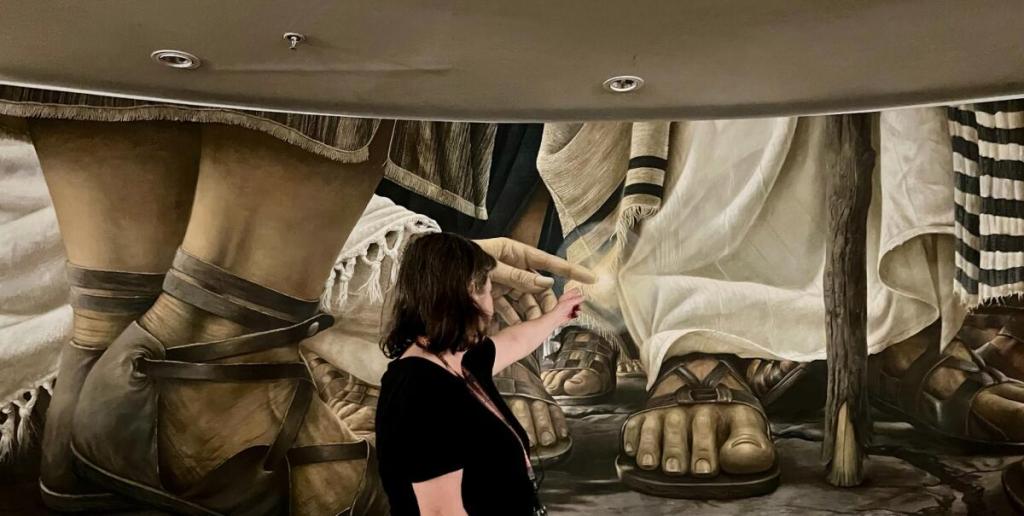
  • Reinforce their unique God-given value, helping each other to build upon their differences to be all God wanted them to be.
  • Realize each have their own place and that is where God has placed them in order to be a guide to many people who look to them for orientation and help. 
  • They all have a light of their own. They don’t need to look to others to get their light from them. As leaders, their influence shines with their own light when using their God-given gifts and influence.
  • They have deep roots preventing them to be like shooting stars. They stand firm in their Christian beliefs and, through this ministry, are being provided with the tools to make a strong impact in their world. 
IF you want to know more about the CLLI ministry, please contact latinaleadershipinstitute.org  

Alicia Zorzoli is a Bible teacher and international lecturer, she has published numerous articles in Christian magazines and books. For more than ten years she has been a part of the CLLI faculty.

Categories: Blog

Por Nora O. Lozano

Please click here to read in English

Al acercarnos al fin de año, diferentes cadenas de noticias han estado informando sobre los principales acontecimientos de este año, así como sobre los desafíos para el próximo año 2026.

Mientras veía CNN, la presentadora de noticias preguntó sobre los principales desafíos a los que nos enfrentamos hoy en día (no recuerdo el programa específico ni los nombres de la presentadora o comentaristas). Una de las comentaristas respondió que nos enfrentamos a tres grandes problemas: vivienda, atención médica y educación superior. Explicó que estos tres asuntos están afectando la vida de los ciudadanos en Estados Unidos, ya que la población de este país tiene dificultades para cubrir los aumentos en los costos de la vivienda (hipoteca o alquiler), la atención médica y la educación superior.

Si eres lector de otro país, es posible que los tres o cuatro problemas con los que tú y tus vecinos se enfrentan estén relacionados con otras situaciones que dependen de sus contextos culturales particulares. Tal vez son la migración, la violencia, el narcotráfico, las pandillas, los feminicidios o algún otro problema social importante.

El hecho es que todas las personas enfrentaremos desafíos durante este nuevo año 2026, los cuales pueden ser personales o sociales.

Volviendo a mi contexto en los Estados Unidos de América, resultó que todos estos desafíos comienzan con la letra “H” en inglés (Housing – vivienda; Health care – atención médica; y Higher education – educación superior). Al reflexionar sobre esto, me di cuenta de que falta una “H”. Es la “H” de la palabra esperanza, la cual comienza con “H” en inglés (Hope)*.

En mi vida como cristiana y como teóloga, me he dado cuenta de que la esperanza es un elemento fundamental y vital en el cristianismo. De hecho, la esperanza es una de las características distintivas del cristianismo. Como personas cristianas, esperamos reencontrarnos con nuestros seres queridos en el cielo; esperamos un futuro mejor; esperamos superar nuestros problemas graves; esperamos que las relaciones complicadas mejoren; esperamos que Dios actúe en nuestro favor; esperamos que nuestras vidas sean mejores porque Jesús nos ha prometido una vida abundante, que comienza aquí y ahora. Podría seguir enumerando la estrecha relación que existe entre el cristianismo y la esperanza.

En su ensayo sobre la esperanza, S. H. Travis menciona que: “Tener esperanza significa esperar con expectación la acción futura de Dios. El fundamento de la esperanza es la actividad pasada de Dios en Jesucristo, quien señala el camino hacia los propósitos de Dios para su creación”. (New Dictionary of Theology, p. 321).

Si el fundamento de la esperanza cristiana se basa en la obra de Dios tal como la ejemplificó Jesucristo, entonces debemos tener paz al pensar en lo que nos deparará el año 2026, independientemente de lo que digan las noticias. Podemos confiar en que el 2026 será un buen año porque sabemos que Dios tiene un buen plan para nosotros. Esto no significa necesariamente que será un año fácil. Es posible que enfrentemos algunas dificultades y desafíos, pero la buena noticia es que no los enfrentaremos solos, porque Dios siempre está con nosotros.

Como líderes cristianas, debemos abrazar y vivir esta esperanza que afirma que Dios siempre está con nosotros y que tiene un buen plan para nuestras vidas. Esta esperanza debe ser un distintivo de nuestras vidas como líderes.

Además, como líderes cristianas que vivimos con esta esperanza, debemos ser como Jesús, portadoras de esta esperanza. Necesitamos compartirla en todos nuestros círculos de influencia: familia, iglesia y comunidad. Al reflexionar sobre cómo compartir esta esperanza, vayamos más allá de las palabras y las ideas, y vivamos de una manera que refleje la vida de Jesús. Él conectó todas sus acciones con los propósitos y planes de Dios.

Al comenzar el año 2026, con todos sus posibles desafíos, acordémonos de la esperanza. Aunque el panorama, según las noticias pueda parecer difícil y desalentador, regocijémonos de tener una esperanza que incluye un futuro marcado por la presencia de Dios y sus buenos planes.

Con esto en mente, entremos al año nuevo con esperanza, confiando en aquel que tiene el futuro en sus manos.

¡Feliz y bendecido Año Nuevo para ti y para tus seres queridos!

*Nota de traducción: Este blog fue escrito originalmente en inglés y, por lo tanto, es posible que algunas partes de la traducción al español no reflejen exactamente el significado original.

Nora O. Lozano es directora ejecutiva y cofundadora del Instituto Cristiano de Liderazgo Latinoamericano y ha participado en la educación teológica cristiana durante más de 25 años.

Por Verónica Martínez-Gallegos

Please click here to read in English

Estamos viviendo tiempos donde la ansiedad se hace presente en nuestra vida cotidiana de forma aguda. Y no hablo de la ansiedad como una enfermedad mental, sino como un afán por las preocupaciones de la vida cotidiana que nos roba la paz. Sobre todo, en estos tiempos de incertidumbre y escasez de alimento, seguridad y estabilidad económica. Entonces, ¿Cómo evitamos sentir ansiedad por un futuro incierto al recordar el cuidado y el amor de Dios?

La palabra “ansiedad” viene del verbo griego miremnao, que significa “estar dividido o distraído”. En latín, la misma palabra se traduce anxius y añade el matiz de “ahorcar o estrangular”. De allí deriva la palabra en castellano ansiedad. Entonces en tiempos difíciles, la ansiedad amenaza con estrangular nuestra vida, dejándonos asfixiados por el temor.          

La ansiedad a la larga drena nuestros recursos y nos deja en banca rota emocional e inmovilidad espiritual. Por esta razón es preciso hacerle frente cuando se nos presenta en tiempos difíciles.

El mal de la ansiedad no es nada nuevo. La biblia habla mucho sobre este tema.

En la parábola del sembrador en Marcos 4, el maestro Jesús pintó en la mente de sus oyentes un cuadro de un agricultor sembrando en cuatro tipos de terreno. En ese cuadro él menciona en el verso 7 que parte de la semilla sembrada entre espinos fue ahogada y no dio fruto.

Aquí la ansiedad brota como hierba mala y espinas, y crece alrededor de la Palabra de Dios, ahogando la vida y la paz que ésta pueda dar. En la lección de la semilla y el terreno, Jesús hace una conexión directa entre los efectos devastadores de la ansiedad y la estrangulación que nos asfixia.

En su libro titulado Cuando se atraviesa tiempos difíciles: ¡Si no es una cosa es otra!Charles R. Swindoll dice que “la ansiedad es dolorosa intranquilidad de la mente que se alimenta con miedos inminentes (amenazadores)”. En otras palabras, la ansiedad nace en nuestra mente y nos atemoriza por cosas que quizá nunca van a ocurrir.

Además, la ansiedad crea efectos malos tales como ataques de pánico y debilidad física y espiritual. Veamos algunos ejemplos, la ansiedad:

–nos hace dudar de Dios y de que Dios es bueno para suplir todo lo que nos falte.

–ahorca lo bueno de Dios en nuestra vida, nuestra fe.

–nos impide distinguir entre lo principal y lo secundario convirtiéndonos en personas que pierden el enfoque de lo importante. Al producir dudas y temores, la ansiedad hace que nos distraigamos con lo temporal y al mismo tiempo descuidemos lo eterno.

–nos hace pensar en cosas que quizá nunca pasarán. Se dice que más del 90% de las cosas por las cuales nos preocupamos nunca acontecerán.

–nos roba la alegría y hace que nos convertimos en personas negativas. Tristemente llevaremos nuestra ansiedad a otras personas.

Entonces, ¿hay algún antídoto para la ansiedad?

El Apóstol Pablo nos da palabras alentadoras:

Regocijaos en el Señor siempre. Otra vez digo:¡Regocijaos! Vuestra gentileza sea conocida de todos los hombres. El Señor está cerca. Por nada estéis “afanosos”, sino sean conocidas vuestras peticiones delante de Dios en toda oración y ruego, con acción de gracias. Y la paz de Dios, que sobrepasa todo entendimiento, guardará vuestros corazones y vuestros pensamientos en Cristo Jesús. Filipenses 4:4-7 (RV 60)

Si actualmente estamos pasando tiempos de ansiedad, leamos Proverbios 12:25 (DHH):

La ansiedad en el corazón del hombre [mujer] lo deprime, más la buena palabra lo alegra.

¿Qué dice Jesús sobre la ansiedad? “NO te preocupes”. No vas a ganar nada con preocuparte.

Por eso les digo que no se preocupen por la vida diaria, si tendrán suficiente alimento y bebida, o suficiente ropa para vestirse. ¿Acaso no es la vida más que la comida y el cuerpo más que la ropa? Miren los pájaros. No plantan ni cosechan ni guardan comida en graneros, porque el Padre celestial los alimenta. ¿Y no son ustedes para él mucho más valiosos que ellos? Mateo 6: 25 y 26 (NTV)

Así que no se preocupen por el mañana, porque el día de mañana traerá sus propias preocupaciones. Los problemas del día de hoy son suficientes por hoy. Mateo 6:34 (NTV)

Si nos enfocamos en el afán y las preocupaciones, nunca sabremos qué es lo que Dios realmente quiere hacer en nuestra vida.

La raíz de la ansiedad es el temor al futuro. Al saber Jesús que la preocupación o la ansiedad sería un dilema que enfrentaríamos el día de hoy, nos manda que no nos preocupemos y que no dejemos que la ansiedad se enraíce en nuestras emociones, en las altas expectativas que tenemos de la vida o de las personas o en asuntos del pasado. Jesús nos invita a ponerle un alto a la preocupación.

Si bien esta temporada del año nos puede traer mucho regocijo, también nos puede traer ansiedad y preocupación debido a las demandas tanto económicas como de tiempo y esfuerzo que enfrentamos. Si en algún momento en estos días la ansiedad o la preocupación nos quieren robar el gozo y la paz, aceptemos la invitación de Jesús a ponerle un alto a la preocupación y a confiar en la provisión de Dios y que Dios tiene cuidado de nosotras siempre.

La Reverenda Verónica Martínez-Gallegos, M.Div., BCC, es capellana y educadora certificada ACPE. Además, sirve también junto a su esposo, quien es miembro del equipo pastoral en la Primera Iglesia Bautista de Duncanville, Texas. Verónica es graduada del CLLI y sirve en el Instituto como presidenta del consejo directivo y miembro de la facultad.  

Por Patty Villarreal

Please click here to read in English

“…Cada una de ellas será una señal. Y el día de mañana, cuando los hijos les pregunten a sus padres qué significan estas piedras, ellos les responderán: ‘Cuando el pueblo cruzó el Jordán, las aguas del río se partieron en dos delante del arca del pacto del Señor. Así que estas piedras son para que los hijos de Israel recuerden siempre lo que aquí pasó …’”

Josué 4:6-7 (RVC)

Cuando lean este blog, estaremos a pocos días de la celebración del 20º aniversario del CLLI, que se celebrará el 25 de octubre en San Antonio, Texas, ciudad natal del Instituto Cristiano para Líderes Latinas (CLLI). ¡Veinte años! Lo que no sabían dos líderes latinas que se conocieron en 2004 es que Dios las usaría para plantar las semillas del comienzo de un movimiento internacional para capacitar a mujeres líderes cristianas desde una perspectiva latina.

Brevemente, para quienes no conocen la historia de los inicios del CLLI, la Dra. Nora O. Lozano y yo nos conocimos en la Universidad Bautista de las Américas (BUA). Después de completar mis estudios superiores, obtener mi licencia como trabajadora social (LMSW) y trabajar en otros campos de trabajo social, regresé a trabajar para Buckner Children and Family Services. Uno de mis roles en Buckner fue servir como maestra de trabajo social en la universidad. Sin experiencia docente en la educación superior, Nora fue designada como mi mentora en su vocación como profesora universitaria. Pronto se dio una amistad.

Normalmente, trabajadoras sociales y teólogas sistemáticas no conviven entre sí. Dios tenía otros planes. Encontramos puntos en común como hermanas en Cristo y como líderes latinas. Como líderes en nuestros respectivos campos, nos pedían formar parte de comités, grupos de trabajo y reuniones estatales, nacionales e internacionales. Al reflexionar sobre estas invitaciones y rechazar algunas de ellas, nos dimos cuenta de que había una enorme necesidad de llenar los vacíos en estas áreas de liderazgo. Se necesitaba que latinas estuvieran presentes en discusiones importantes y donde se tomaban decisiones que afectan a las iglesias y comunidades.

A través de mucha oración, discusiones entre nosotras y consultas con otras líderes latinas en nuestros círculos, se plantaron las semillas del instituto. El Dr. Albert Reyes, entonces presidente de BUA, aprobó que siguiéramos adelante con esta iniciativa. Se necesitaron 15 meses de preparación para iniciar la primera capacitación en enero de 2007 como una clase intensiva en la universidad.

Una particularidad de esta clase del período de enero fue que, junto con las estudiantes de BUA que tomaban el curso de liderazgo para obtener créditos universitarios, también se invitó a inscribirse a mujeres seleccionadas de la comunidad. Estas mujeres eran líderes de la iglesia y del estado. Juntas, participaron y estudiaron en un curso intensivo de una semana (de 9:00 am a 9:00 pm). El grupo docente estaba compuesto por profesoras de BUA y mujeres líderes a nivel estatal y nacional. Otra característica singular fue que el curso se impartió en el Campamento Buckner, cerca de Marble Falls, Texas. Esto se pudo lograr con la ayuda, nuevamente, del Dr. Albert Reyes, quien para entonces había empezado a servir como presidente de Buckner Children and Family Services. Queríamos crear un entorno donde las estudiantes pudieran conectarse entre sí sin sus responsabilidades domésticas y donde pudieran concentrarse en aprender, desarrollar amistades y relaciones y descansar en un ambiente de campamento.

Hay mucho que decir sobre la increíble experiencia que las estudiantes de BUA, las mujeres de la comunidad y el personal docente, compartieron en el momento de la evaluación al final de la semana. Nora y yo quedamos impresionadas por sus respuestas entusiastas y su insistencia en continuar con más materiales y clases. Recuerdo como si fuera ayer la conversación que tuvimos Nora y yo en el camino de regreso a San Antonio. Sabíamos que esto era más que una clase intensiva. Sabíamos que este movimiento tenía que ser plan de Dios y que Dios nos estaba usando para llevarlo al siguiente nivel.

Desde entonces, nos convertimos en un Instituto de BUA y, junto con un grupo de líderes latinas asesoras, ampliamos el programa académico y desarrollamos el currículo del CLLI. En 2015, solicitamos y recibimos la certificación 501©3 como organización sin fines de lucro del estado de Texas. Nuestras asesoras se convirtieron en miembros del consejo directivo. En estos 20 años, hemos capacitado formalmente a líderes en cohortes ubicadas en Estados Unidos de América en Texas y Carolina del Norte, en México en Monterrey, Metepec y Ciudad de México, y en Barranquilla, Colombia.

Como cofundadora, escribo esto con ojos llorosos. Me siento honrada. De acuerdo a la historia en estos versículos, Josué había instruido a los líderes de las 12 tribus de Israel para que tomaran cada uno una piedra de en medio del río Jordán, mientras los sacerdotes sostenían el Arca del Pacto al cruzar el río. Las piedras debían servir como recordatorio para los israelitas de las acciones poderosas, la fidelidad y la provisión de Dios.

Mis lágrimas surgen del recuerdo de mis “piedras” simbólicas, las innumerables mujeres que han sido alumnas y graduadas de las capacitaciones del CLLI. El privilegio de escuchar sus historias, tanto entonces como ahora. Historias de empoderamiento gracias a las clases y las conexiones que hicieron con las mujeres que conocieron, tanto profesoras como compañeras de estudios. He sido testigo de su caminar hacia la libertad de estereotipos y del romper con ataduras que las hacían creer que como mujeres son ciudadanas de segunda clase en el Reino de Dios. Tantas historias con un mensaje de aliento y motivación de “Sí se puede”, donde los estudiantes de CLLI se animan a continuar con sus estudios y su educación superior, a identificar o definir su llamado en la iglesia o en el mundo secular, a desarrollar nuevas amistades y hermandades, y a cultivar una relación más fuerte con Dios.

Todo esto se debe a una cita divina que Dios orquestó hace 20 años: una conexión entre dos líderes latinas que operaban en diferentes círculos. Fue arriesgado porque desafiamos muchas normas al crear el CLLI, pero Dios ya había “abierto el Jordán” y había dicho “¡Adelante”! Y nosotras le seguimos.

Gracias, Dios, por tu fidelidad y provisión mientras seguimos con la trayectoria del Instituto Cristiano para Líderes Latinas. Gracias también a quienes han apoyado este ministerio con sus oraciones y recursos. Ustedes también son parte de esta historia y celebramos su apoyo fiel.

Finalmente, agradecemos a todas los estudiantes y graduadas del CLLI que han participado en las capacitaciones del Instituto. Gracias por confiarnos su formación y desarrollo como líderes.

Al continuar con la celebración de estos 20 años de servicio, también estamos emocionadas anticipando las grandes cosas que Dios hará en el futuro con este ministerio.

Les invitamos a unirse a este ministerio para poder seguir transformando las vidas de muchas mujeres en el nombre de Cristo durante los próximos 20 años. Por favor, consideren incluirnos en sus oraciones y contribuir con recursos financieros. Para ayudarnos a alcanzar nuestra meta de aniversario de recaudar $20,000, por favor, haga clic aquí: https://www.christianlatinaleadershipinstitute.org/friends-donors

¡Adelante en el nombre de Dios!

Patty Villarreal, LMSW, es cofundadora de CLLI y miembro del cuerpo docente. Después de trabajar 43 años como trabajadora social, se jubiló y continúa sirviendo como voluntaria en diferentes iglesias y ministerios comunitarios.

Por Anna Rodriquez

Please click here to read in English

Ya te lo he ordenado: ¡Sé fuerte y valiente! ¡No tengas miedo ni te desanimes! Porque el Señor tu Dios te acompañará dondequiera que vayas. Josué 1:9 (NVI)

Al enfrentar los desafíos políticos y sociales, demostrar audacia sirve como una postura mesurada contra la aprensión y la negatividad. Implica articular las propias perspectivas a pesar de la incertidumbre, aceptar el cambio y apoyar firmemente los valores y aspiraciones personales. Esta valentía surge internamente, no del estímulo externo.

Este principio guió mi respuesta a una situación reciente. Hace poco, recibí una invitación de unas clientes antiguas para desayunar y reconectarnos. Dudé, preguntándome si podría acomodar mis compromisos, pero me di cuenta de que salir de mi zona de confort se alineaba con mis valores. Aunque inicialmente me incliné a rechazar la invitación, el entusiasmo genuino en su voz me impulsó a aceptar.

Las señoras habían planeado cuidadosamente un desayuno para que pudiéramos reconectarnos y compartir historias sobre los éxitos de sus hijos y sus crecientes familias. Cuando me agradecieron, respondí que toda la honra pertenece a Dios, y añadí: “Ustedes hicieron el trabajo difícil; yo hice el trabajo del corazón”. Les recordé que la audacia significa asumir riesgos y actuar con valentía, especialmente ante la incertidumbre.

Elogié a las mujeres por aceptar la incomodidad al probar cosas nuevas, alzar la voz y enfrentar tareas intimidantes. La audacia no consiste en ser ruidosa ni imprudente; es elegir hablar cuando el silencio es más fácil, expresarse con autenticidad y decir sí a la incertidumbre a pesar del miedo.

Mientras conducía a casa después del desayuno, recibí una llamada de mi hija menor. Me contó sobre una experiencia que había compartido previamente en su grupo de mujeres sobre la salud de su esposo. El no se había estado sentiendo bien y fue ingresado a urgencias, donde el personal médico encontró una obstrucción arterial del 99%; estaba al borde de un infarto. Los médicos recomendaron el colocar un stent. Antes del procedimiento, su esposo mencionó que se sentía ansioso.

Mi hija recordó una frase que la impulsó a orar por él. Después, él se mostró más tranquilo y pasó por la cirugía de una manera exitosa. Mi hija me dijo que durante esos moments sentía mi voz —el aliento de su madre— en lo más profundo de su ser, inspirándola a actuar con valentía. Recordó haberme oído orar con asertividad ante diversas situaciones y, al enfrentarse al miedo, comprendió qué pasos debía dar.

Mientras continuamos nuestra conversación, mi hija puso la cereza en el pastel cuando expresó que después de compartir su oración audaz con el grupo de mujeres, ellas ahora han implementado el “enseñar a sus hijas” a orar en voz alta, con audacia, valentía y fe. La audacia no es una característica reservada para unas pocas personas, ni una cualidad innata, es una habilidad que cualquiera puede cultivar y desarrollar. Al elegir la valentía por encima de la comodidad, y al aceptar el tomar riesgos calculados y acciones intencionales con propósito, las personas pueden crear nuevas posibilidades y oportunidades para sí mismas y para quienes les rodean.

La audacia es una rebelión silenciosa contra el miedo. Es una declaración de que tu voz, tus sueños, tu presencia, importan. Así que sé audaz. No porque el mundo lo exija, sino porque tu alma lo exige.

Más todavía, la audacia representa un desafío mesurado al miedo. Es una clara afirmación de que la voz, las aspiraciones y la presencia de cada persona tienen un valor inherente. Es importante buscar la audacia, no por presiones externas, sino porque se alinea con las convicciones propias.

Como líderes cristianas latinas, los miembros de nuestras comunidades recurren a nosotras con frecuencia en sus momentos más difíciles. En estos momentos de desesperación, animarles a ser audaces y alzar la voz contra el miedo que intenta abrumarlas, se convierte en un poderoso testimonio de fe inquebrantable y confianza en el poder de Dios. Esta respuesta valiente refleja nuestra profunda convicción y demuestra a las personas que servimos a un Dios vivo, atento y receptivo.

Cuando elegimos ser audaces y alzamos la voz con fe, inspiramos a quienes nos rodean a creer en lo imposible, a mantenerse firmes en la verdad y a acercarse al trono de la gracia sin vacilar.

Anna Rodriquez es miembro de la junta directiva del CLLI y se graduó del mismo en 2010. Ha trabajado en el campo de los servicios sociales por más de 25 años y tiene una maestría y una licenciatura en administración pública de la Universidad de Texas, Odessa, Texas.

La manera en que miramos

Christian Latina Leadership Institute

Por: Eva Martínez

Please click here to read in English

Por eso yo, que estoy preso por la causa del Señor, les ruego que vivan de una manera digna del llamamiento que han recibido. Sean humildes y amables; tengan paciencia y sopórtense unos a otros con amor… Más bien, sean bondadosos y compasivos unos con otros, y perdónense mutuamente, así como Dios los perdonó a ustedes en Cristo.
(Efesios 4:1-2, 32 NVI)

Como mujeres llamadas por Dios al liderazgo, muy pronto nos damos cuenta de que nuestro servicio se desarrolla en medio de otras personas; es un servicio en relación: “Unos con otros”.  En ese contexto, nuestra forma de mirar a las demás personas —a nuestros colaboradores, líderes o miembros de nuestras iglesias y de nuestra propia familia—es muy importante. La mirada no es sólo una acción física. Es una disposición del corazón, es una manera de percibir las situaciones que vivimos y a las personas que nos rodean.

Probablemente en alguna ocasión hayas visto esta imagen. Esta es una famosa ilusión óptica conocida como Mi esposa y mi suegra. Fue dibujada originalmente por el caricaturista británico William Ely Hill y publicada en 1915 en la revista Puck, con el pie de imagen: “Ambas están en este dibujo — encuéntralas”.

Es un ejemplo de figura reversible: dependiendo de cómo la mires, puedes ver ya sea a una mujer joven mirando hacia un lado o a una mujer anciana de perfil. ¿Qué es lo que ves?  Si solo puedes ver a una mujer joven difícilmente entenderías la descripción que realiza quien ve a una mujer mayor. Pero ambas mujeres están en la imagen, aunque nuestra mirada perciba exclusivamente a una de ellas. Quizás eres de las personas que perciben las dos imágenes. Con algo de apoyo de alguien que te de unas pistas o dedicando un poco más de tiempo y esfuerzo ¿puedes cambiar de una mirada a la otra? Lo importante es reconocer que las dos están ahí.

Este interesante ejercicio nos puede ayudar a reflexionar sobre la importancia de cómo percibimos a las personas con quienes nos relacionamos cotidianamente y cómo nuestra “mirada” puede ser un instrumento para influir positivamente (o no) en su desarrollo.

En mi ministerio he trabajado muchos años en favor de personas con discapacidad intelectual. Gracias a ello he tenido la bendición de conocer a personas valiosas que me han dejado grandes enseñanzas. Como por ejemplo, la importancia de poner el foco en las fortalezas y no en el déficit, de creer en la persona y percibirla no como una receptora pasiva de ayuda sino como ciudadana que puede contribuir a la sociedad con sus talentos. Según sea nuestra percepción de ella, dependerá la forma en que la tratemos e impulsemos el desarrollo de su potencial.

¿Cómo es la mirada que tenemos acerca de las personas con quienes nos relacionamos? ¿Es una mirada que se enfoca en sus talentos y posibilidades o en sus carencias y limitaciones?

Efesios 4 nos invita a vivir de una manera digna del llamamiento recibido, y eso implica asumir una mirada transformada por el evangelio. Tener una mirada que restaura. Pablo nos presenta un camino en nuestro liderazgo, liderazgo en relación: el camino del amor, la humildad, la mansedumbre y la paciencia. “Sopórtense unos a otros con amor”, nos dice. No es una exhortación a la pasividad, sino a la compasión. La palabra “soportar” aquí no es resignarse, sino mantenerse firmes en el amor, incluso cuando la otra persona nos resulta difícil o desafiante. Pues cuando miramos con dureza a otras personas, olvidamos que también nosotros necesitamos gracia, cada día.

Mirar con compasión es ver más allá, como cuando con más tiempo y esfuerzo podemos ver a la otra mujer que está en la imagen; es recordar que la otra persona también está en proceso. Que tiene luchas internas, heridas que no vemos, temores que tal vez no entiende ni ella misma. Tal como me pasa a mí.

Mirar con compasión es ver a la persona con los ojos con que Cristo nos ha mirado a nosotras. Y es en ese contexto que Pablo termina el capítulo diciendo: “más bien, sean bondadosos y compasivos unos con otros”. Repitiendo esto de la existencia de unos y otros, dando la idea de diversidad donde muy probablemente los unos tenían ideas distintas a las de los otros. Y donde se necesitaba una mirada no sólo de compasión sino de desafío, de invitación al crecimiento y desarrollo. “Perdónense mutuamente, así como Dios los perdonó a ustedes en Cristo”. El perdón no nace de un sentimiento momentáneo, sino de una decisión sostenida por la memoria de la cruz. Cuando recordamos cuánto nos ha perdonado Dios, se debilita nuestro afán de condenar, y se fortalece nuestra capacidad de aceptar y restaurar.

La mirada compasiva y la mirada de desafío a ser mejores se alimentan de la seguridad de sabernos amadas por Dios.

Querida amiga en el liderazgo: El Señor no nos ha llamado para levantar muros que nacen de la dureza de nuestra mirada, sino para abrir caminos de posibilidad y reconciliación. No estamos solas en esta tarea. El Espíritu Santo está obrando en ti y en mí, para transformar nuestra manera de ver a las demás personas. Hoy podemos pedirle que nos enseñe a mirar con los ojos de Cristo: ojos que ven más allá de las heridas, que esperan lo mejor, y que bendicen.

Eva Martínez es licenciada en psicología con maestría en salud mental y discapacidad, coordinadora del programa de familias fortalecidas e incluyentes de Effeta ABP, institución que busca impulsar la inclusión y el ejercicio de los derechos de las personas con discapacidad intelectual y sus familias. Es graduada del CLLI Monterrey (2018) y miembro del consejo directivo del mismo. Además, sirve junto a su esposo, Joel Sierra, en el pastorado de la Comunidad Bautista Jiréh de Monterrey. Es mamá de 4 hijos: Andrés, Luz Daniela, Samuel y Miguel.

Por: Verónica Martínez-Gallegos

Please click here to read in English

Las transiciones son cambios o eventos significativos que te mueven de tu zona de confort a un espacio donde habrá que iniciar de nuevo en un territorio desconocido. La vida nos presenta momentos en que, para avanzar, hay que dejar atrás lo conocido, por ejemplo: una relación significativa, el trabajo y los compañeros, un lugar especial y las amistades, incluso una iglesia y queridos hermanos y hermanas.

No es fácil, y no todas las personas lo experimentan. He conocido a personas que han nacido en un lugar y que nunca han salido de su ciudad, o quienes han trabajado toda su vida en un sólo empleo.

No es que un estado sea mejor que el otro. Quedarse en un lugar toda la vida trae estabilidad y algunas personas prefieren eso. Cambiarse de un lugar a otro tiene sus beneficios, tales como iniciar de nuevo, conocer gente diferente y despojarte de cosas acumuladas. Sin embargo, las transiciones por muy positivas que sean siempre van acompañadas de duelo por la pérdida de lo que se deja atrás.

Comparto ese tema porque las transiciones han sido parte de mi vida y en más de una ocasión las he experimentado. La transición más reciente fue cambiarnos mi esposo y yo de Carolina del Norte, en donde vivimos casi treinta años, con la excepción de dos años que estuvimos fuera de allí. En estos treinta años también servimos en varios ministerios muy significativos.

En cada cambio que hemos vivido, la cuestión más importante es saber cómo escuchar a Dios y entender su voluntad. Al ver atrás a todas las veces que hemos tenido que entrar en una etapa de transición, puedo decir sin temor a equivocarme que Dios estaba guiándonos.

Para mi escuchar a Dios significa ser intencional en mi comunicación a través de la oración. La oración para mí es hablar directa y sinceramente con Dios sobre mis deseos, dudas, temores, aflicciones, desacuerdos y frustraciones. Hace muchos años que practico escribir mis oraciones en un diario, y las conversaciones con Dios más importantes de mi vida están escritas allí. De vez en cuando, leo alguno de mis diarios pasados y me gozo al recordar todo lo que he vivido y cómo he experimentado a Dios en mi vida.

La biblia nos habla mucho de las transiciones. Por ejemplo, el pueblo de Israel supo lo que era vivir en transición. Por cuarenta años el Señor les llevó por todo el camino del desierto. Otro ejemplo es de Eliseo quien tuvo que pasar por etapas de transición donde Dios lo guió de un lugar a otro (1 Reyes 17:1-9).  

Además, la biblia nos ayuda a entender las transiciones. Proverbios 16:9 menciona: “uno puede planear su vida, pero el Señor decide lo que a uno le va a suceder” (BDPT). De acuerdo a este verso, nuestras vidas no nos pertenecen pues son del Señor, y sólo Dios establecerá nuestros caminos.

¿Te preguntarás y cómo saber la voluntad de Dios? Algo muy significativo para mí es sentir la paz de Dios. Isaías 26:3 ha sido un pasaje importante en mi vida. ¡Tú guardarás en perfecta paz a todos los que confían en ti, a todos los que concentran en ti sus pensamientos! (NTV).

Sentir la paz de Dios es de suma importancia para mí porque las transiciones pueden convertirse en desiertos. Sin embargo, Dios tiene un propósito en todo lo que sucede. Dios quiere que seamos transformados en el proceso de cambio, que no seamos las mismas personas antes y después de una transición.

Cuando escuchamos decir a una persona que Dios la está guiando a ir a otro lugar, muchas veces parece difícil de explicar y quizá de entender, tanto para la persona misma como para quienes están a su alrededor. Cuando esto sucede es porque Dios ya ha estado trabajando mucho antes en la vida de la persona y en el próximo lugar. Muchas veces Dios usa situaciones para incomodarnos y ayudarnos a visualizar más allá de nuestra comodidad.

Lo cierto, para mí, es que Dios nunca me ha movido de un lugar a otro sin tener planes mejores (Jeremías 29:11). Dios ha planeado la salida y la entrada y todo ha fluido sin ningún contratiempo. Para mí eso es lo que me da la paz, el saber que las cosas no están forzadas y que Dios abre camino de una manera asombrosa. Son esos eventos y detalles que sabemos que sólo Dios los puede hacer.

Quizá estas pasando por una etapa de transición y tienes que tomar una decisión. Mis preguntas serían: ¿ya oraste al respecto? ¿Cómo te ha hablado Dios a través de su Palabra? ¿Qué te ha dicho Dios? ¿Tienes paz al tomar la decisión de un cambio? Tener la seguridad que Dios va contigo te dará la paz para seguir adelante.

“Cuando pases por aguas profundas, yo estaré contigo. Cuando pases por ríos de dificultad, no te ahogarás. Cuando pases por el fuego de la opresión, no te quemarás; las llamas no te consumirán” (Isaías 43:2).

La Reverenda Verónica Martínez-Gallegos, M.Div., BCC, es capellana y educadora certificada ACPE. Además, sirve también junto a su esposo, quien es miembro del equipo pastoral en la Primera Iglesia Bautista de Duncanville, Texas. Verónica es graduada del CLLI y sirve en el Instituto como presidenta del consejo directivo y miembro de la facultad.  

El lado ganador

Christian Latina Leadership Institute

Por: Gabriela Sánchez

Please click here to read in English

Como líderes cristianas en nuestros respectivos ministerios y vidas personales, es inevitable que nos encontremos con nuevos caminos llenos de incertidumbre, enfrentemos desafíos duraderos y guiemos a otras personas durante temporadas difíciles en la vida. En estos momentos turbulentos, podemos intentar depender de nuestra propia fuerza y sabiduría; sin embargo, la historia de Josué 11 nos recuerda que la verdadera victoria no se logra gracias a nuestros propios medios, sino alineándose con el propósito de Dios para nosotras. Josué 11 nos habla de un tiempo en que el rey Jabín de Hazor formó estratégicamente una enorme coalición de reinos para enfrentar a Israel:

“Todos esos reyes salieron a pelear. Sus ejércitos unidos formaban una inmensa multitud. Y con todos sus caballos y carros de guerra cubrieron el terreno como la arena a la orilla del mar”. Josué 11:4

A pesar de estar en una desventaja numérica y general, Josué permaneció del lado de Dios, confió en Su promesa y siguió Sus instrucciones mientras guiaba a Israel en la batalla. Esta poderosa historia nos recuerda tres verdades importantes para enfrentar nuestras propias batallas del presente.

1. Permanecer del lado de Dios nos da confianza y elimina el miedo.
Cuando Josué se enteró de la gran alianza de ejércitos formada para luchar contra Israel, era natural sentir miedo. Sin embargo, Dios habló a Josué:

“Entonces el Señor le dijo a Josué: No les tengas miedo. Mañana, a esta hora, los entregaré a todos muertos en manos de Israel. Después lisia sus caballos y quema sus carros de guerra”. Josué 11:6

Dios tranquilizó a Josué en medio de la incertidumbre. Cuando enfrentamos situaciones inéditas e inciertas en la vida, podemos acceder a la fuente suprema de seguridad y fortaleza en la promesa de Dios. El miedo que antes nos paralizaba pierde su fuerza cuando nos enfocamos en Su promesa. Como mujeres líderes, a menudo se nos llama a tomar decisiones difíciles, a enfrentar situaciones que parecen insuperables o a entrar en lo desconocido. Pero Dios nos recuerda: “No tengas miedo”. Estar de su lado es nuestra fuente de confianza y fortaleza. Cuando alineamos nuestro corazón y acciones con Dios, podemos vivir con valentía, sabiendo que Dios va delante de nosotras.

2. Estar del lado de Dios nos ayuda a ser persistentes y a luchar con un sentido de propósito.
La victoria rara vez llega sin persistencia. Un detalle de este pasaje que llamó mi atención fue el hecho de que los israelitas no ganaron simplemente una batalla, ni dejaron de luchar al ver que sus enemigos comenzaban a huir. Persiguieron a sus enemigos sin descanso, impulsados por la confianza de que Dios peleaba por ellos.  

“Y el Señor les dio la victoria sobre sus enemigos. Los israelitas los persiguieron tan lejos como Gran Sidón y Misrefot-maim y, hacia el oriente, por el valle de Mizpa, hasta que no quedó ningún guerrero del enemigo con vida”. Josué 11:8

Esto estuvo lejos de ser una victoria pasiva. Requirió acción valiente, resiliencia y una fe inquebrantable. Cuando estamos del lado de Dios, recibimos el poder de seguir adelante, incluso cuando el camino es largo y los obstáculos parecen imposibles. Nuestro sentido de propósito se renueva porque sabemos que nuestros esfuerzos están alineados con un propósito superior.

Como mujeres líderes, la persistencia a menudo es necesaria en nuestros ministerios, lugares de trabajo y familias. Habrá temporadas en las que el progreso parezca nulo o lento. En esos momentos, recuerda avanzar con perseverancia. No te rindas y sigue confiando en Dios.

3. Permanecer obedientes a la voluntad de Dios asegura la victoria
Una lección importante de Josué 11 está en el poder de la obediencia. La victoria de Josué no fue el resultado de superioridad militar ni de habilidades de combate excepcionales. La victoria fue el resultado de la obediencia cuidadosa a las instrucciones de Dios.

“Y Josué hizo lo que se le indicó, obedeció cuidadosamente todos los mandatos que el Señor le había dado a Moisés. Así que Josué conquistó toda la región: la zona montañosa, todo el Neguev, toda el área que rodea la ciudad de Gosén, las colinas occidentales, el valle del Jordán, los montes de Israel y las colinas de Galilea”. Josué 11:15b-16

La obediencia no siempre es fácil. Requiere humildad, entrega y disposición para seguir la guía de Dios, aun cuando no comprendamos del todo Su plan. Josué obedeció TODOS los mandamientos que el Señor le dio. Sin excepciones y sin atajos. Este pasaje nos enseña que la obediencia es la llave para abrir la puerta de victoria que Dios desea para nuestras vidas. Finalmente, como líderes en nuestras comunidades, es esencial modelar la obediencia ante quienes nos rodean y a quienes se nos ha confiado para liderar. Hacerlo puede convertirse en un testimonio poderoso de nuestra confianza y fidelidad a Dios, e inspirar a otras personas a hacer lo mismo.

La historia de Josué no es una historia antigua y olvidada. Está aquí como una promesa viva y disponible para quienes se alinean con la promesa de Dios. Mientras escribía este blog, recordé una historia ocurrida durante la Guerra Civil. En medio de la batalla, uno de los asesores del presidente Lincoln le preguntó si había orado para que Dios estuviera de su lado. El presidente respondió: “Señor, no me preocupa si Dios está de nuestro lado; mi mayor preocupación es estar del lado de Dios, porque Dios siempre tiene la razón”.

Cuando elegimos el lado de Dios, Dios nos concede la victoria. Las batallas que enfrentamos en nuestros ministerios, lugares de trabajo y vidas personales son muy diferentes a la de Josué 11, sin embargo, la promesa de Dios permanece inalterable.

Te invito a reflexionar sobre las siguientes preguntas: ¿Qué batallas enfrentas hoy? ¿Cómo puedes alinearte del lado de Dios en la batalla? ¿Cómo puedes ayudar a otras personas a recordar la promesa de Dios mientras atraviesan tiempos difíciles?

A manera de conclusión, les animo una vez más a recordar: Debemos procurar siempre estar del lado de Dios, porque su lado siempre es el ganador.

Gabriela Sánchez es graduada del CLLI y sirve como miembro del consejo directivo del mismo. Sánchez es también graduada de la Universidad de Carolina del Norte, Charlotte con una licenciatura en administración de empresas y de la Universidad de Wake Forest con una maestría en administración de empresas. Vive con su esposo Erick y su hijo Liam en Charlotte, Carolina del Norte, donde sirve en el ministerio de medios audiovisuales en su iglesia bautista local La Voz de la Esperanza.

Por Carolyn Porterfield

Please click here to read in English

Algunas historias del Evangelio son memorables, como la de Jesús alimentando a los cinco mil en Juan 6:1-15. Inicialmente, pensé que su punto principal era que Jesús alimentaba a la gente hambrienta por compasión. Sin embargo, una mirada más profunda revela una lección de liderazgo valiosa para el crecimiento personal.

Esta historia ejemplifica el desarrollo del liderazgo. Jesús había escogido a doce hombres como su equipo para continuar su misión después de que él se fuera. Necesitaba que comprendieran y llevaran a cabo la misión que les había confiado.

En esta historia, Jesús sabía que quería alimentar a la multitud que lo seguía. Preguntó a Felipe: “¿Dónde compraremos pan para esta gente?” Felipe comentó que el costo era demasiado alto para lograr lo que Jesús pretendía.

Entiendo la situación de Felipe. Una vez dirigí un equipo creativo con ideas costosas, y mi respuesta inicial a menudo era “No tenemos dinero para eso”, lo que apagaba su creatividad y obstaculizaba nuestra misión. ¿Qué hubiera pasado si Jesús hubiera estado de acuerdo con Felipe y hubiera despedido a la gente?

Andrés llevó a Jesús a un niño que tenía cinco panes pequeños de cebada y dos peces. Teniendo en cuenta la gran multitud que había que alimentar, Andrés cuestionó la suficiencia de esta pequeña cantidad. ¿Alguna vez has tenido una experiencia similar como líder? Tienes algunos recursos, pero parecen muy inadecuados para la misión.

Una organización sin fines de lucro en California tenía como objetivo proporcionar alimentos y vivienda a las personas sin hogar. Los recursos eran limitados. Se inició un gran proyecto para construir una nueva instalación, pero algunos líderes de la ciudad y del vecindario plantearon objeciones que podrían detener el proyecto. Se requería una cantidad considerable de dinero para terminar el edificio, y había un plazo estricto que debía cumplirse, o el proyecto se daría por concluido.

Durante una reunión de emergencia de la junta directiva, las sugerencias de recaudación de fondos fueron rechazadas repetidamente hasta que un miembro propuso una opción diferente. Dijo que había visto lo que el hombre podía hacer. Ahora quería ver lo que Dios podía hacer. La gente oró y se fue a sus casas. A la mañana siguiente, Dios proveyó justo lo que se necesitaba. El edificio se inauguró y la misión de alimentar y albergar a las personas sin hogar continuó.

En una colina cubierta de hierba en Galilea, el equipo de Jesús vio lo que él podía hacer. Tomó lo que se le ofrecía, dio gracias por ello e instruyó a los discípulos para que dieran los panes y los peces a la gente. Hubo más que suficiente y hasta sobraron doce cestas de panes de cebada.

Esta historia describe tres aspectos importantes que quienes son líderes deben entender. 1) La obra de Dios 2) hecha a la manera de Dios 3) tendrá los recursos necesarios que Dios proveerá. Recuerda, estás llevando a cabo las tareas que Dios te ha confiado. Dios te ha dado talentos, habilidades, experiencias y relaciones que te convierten en la persona que Dios te ha creado para ser.

A veces puedes sentirte inadecuada, como Felipe, que dudaba de su capacidad para conseguir los fondos necesarios, o Andrés, que ofrecía panes y pescados, pero no tenía fe en que sería suficiente.

Jesús tomó lo que parecía inadecuado a los ojos de los discípulos y dio gracias por ello. Con demasiada frecuencia nos enfocamos en lo que creemos que nos falta en lugar de reconocer lo que tenemos. Da gracias a Dios por todo lo que te ha dado: tu mente, talentos, habilidades, dones espirituales y pasión por ayudar a las demás personas y lograr un cambio duradero. Ofrécele todo eso a Dios para que lo bendiga.

Cuando era una joven graduada de la universidad, Dios me llamó a ir a Japón para compartir el Evangelio. El desconocimiento del idioma o la cultura se vio agravado por sentimientos de insuficiencia. Una mañana, desesperada, le dije a Dios por qué no debía estar en Japón debido a todas las cosas que yo no era y que no podía hacer. Dios me recordó gentilmente que levantara mis ojos hacia él porque Dios era el creador del cielo y la tierra. Dios me dijo que yo era hechura suya, creada en Cristo Jesús, para hacer las cosas buenas que Dios ya había preparado para que yo hiciera. Miré a mi alrededor el hermoso escenario y pensé en la maravillosa gente japonesa. Si Dios podía hacer eso, Dios podría tomar mis “panes y peces” y usarlos para compartir el Evangelio.

Mi oración de desesperación se convirtió en una oración de acción de gracias. Dios tomó lo que le ofrecí, lo bendijo y fue suficiente. Dios me mostró dónde usar mi talento para cantar y tocar la guitarra para compartir el Evangelio en las iglesias, en una escuela de enfermería y en el centro comunitario donde trabajaba. Dios quería que usara mi habilidad de escribir a máquina como una puerta para enseñar a escribir y discipular a un nuevo creyente. Dios usó mi don espiritual de enseñar para bendecir a mis estudiantes de ESL (inglés como segundo idioma). Cuando hacemos la obra de Dios a la manera de Dios, Dios proveerá los recursos que necesitamos para hacer lo que nos ha pedido.

¿Qué es eso aparentemente imposible que Dios te está pidiendo en esta etapa de tu vida? ¿Estás dispuesto a darle a Dios lo que tienes y confiar en que Dios te bendecirá para su gloria y la de las demás personas? Nunca se sabe. Es posible que Dios quiera usarte para ayudar a alimentar a cinco mil personas.

Carolyn Porterfield vive en Irving, Texas y se desempeña como presidenta del Comité Académico del CLLI. Le encanta ver a Dios usar a las personas para hacer su obra.

Por Patty Villarreal

Please click here to read in English

Durante esta temporada, la gente cristiana celebra la vida, muerte y resurrección del Señor Jesucristo. Mi iglesia sigue el calendario litúrgico cristiano. Así, durante el Domingo de Ramos, los niños y niñas marchan de un lado a otro de los pasillos del santuario agitando hojas de palmas que conmemoran la entrada victoriosa de Jesús en Jerusalén antes de su muerte.

Recientemente vi esta representación de la entrada victoriosa de Jesús en la pantalla grande de un cine. Soy una gran apasionada de la serie The Chosen (El Elegido). En este momento, estoy siguiendo la serie actual de la parte 5: “La Última Cena”. Fue con lágrimas en los ojos que observaba esta muestra de adoración sincera a nuestro Señor. ¡Cómo habría sido esa escena si hubiéramos podido presenciarla!

Sin embargo, no todos estaban de celebración. Muchas personas malinterpretaron lo que esto significaba en el plan de Dios para su creación. Fue el principio del fin de la vida de Jesús en esta tierra. Una vida que nos mostró cuánto nos ama Dios realmente y que el ministerio de Jesús fue uno de reconciliación, de unificarnos con Dios.

Uno de los acontecimientos que sucedió después de la entrada triunfal en Jerusalén fue la Última Cena. En ese momento, Jesús dijo que otro vendría a ayudarnos. Se estaba refiriendo al Espíritu Santo, la tercera persona de la Trinidad. En Pentecostés, el principio del plan siguiente de Dios, comenzó la obra de la Iglesia y del movimiento cristiano, bajo el poder del Espíritu Santo.

Y aún continúa.

Cuando terminen las cantatas y dramas de celebración del Domingo de Resurrección; cuando los servicios de adoración hayan acabado; cuando terminen los días de campo en la iglesia y/o en la familia; cuando las búsquedas de huevos se acaban y los pedazos de cascarones se caen del cabello y todo está dicho y hecho, ¿qué pasa entonces? La obra del mensaje de Resurrección continúa.

Al continuar con esta sagrada obra, quisiera ofrecer un recordatorio y una bendición:

El recordatorio – Somos receptores de la Gran Comisión. La obra de la Iglesia continúa. Como seguidores de Cristo, debemos servir como ministros de reconciliación. Una de nuestras graduadas del CLLI, Jana Atkinson Morga, recientemente me introdujo a un libro, The Lives We Actually Have: 100 Blessings for Imperfect Days (Las vidas que realmente tenemos: 100 bendiciones para días imperfectos). [Traducción de la autora], de Kate Bowler y Jessica Richie. Una de las secciones de bendición favoritas para mí es un extracto de “para cuando estés cansado de los sistemas descompuestos” (p. 124-125):

“Oh Dios, cuán bienaventurados somos los que clamamos a ti: Danos el poder de ver y distinguir lo que está descompuesto, lo que es nuestro para restaurar. Guíanos para encontrar alternativas coherentes y hermosas que fomenten la vida, la esperanza y la paz. Ayúdanos a usar nuestros dones uno con el otro en unidad. Bendecidos somos los que elegimos vivir en anticipación, nuestros ojos escudriñando el horizonte en busca de señales de tu reino—el cielo descienda— mientras esperamos”. (Traducción de la autora)

Jesús nos invita a unirnos a su ministerio de reconciliación: “Entonces dijo a sus discípulos: A la verdad la mies es mucha, mas los obreros pocos. Rogad, pues, al Señor de la mies, que envíe obreros a su mies” (Mateo 9:37-38 Reina-Valera). Jesús nos llama a ser estos trabajadores que se necesitan para cosechar el campo mientras ofrecemos en su nombre alternativas que fomentan la vida, la esperanza y la paz.

La bendición – Somos líderes ocupadas. Nuestro papel como “personas influyentes” (influencers) y nuestras tareas de liderazgo nos mantienen bastante activas. Además del llamado y ministerio específicos que Dios nos ha dado, sé que muchas de ustedes tienen carga en su espíritu por encontrar a la gente perdida, sanar a los quebrantados en espíritu, alimentar a los hambrientos, liberar a los oprimidos y traer paz a todas las personas. Es una carga santa y un privilegio santo. Somos bendecidas de ser mensajeras de Su Amor. Tenemos la oportunidad de “influir” en otras personas y guiarlas hacia el camino de la reconciliación proclamando las buenas nuevas de que Jesús pagó por nuestros pecados y por los del mundo entero.

Como mensajeras de Jesús, todos los días, en todos los sentidos, en todo lo que hacemos y en todo lo que decimos, la obra de la Resurrección continúa.

¡Adelante en el nombre de Jesús y en el poder del Espíritu Santo!

Patty Villarreal, LMSW, es cofundadora de CLLI y miembro del cuerpo docente. Después de trabajar 43 años como trabajadora social, se jubiló y continúa sirviendo como voluntaria en diferentes iglesias y ministerios comunitarios.

Por Marcela Ordaz

Please click here to read in English

Este año celebro mis 44 años con la certeza de que no cambiaría la energía de los 20 por la sabiduría y el temple de los 40. Cada década nos moldea y fortalece, y hoy más que nunca, sé que las mujeres estamos llamadas a liderar con propósito.

Hemos visto a mujeres romper barreras y ocupar espacios donde antes no tenían voz: primeras ministras, ejecutivas en grandes industrias, mujeres en posiciones claves tanto en el Vaticano como en muchas denominaciones protestantes y líderes comunitarias que transforman realidades. El mensaje es claro: no necesitamos pelear por nuestro lugar, sólo debemos prepararnos, porque el mundo ya está cambiando, y nosotras con él.

Este año, Christian Latina Leadership Institute (CLLI) celebra 20 años empoderando mujeres que han tomado las riendas de su destino, bajo la dirección de Dios, y han decidido formarse, fortalecerse y liderar.

Nuestro propósito sigue firme: equipar a más mujeres con herramientas para liderar en sus comunidades, iglesias y profesiones. Como parte de las celebraciones de este año, una de nuestras metas es alcanzar $20,000 en donaciones durante 2025, pero el verdadero objetivo sigue siendo impulsar el crecimiento de cada mujer que decide prepararse para su llamado. No se trata sólo de ocupar un lugar en la mesa, sino de cambiar la conversación y crear nuevas oportunidades.

El poder de Dios se perfecciona en nuestra debilidad, y en esa verdad encontramos la fuerza para seguir avanzando. No se trata de demostrar nada a nadie, sino de reconocer que lo que has logrado es un regalo y una responsabilidad que inspira a otras mujeres, jóvenes y niñas a creer que también pueden.

Durante estos 20 años hemos escuchado muchos testimonios inspiradores que invitan a seguir adelante. Queremos compartir algunos de estos testimonios contigo.

Alondra Bustamente – CLLI North Carolina:

¡Comenzar el entrenamiento del CLLI fue la mejor decisión! ¡Las clases han sido muy edificantes, útiles y de bendición para mí! Habiendo crecido en un entorno donde las mujeres eran vistas como inferiores, las clases de CLLI me han enseñado sobre el valor, la dignidad y el llamamiento de las mujeres. Ahora, mi objetivo es compartir este conocimiento con otras mujeres que enfrentan una experiencia similar a la mía.

Vania A. López – CLLI Metepec:

El tomar los cursos del CLLI me ha ayudado a disipar una gran neblina que afectaba mi vida y a confirmar que Dios tiene grandes planes para mí. Cada una de las clases ha llenado mi corazón de orden, entendimiento y paz. Sólo puedo expresar gratitud por estar en este lugar privilegiado de estudio.

Sara Vargas – CLLI North Carolina:

CLLI me ha ayudado mucho en mi formación como líder. Es un entrenamiento que abarca las luchas de la mujer, incluyendo tanto la perspectiva de género como la étnica. Ser líder conlleva mucha responsabilidad, y el CLLI está precisamente para educar y preparar a esa líder que llevamos dentro.

Rosario Gutiérrez Dorantes – CLLI Ciudad de México:

Por mucho tiempo estuve orando para que Dios me revelara mi ministerio específico. El CLLI vino como una respuesta a esta oración pues me ha ayudado a discernir mis dones y la mejor manera de usarlos. Si bien el enfoque principal del CLLI es liderazgo, la educación es integral pues incluye todas las áreas de la vida. Por esto hoy soy una mejor líder para la gloria de Dios. Gracias a todas las personas que apoyan este ministerio pues me están ayudando a alcanzar el propósito de Dios para mi vida.

Al reflexionar en estos 20 años estamos tan agradecidas por todos los testimonios de transformación y empoderamiento que hemos escuchado en la comunidad del CLLI. A la vez, esperamos con anticipación lo que Dios seguirá haciendo en medio de esta comunidad.

Dios nos sigue llamando a transformarnos y servirle mejor. ¿Estás lista para tu momento? ¿Cuál es el siguiente paso que darás en tu camino hacia un liderazgo más influyente, productivo y eficaz?

Marcela Ordaz es graduada del CLLI y sirve como miembro de la facultad del mismo. Además, es apasionada por la organización de eventos industriales y se desempeña en el rol de directora de ventas en FABTECH México desde 2005 y como anfitriona del podcast Industrial Talks LA. Su compromiso se centra en impulsar la educación, capacitación y empoderamiento, especialmente dirigido a mujeres en organizaciones sin fines de lucro.

Por Ana Castellano

Please click here to read in English

Durante el mes de febrero en muchos países se celebra el día de San Valentín o día del amor y la amistad. Si bien es cierto que este mes nos ofrece la oportunidad de celebrar a quienes amamos y agradecerles por su presencia en nuestras vidas, este mes ofrece también una oportunidad para reflexionar en el tema del amor.

Como cristiana, muchas veces he leído el capítulo del amor que se encuentra en 1 Corintios 13. Al hacerlo, me he hecho la pregunta de cómo utilizar en mi vida este concepto expuesto por el Apóstol Pablo, especialmente los versículos del 4 al 8:

El amor es sufrido, es benigno; el amor no tiene envidia, el amor no es jactancioso, no se envanece;no hace nada indebido, no busca lo suyo, no se irrita, no guarda rencor;no se goza de la injusticia, mas se goza de la verdad. Todo lo sufre, todo lo cree, todo lo espera, todo lo soporta. El amor nunca deja de ser…” (1 Corintios 13:4-8 RVR 1960)

Este texto se encuentra después de una larga exposición acerca de cómo servir en la iglesia local usando nuestros dones con humildad, evitando el aparentar o creer que somos mejores que las otras personas. En este escrito quiero reflexionar en la manera en que yo entiendo este pasaje y mi forma de aplicarlo en mi vida. Te invito a reflexionar conmigo.

Quiero comenzar con la idea de que el amor es sufrido. Una parte importante que he aprendido en el ministerio es estar dispuesta a pagar el precio. He aprendido que no soy moneda de oro para caerle bien a todas las personas. Es decir, habrá gente que no me va a ver con cariño, incluyendo personas en la iglesia local. Estas hermanas o compañeras de trabajo pueden llegar a ser piedras de tropiezo en mi ministerio y reconozco que ganarlas puede ser muy difícil. Estas experiencias me ayudan a no sentirme más o superior que otras personas, sino a tener un mayor cuidado al hablar o actuar. Muchas veces he llorado, me he alejado de personas, pero he aprendido a preguntarle a Dios: ¿Qué me quieres enseñar con esto?

Esta pregunta que me he hecho en lo personal, me ha llevado a usarla como una herramienta en mi ministerio. Cuando veo a alguna hermana en problemas le animo a preguntarle a Dios qué le quiere enseñar hoy.

El amor es benigno, no tiene envidia. Como hija de Dios y líder en su ministerio, debo ser benigna con otras hermanas y con mis compañeros de trabajo. No debo envidiar, ni hablar mal de las personas a sus espaldas. Si tengo algo en contra de alguien o no me gusta su actitud hacia mí, debo hablar con esa persona y preguntarle si le hice algún agravio. Reconozco que a veces hay gente que se ha enfadado conmigo y yo ni siquiera me he dado cuenta de eso. Así que he aprendido a escuchar más que hablar. Eso no lo hacía antes. Además, antes me jactaba de todo lo que he estudiado y mis títulos, como si eso me mantuviera el corazón lleno. La verdad es que Cristo es el único que debe llena mi alma. Así que debemos preguntarnos cada día ¿Quién llena mi corazón? Y luego hacer los ajustes necesarios. 

El amor no hace nada indebido, no se irrita, no guarda rencor. Recuerdo que cuando no era cristiana yo decía: “el que me la hace me la paga”. Hermanas, todavía el día de hoy tengo una lucha constante para no irritarme. Lo bueno es que ahora puedo controlar el enojo más rápido que antes. Una de mis oraciones más constantes es que Dios me ayude a ser de bendición para otras personas. No lo he logrado al cien por ciento, pero prosigo hacia la meta. Día a día, paso a paso, allí voy. La Palabra de Dios me ha ayudado mucho a cambiar mi forma de ser. Esta parte del amor me ha costado más que otras, pero sigo buscando alabar a Dios, un día a la vez. ¿Es algo que se te hace difícil también a ti?

En este mundo hay mucha injusticia. Veo los noticieros y a veces me dan ganas de llorar por todo lo que pasa y cómo muchas personas abusan de otras sin ninguna compasión o benignidad. En mi trabajo también, día a día escucho historias de abuso de diferentes formas. He llorado con personas al escuchar sus historias. Al mismo tiempo me alegro mucho con aquellas personas que mejoran su condición de vida. La justicia es algo que Dios espera de mí y es algo que debo aprender a hacer cada día.

El amor nunca deja de ser. Amar es el privilegio más grande que tenemos. Dios es amor (1 Juan 4:8); y porque le hemos conocido poseemos la habilidad de mostrar un amor más cercano al de Dios que el amor que muestra el mundo. El amor de acuerdo al mundo está lleno de envidia, rencores, jactancia y envanecimiento. Es un supuesto amor que hace cosas indebidas, busca lo suyo propio, está lleno de irritabilidad y rencor, se goza en la injusticia, nada soporta, nada cree, no sufre, no espera nada y se termina.

Si queremos ser líderes que reflejan a Cristo debemos mostrar a otras personas el amor de acuerdo a Dios y no de acuerdo al mundo

Este amor de acuerdo a Dios es lo que nos dará credibilidad como líderes cristianas. La Biblia es clara al decir que podemos tener todos los dones más preciados, las habilidades más buscadas, pero si no mostramos el amor de Dios en lo que hacemos, lo que hagamos es como un ruido intenso en los oídos de Dios y de las personas a nuestro alrededor.

Un poco más adelante este capítulo alude a la idea de que cuando somos niños, hacemos las cosas de niños. Sin embargo, ahora que ya somos grandes debemos hacer las cosas de las personas grandes (1 Corintios 13:11). Si hemos madurado en el Señor, hagamos las cosas del Señor, no las del mundo. Este pasaje de 1 Corintios 13:4-8 nos enseña esto mismo, a ser y actuar como hijas de Dios, maduras y en el proceso de santificación.

Les invito a que nos dispongamos a utilizar este concepto del amor que el Apóstol Pablo nos dejó y a mejorarlo a diario en nuestras vidas. Dios nos bendiga y nos ayude en nuestro camino hacia la meta común: servir como Cristo lo hizo hasta poder verle cara a cara. 

Ana Castellano nació en Venezuela y está casada con Roberto Jiménez. Juntos tienen tres hijos, Abigail, Naomi y Daniel. Ella es graduada del CLLI (2014) y trabaja con niños de 6 a 17 años en una clínica de salud mental. Su esposo es pastor de la Iglesia Bautista Trinidad y juntos trabajan para llevar el evangelio a otras personas. Ana y su familia viven en San Antonio, Texas.

Por Nora O. Lozano

Please click here to read in English

Mientras seguía reflexionando sobre el comienzo de un año nuevo y las oportunidades que tenemos por delante en los próximos 11 meses, me enteré del reciente accidente aéreo que ocurrió cerca del aeropuerto Reagan de Washington D.C., donde murieron 67 personas. Este accidente inevitablemente me recordó otro accidente aéreo que también ocurrió en enero, pero hace 5 años. En este otro accidente murieron el jugador de baloncesto Kobe Bryant, su hija y otras siete personas. Estas nueve personas viajaban en California, en helicóptero, para asistir a un partido de baloncesto. De repente tuvieron un accidente y todos fallecieron.    

Cada vez que sucede algo así, mis redes sociales se inundan de mensajes de sorpresa, así como de mensajes sobre la fragilidad de la vida y cómo debemos centrarnos en las cosas significativas que son las que más importan. Cuando sucede algo así, muchas personas pensamos en la necesidad de expresar nuestro amor a quienes son importantes para nosotros, así como en la importancia de aprovechar el momento. ¿Por qué? La vida es frágil. No sabemos si volveremos a tener la oportunidad de abrazar y besar a una persona amada. No tenemos garantía de que mañana estaremos aquí en esta tierra, ni de que las personas que amamos estarán con nosotros mañana.

Uno de los pasajes bíblicos que escucho a menudo en estas situaciones es: “Enséñanos de tal modo a contar nuestros días, Que traigamos al corazón sabiduría” Salmo 90:12 (RVR 1960). El mensaje es muy claro: aprovecha la oportunidad que tienes ahora porque el mañana no está garantizado. Hay que ser sabios con el tiempo que tenemos en esta tierra, porque no sabemos cuando se va a terminar.

Este mensaje se puede aplicar a todos los ámbitos de la vida. Fácilmente podemos meditar en este texto y agregar: Enséñanos a contar nuestros días (y oportunidades y bendiciones), para que adquiramos un corazón sabio. Hoy quiero invitarte a pensar en todo esto en el contexto de la comunidad del CLLI.

¿Cuáles son las cosas que tú/nosotras tenemos ahora mismo en el CLLI? ¿Cuáles son las oportunidades que debemos valorar aquí en el CLLI? Oportunidades que no debemos dar por sentadas porque no están garantizadas en el futuro.

En primer lugar, piensa en la oportunidad que tienes de participar en un entorno educativo, ya sea como estudiante, docente o coordinadora del CLLI. No podemos dar esto por sentado. ¿Sabes a cuántas personas en el mundo les encantaría estar aprendiendo en un salón de clases? Sin embargo, no pueden porque tal vez su país está en guerra o sufriendo un desastre natural, o tal vez tengan que trabajar muchas horas para mantener a su familia, o tal vez pasen sus días buscando comida, agua o refugio sólo para sobrevivir.

Como estudiante del CLLI, estás estudiando y aprendiendo porque hay personas que están invirtiendo en ti. Lo más probable es que un donante generoso del CLLI esté dando para que tú puedas tener una beca y así estudiar en tu sitio local del CLLI. No podemos dar por sentado ese apoyo financiero. Así que aprovecha la oportunidad que tienes ahora mismo.

Quizás en este momento tengas el apoyo de tu cónyuge, padre o madre, hijos u otros familiares. No lo des por sentado. No sabemos durante cuánto tiempo tendremos a esas personas amadas con nosotras.

Este es el tiempo que Dios te ha dado, aprovéchalo ahora mismo. Aprovecha el momento para profundizar en tu relación con Dios, para obtener conocimientos en tu salón de clases físico o virtual, para aprender a través de tus tareas y experiencias con tu grupo del CLLI y para nutrir tu relación con tus hermanas del CLLI. Aprovecha la oportunidad, úsala de la mejor manera. Aprovecha al máximo el tiempo y la oportunidad que tienes ahora.

Dios nos ha dado muchos dones y espera que seamos como el “buen siervo fiel” de la parábola de los talentos en Mateo 25. Dios desea que usemos estos dones de la manera correcta para que así se multipliquen, dándole gloria y ayudando a cumplir su propósito.

Si bien, las tragedias de estas personas que murieron en estos accidentes aéreos son extremas, y ojalá esto no nos suceda a nosotros, la Biblia siempre nos desafía a ser buenos administradores de los dones ordinarios y extraordinarios que hemos recibido, las cosas grandes y las cosas pequeñas.

Así que presta atención, mira a tu alrededor, valora lo que tienes, agradece por ello y aprovéchalo de la mejor manera posible. En el caso de las estudiantes del CLLI y de cualquier estudiante en general, les invito a considerar que recibir una educación es un regalo. Es un privilegio. No lo des por sentado. Por eso, les invito a ser buenos administradores de la oportunidad que han recibido. Puede que esta oportunidad nunca se presente de nuevo.

Y lo mismo se aplica para todas las demás personas que estamos leyendo esto y que no somos estudiantes. Sin importar la etapa de la vida en la que nos encontremos, también debemos orar: Enséñanos a contar nuestros días (y oportunidades y bendiciones), para que adquiramos un corazón sabio.  

Un año nuevo está enfrente nuestro. ¡Pidamos a Dios un corazón sabio, lleno de gratitud y listo para aprovechar el momento!

Nora O. Lozano es directora ejecutiva y cofundadora del Christian Latina Leadership Institute (CLLI), y ha estado involucrada en el campo de la educación teológica cristiana por más de 25 años.

Por: Verónica Martínez-Gallegos

Please click here to read in English

Cada año tenemos la oportunidad de tener un nuevo comienzo. Esa frase trillada la escuchamos cada inicio de año, aunque realmente un comienzo nuevo lo tenemos con el amanecer de cada día. Sin embargo, nos gusta pensar que sólo a inicios de un nuevo año podemos comenzar de nuevo.

Podríamos cambiar nuestra manera de pensar al hacernos nuevas metas al inicio de un nuevo día, semana, mes o de cada trimestre al año. Podría ser una forma más practica de lograr objetivos a corto y largo plazo. Si pudieras comenzar algo de nuevo, ¿cuál sería ese proyecto en tu vida? ¿Qué tal si empezamos de adentro hacia fuera? Todas las personas tenemos conflictos internos y formas de relacionarnos que nos gustarían mejorar.

Hace un par de años descubrí el trabajo de la psicoanalista Karen Horney. A través de su teoría constructiva inicié un nuevo comienzo, una limpieza interior de mi pensamiento. Horney plantea tres conceptos básicos: el mal básico que inicia cuando no se satisfacen las necesidades básicas en la infancia, haciendo que luego se desarrolle una hostilidad básica y después una ansiedad básica, que cada persona combate de tres maneras: acercarse, confrontar y distanciarse de las personas. 

Estas tres maneras de relacionarnos con las demás personas tienen dos lados y se conectan en cómo pensamos de nosotras mismas y en lo que hemos internalizado. Horney también planteó la autoconciencia del yo. Cuando la persona pierde la conciencia de su yo real y vive con la percepción de un yo ideal o un yo despreciado, estos pensamientos no dejan espacio para que la persona viva en su autenticidad, que es donde se puede encontrar el potencial de crecimiento o autorrealización.

Con el yo ideal se piensa en un perfeccionismo ilusorio y el mensaje interno es: “debería ser…, o creer que ‘yo soy’”. En el yo despreciado se piensa en autoevaluaciones falsas o negativas y el mensaje interno es: “No soy lo suficientemente buena”.

Por ejemplo, la persona que se acerca a la gente tiende a ser complaciente y el mensaje interno es “si me amas, no me harás daño”. Algunas de las necesidades internas son de afecto y aprobación.  Así que quienes se relacionan acercándose a las demás personas se identifican con el yo despreciado. Se esfuerzan demasiado por complacer a las demás personas para sentirse amados.

Quien se mueve en contra de las demás personas suele ser hostil y el mensaje interno es: “Si tengo poder, nadie puede hacerme daño”. Sus necesidades internas son control, reconocimiento, admiración, logro, y se identifica con el yo ideal. Se esfuerzan demasiado por aparentar ser fuertes y no vulnerables.

Quien se distancía de las demás personas tiende a ser individualista, frio y distante y el mensaje interno es: “Si me retiro de las demás personas, nadie puede hacerme daño”. Algunas de las necesidades internas son la autosuficiencia e independencia, y la perfección, y vacila entre el yo despreciado y el yo ideal. Esta persona se esfuerza demasiado por lo que “debería ser” y sufre al pensar que nunca será lo suficientemente buena.

Sin embargo, estas tres maneras de relacionarnos con las demás personas tienen un lado positivo en las relaciones interpersonales. Por ejemplo, acercarse a otras personas crea relaciones amistosas, enfrentar nos equipa para la resiliencia y los límites y alejarnos da espacio para la solicitud y el desapego sano. Sólo cuando estos comportamientos se vuelven compulsivos y poco realistas existe el peligro de un conflicto interno mal sano.

Al reflexionar sobre lo que enseña esta teoría del yo real, en mi teología entiendo que yo soy quien Dios me creó para ser (Salmo 139:13). Dios me creó para ser mi yo auténtico y vivir haciendo el bien (Efesios 2:10). Independientemente de haber crecido en un núcleo familiar donde mis necesidades fueron o no fueron suplidas, como mujer adulta soy responsable por mi comportamiento. Mi padre y mi madre me dieron lo que tuvieron con los recursos que ellos a su vez recibieron. Soy responsable de llevar todo pensamiento a la obediencia a Cristo (2 Corintios 10:4-5). Puedo castigarme pensando en el “debería” o creer que todo lo hago perfecto. Sin embargo, es difícil vivir en una mentalidad que gravita hacia ambos extremos.

También he comprendido que todas las personas usamos las tres formas de relacionarnos dependiendo de nuestra posición de poder. Por ejemplo, no me relacionaría moviéndome en contra de mi jefe, al menos que fuera por una injusticia. Pero quizá si me muevo en contra cuando estoy inconsciente que estoy en una posición de autoridad. Por eso es importante la autoconciencia. Un ejemplo de esto sería en cómo tratamos a nuestros hijos, sobre todo cuando son menores de edad o como tratamos al o la mesera cuando no recibimos el trato que creemos que nos merecemos.

Volviendo a la pregunta inicial, si pudieras empezar de nuevo reflexionando desde dentro, ¿cómo te relacionas con las demás personas? ¿Lo haces de forma sana o buscando satisfacer una necesidad interna no satisfecha? Te invito a reflexionar. Siempre es posible cambiar y esforzarse por ser la mejor versión de uno mismo. Dios nos creó para hacer el bien, y esto empieza por nosotros mismos. Este año nuevo nos ofrece una oportunidad de comenzar de nuevo. ¡Aprovechémosla bien!

“—El primer mandamiento, y el más importante, es el que dice así: ‘Ama a tu Dios con todo lo que piensas y con todo lo que eres’. Y el segundo mandamiento en importancia es parecido a ése, y dice así: ‘Cada uno debe amar a su prójimo como se ama a sí mismo’. Toda la enseñanza de la Biblia se basa en estos dos mandamientos” (Mateo 22:38-40 TLA).

La Reverenda Verónica Martínez-Gallegos, M.Div., BCC, es capellana y educadora certificada ACPE. Además, sirve también junto a su esposo, quien es pastor titular de la Iglesia Bautista La Voz de La Esperanza en Charlotte, Carolina del Norte, y colabora en el CLLI en diferentes puestos: Miembro del consejo directivo, facultad y coordinadora del CLLI en Carolina del Norte.  

Por: Margarita García

Please click here to read in English

¿Alguna vez te has preguntado si estás haciendo la voluntad de Dios para tu vida? Te has hecho la pregunta: ¿Qué quiere Dios que haga en esta etapa de mi vida? 

Yo sí. De hecho, pasó bastante tiempo pensando en esto. ¿Cuál es la voluntad de Dios para mi vida? ¿Esa decisión que acabo de hacer es la voluntad de Dios? ¿Debería hacer algo diferente? ¿Estoy escuchando atentamente lo que Dios tiene que decir o me estoy apoyando en mi propio entendimiento? Estas son preguntas con las que lucho y tal vez algunas de ustedes sientan lo mismo. 

El apóstol Pablo fue claro en 1 Tesalonicenses 5:16-18 cuando dijo: “Estén siempre alegres, oren sin cesar, den gracias a Dios en toda situación, porque esta es su voluntad [de Dios] para ustedes en Cristo Jesús. El apóstol se centra en tres cosas que son la voluntad de Dios: la alegría, la oración y la gratitud. Cuando leo este versículo me encanta la simplicidad de las palabras, pero el mensaje que está dando no es nada sencillo. El apóstol está pidiendo algo que creo que es muy difícil de hacer. 

Por definición, la alegría o el regocijo es un sentimiento de gran placer o felicidad como resultado de que algo bueno suceda en tu vida. Esto suena razonable, claro que puedo alegrarme cuando suceden cosas buenas. Pero, ¿qué pasa si lo “no tan bueno” está sucediendo en mi vida y encontrar alegría o regocijo ya no es tan fácil? Si lo vemos desde una perspectiva bíblica, regocijarnos no se trata de encontrar la felicidad como la vemos en el mundo actual. Más bien es encontrar contentamiento o satisfacción independientemente de cuáles sean las circunstancias externas. El apóstol estaba escribiendo a los Tesalonicenses durante un tiempo de persecución. Les anima a seguir creciendo en su fe y les dice qué hacer en respuesta a la oposición que enfrentaban. Me podrás decir que es mucho más fácil decirlo que hacerlo y estoy de acuerdo contigo. Sin embargo, el apóstol no se detiene allí y les da una segunda clave que incluye la oración. 

Cuando regocijarse en el Señor no tiene sentido, la oración sí lo tiene. El apóstol dijo: “Oren sin cesar”. Sabía que “estar siempre gozosos” sería difícil, así que les dijo que oraran siempre. El núcleo de la fe cristiana es la oración. Cuando oramos sucede lo inesperado. Somos empoderadas para crecer en la fe, nuestro corazón toma una postura de dependencia total en el Señor, somos capaces de amar a pesar de las circunstancias y podemos dar gracia porque la recibimos a través del sacrificio en la cruz. La oración no siempre cambia las circunstancias como nos gustaría que sucediera, pero cambia nuestro corazón. Nos alegramos aún en la dificultad. 

Y, por último, me alegra mucho que el apóstol Pablo haya incluido la gratitud en este breve versículo. La gratitud no siempre es algo natural para mí. Algunos días tengo que obligarme a ser agradecida. Sé que es un desafío, especialmente cuando la vida da un giro inesperado. Pero al igual que el regocijo, la gratitud es una actitud del corazón. Nuestro corazón responde con gratitud cuando nos regocijamos sabiendo que Dios está en control. Sus planes son mejores que los nuestros, y a Dios nada le toma por sorpresa. Sé que puedo confiar en Dios de todo corazón y “dar gracias en toda situación.” 

Entonces, regresando a la pregunta que nos hicimos al inicio: ¿Cuál es la voluntad de Dios para nosotras en esta etapa de nuestra vida? Regocijarnos, incluso cuando las circunstancias externas se pongan difíciles porque Dios nos saca adelante. Orar en todo tiempo porque allí encuentra descanso nuestro corazón. Y dar gracias sabiendo que Dios aún no ha terminado con nosotras. Dios tiene un plan perfecto para ti y para mí.

Margarita García es Coordinadora Bilingüe del distrito escolar de Kaufman. Tiene una maestría en Educación de Dallas Baptist University, Dallas, Texas. Es graduada del CLLI Texas, se ha desempeñado como Coordinadora del CLLI del Este de Texas y como parte del consejo directivo del Instituto. Además, sirve junto con su esposo pastoreando la Iglesia CLife Kaufman en español.

Por: Norvi Mayfield, Verónica Rodríguez Navarro y Nora O. Lozano

Please click here to read in English

Las graduaciones son eventos tan gloriosos y de celebración. Quienes creen y apoyan la educación a cualquier nivel, guardan en su corazón la esperanza de que todos los estudiantes se gradúen, y que, al cerrar un ciclo educativo, inicien un nuevo camino que les beneficie y contribuya al bien común en nuestro mundo.

CLLI no es la excepción. Mantenemos muy cerca la esperanza de que mientras nuestras estudiantes suben al estrado para recibir sus certificados, no sólo están llevando en sus manos un certificado, sino una riqueza de conocimientos y experiencias que les permitirá continuar un proceso de transformación de ellas mismas y de sus familias, iglesias y comunidades.

Recientemente vivimos esta experiencia en la graduación del CLLI Ciudad de México y queremos compartirla con usted. Por lo tanto, le pedí a dos de nuestras líderes del CLLI que contribuyeron de manera importante en esta graduación, que compartieran sus perspectivas con respecto a este importante evento.

Verónica Rodríguez Navarro, Coordinadora del CLLI Ciudad de México y graduada del CLLI (Monterrey, México 2022), compartió lo siguiente:

El CLLI Ciudad de México, primer capítulo, fue una oración contestada de las líderes que creyeron en lo que Dios podía hacer en y a través de ellas. Al recordar la primera sesión donde conocimos al grupo, puedo recordar rostros que reflejaban duda, expectativa e incredulidad (si este programa era para ellas o no), y recuerdo también a otras más con hambre de descubrir qué encontrarían al final de esta capacitación. Para algunas, el camino se volvió largo de transitar cuando en medio de pruebas, enfermedades o desánimo, el final se veía inalcanzable, pero Dios infundió el aliento que cada una de ellas necesitaba para así poder terminar con éxito.

Para muchas, el apoyo de sus familias fue la clave para alcanzar la meta. Escuchar los testimonios de cómo sus esposos, hijos, y en ocasiones nietos les impulsaron a terminar, muestra que este programa no sólo empodera a quien transita en él, sino que también las familias son tocadas al participar del plan de vida en estas mujeres. El propósito de transformación trascendió así de las graduadas a sus familias.

Como era de esperarse, la celebración de graduación estuvo llena de momentos emotivos y significativos para cada una de las estudiantes. Vimos sus rostros que brillaban de satisfacción y gratitud por la meta lograda. Además, sentimos la presencia de Dios abrazando con afirmación a la nueva generación de líderes latinas de México. Cada oración y cántico se volvió una declaración de esperanza para esta nueva etapa que estaban experimentando. Con seguridad este evento marcó la vida de las graduadas, pero también de las personas invitadas a la celebración.

Norvi Mayfield, graduada del CLLI (Texas 2019) y quien apoya de muchas maneras el trabajo del Instituto, también expresó su experiencia en la graduación del CLLI Ciudad de México:

Le doy gracias a Dios por la oportunidad de poder compartir con ustedes todas las cosas gloriosas que Dios está haciendo por medio del CLLI. Yo tengo el honor y privilegio de haber visitado tres diferentes capítulos del CLLI: Monterrey, Metepec y la Ciudad de México. En mi reciente participación en la graduación de la ciudad de México escuché los testimonios de transformación de varias hermanas que venían con una autoestima baja y dañada. Quiero compartir dos historias que me impactaron mucho. Cuando yo conocí a estas dos hermanas al principio de la capacitación, ellas no decían casi nada pues sentían que su opinión o palabras no valía nada. Venían heridas por el sistema y con dudas sobre si en el CLLI se les trataría de la misma manera o sea sin darles el valor que Jesús da realmente a las mujeres.

Una de estas hermanas compartió cómo era desvalorada en su familia en relación a sus opiniones, gustos, deseos o planes. Sin embargo, a través de sus estudios en el CLLI fue sanada de adentro hacia afuera y pudo encontrar un sentido de libertad. Esta transformación se dejó sentir en todas las áreas de su vida y le permitió reclamar su espacio de vida plena en su familia y en la sociedad.

Este es uno de los regalos que trae el currículo del CLLI. Un currículo que presenta una teología cristiana sana que presenta a Cristo y la transformación que él puede traer a la vida de los seres humanos. Aunque este currículo es a nivel universitario, es presentado de una manera entendible que toca las vidas diarias de las mujeres, en cualquier nivel educativo que ellas estén o etapa de desarrollo en su vida. El ver a esta hermana en la última clase y durante la graduación expresando sus opiniones con gran elocuencia y seguridad, me hizo acordarme de los milagros bíblicos de sanidad. En ese momento yo también estaba presenciando un milagro contemporáneo. ¡Gloria a Dios!

Por otro lado, me impactó también el testimonio de otra hermana, una mujer de 75 años, quien anteriormente no había tenido mucha oportunidad de estudiar. Al principio del entrenamiento ella era una mujer callada y cohibida, y al final de la capacitación ella también se volvió una mujer elocuente, que subió a la plataforma con sus hombros erguidos. Después de recibir su certificado, su hijo la abrazó expresando un gran gesto de alegría y orgullo. Con esto vimos que la transformación de esta hermana, alcanzó también a su familia, pues si ella pudo, su hijo y toda su familia también podrán. Esto es algo grande, pues al verlo, estamos presenciamos la transformación de toda una familia y tal vez en el futuro de todo un país.

Con estos testimonios, quiero compartir con todas las personas que contribuyen al CLLI con su tiempo, oraciones, trabajo o recursos, que la transformación que el CLLI ofrece, en el nombre de Cristo, es real y concreta. Realmente podemos ver las vidas de mujeres transformadas que están transformando sus entornos.

La otra cosa importante de invertir en el CLLI es que la inversión en vidas transformadas se puede apreciar en el presente. Tengo 35 años de estar involucrada en diferentes ministerios y misiones, y nunca he visto un ministerio como éste donde usted puede apreciar, ahora mismo, el desarrollo exponencial de líderes locales. No se pueden negar las evidencias sólidas que prueban los logros de este ministerio. Así que le quiero invitar a apoyar al CLLI pues será de gran bendición para las hermanas que toman la capacitación, pero también para usted porque estará presenciando en el presente la transformación de mujeres, sus familias y las generaciones futuras.

¿Qué podemos decir ante estos testimonios? ¡Gloria a Dios! En verdad celebramos una graduación, y mucho más. Le invitamos a unirse al CLLI mientras continuamos con nuestro objetivo de transformar la vida de mujeres en el nombre de Cristo. Como tan bien expresaron Verónica y Norvi, será testigo de la transformación de la vida de mujeres, y de las vidas de sus familias, iglesias y comunidades en tiempo real. ¡Qué regalo tan grande! Para obtener más información sobre este ministerio y las formas de apoyarlo, visite https://www.christianlatinaleadershipinstitute.org o escriba a clli@cllinet.org

Norvi Mayfield, graduada del CLLI (Texas 2019) y quien apoya de muchas maneras el trabajo del Instituto, es consultante en el área de misiones y organizaciones sin fines de lucro. Verónica Rodríguez Navarro, coordinadora del CLLI Ciudad de México y graduada del CLLI (Monterrey, México 2022), es directora de la Escuela de Música y Capacitación Ministerial Hudbé y ministro de adoración en la Iglesia Bautista Bethel en la Ciudad de México. La Dra. Nora O. Lozano es directora ejecutiva del Christian Latina Leadership Institute (CLLI).

Por Anna Rodriquez

Please click here to read in English

Tienes que ser profesora”. Mi madre me lo recomendaba encarecidamente después de observar mi pasión por ayudar a las personas. Sin embargo, después de escucharla, ni siquiera podía pensar en la idea de convertirme en maestra. Ahora bien, si mi abuela fuera la que hubiera dicho que necesitaba ser maestra, entonces lo más probable es que hubiera sido maestra.

No es que no escuche las sugerencias de mi madre, pero mi abuela, que vivía enseguida de nosotras, influyó en mi vida de una manera muy impactante. Ella era mi heroína y modelo a seguir del liderazgo de una latina. Una parte importante de quién soy y de cómo sirvo a la comunidad se debe a su influencia. Heredé este don de servir de mi abuela a una edad temprana. Mi corazón canta cada vez que alguien dice: “Tienes el corazón de tu abuela”.

Al reflexionar sobre mi trayectoria, me alegra el corazón recordar los preciosos momentos que pasé sirviendo en la profesión de ayudar a las personas y cómo mi abuela me inspiró a servirles. Cuando era niña, mi abuela me incluía en conversaciones sobre la importancia de La Regla de Oro: “Así que en todo traten ustedes a los demás tal y como quieren que ellos los traten a ustedes” (Mateo 7:12 NVI).

Ella demostraba La Regla de Oro en sus conversaciones y acciones al preparar comidas para vecinos enfermos, llevar a las personas a sus citas médicas, ayudando en crisis utilizando sus estrategias de razonamiento, y abriendo una salida de la nada para satisfacer las necesidades básicas de todas las personas. Seguir su ejemplo finalmente me llevó a participar en el servicio comunitario, lo que se convertiría en mi carrera.

Recientemente, me ofrecieron la oportunidad de regresar a la escuela y obtener una maestría en trabajo social, lo cual me abre el camino para convertirme en trabajadora social certificada. Cuando comencé a pensar en mi edad, tenía dudas sobre regresar a la escuela. Pensé que este era el momento en que debería planear mi jubilación, ¡no buscar qué más agregar a mis responsabilidades! Después de intentar convencerme de que no necesitaba estudiar otra carrera, recordé la voz de mi abuela. Sus palabras para mí fueron: “Donde hay una necesidad, hay un camino”. Todas esas veces que ella sirvió a otras personas conmigo a su lado allanaron el camino para que yo siguiera una trayectoria en la que pudiera ser una voz para la gente vulnerable.

El campo del trabajo social es un entorno acelerado que requiere mucho trabajo arduo; desafortunadamente, hay muchas ocasiones en las que trabajadores sociales se encuentran en situaciones difíciles con la responsabilidad de encontrar soluciones. En mi experiencia, trabajar en el ámbito del trabajo social ha tenido muchos desafíos. Actualmente resido en el Oeste de Texas. Existe un número limitado de organizaciones sin fines de lucro que ofrecen servicios sociales. La mayoría de estas organizaciones tienen una gran necesidad de terapeutas y trabajadores sociales. Hace poco leí una cita: “Si la variedad es el gusto de la vida, entonces el trabajo social es una de las carreras más populares que existen”.

El código de ética juega un papel importante en esta profesión. Representa un resumen de las mejores prácticas para mantener la certificación. Cuando estudio este código de ética, recuerdo al Espíritu Santo, el Espíritu de verdad que nos guía a toda la verdad (Juan 16:13) y que invita a líderes a vivir con honestidad e integridad. El objetivo final de la profesión de trabajo social es mejorar el bienestar humano, ayudar a satisfacer las necesidades básicas prestando atención al contexto del cliente y empoderar a las personas vulnerables, oprimidas y a quienes viven en la pobreza.

Esta pasión de servir a las demás personas que comenzó con mi abuela ha continuado a lo largo de los años. Al mismo tiempo, sigue habiendo escasez de consejeros profesionales certificados y trabajadores sociales con nivel de maestría. Estas dos realidades se cruzaron cuando la universidad a la que asistiré ofreció una beca en desarrollo de la salud para abordar la creciente necesidad. Tengo la intención de trabajar arduamente para completar con éxito el programa y servir como modelo para quienes vienen detrás de mí y, al mismo tiempo, rendir homenaje a las mujeres que allanaron el camino antes que yo. Estaré eternamente agradecida con mi abuela, quien encendió el fuego en mi corazón para servir a las demás personas siendo una mujer conforme al corazón de Dios.

En nuestra comunidad tenemos un dicho común, ¡Sí se puede!, les invito a inspirar a otras personas a ser lo mejor que puedan ser para así lograr el bienestar de nuestras comunidades y darle la gloria de Dios.

Anna Rodriquez es miembro de la junta directiva del CLLI y se graduó del mismo en 2010. Ha trabajado en el campo de los servicios sociales por más de 25 años y tiene una maestría y una licenciatura en administración pública de la Universidad de Texas, Odessa, Texas.

Por: Becky Klein

Please click here to read in English

¡Qué rápido pasa el verano! ¿A dónde se fue? Fue apenas ayer cuando terminaron las clases y los estudiantes y sus familias se preparaban para las vacaciones; más tiempo de juego para los niños y niñas; campamentos de verano y trasnochar, y muchas otras actividades de verano planificadas. Y sin duda, cada año parece pasar más rápido que el anterior.

A medida que pasamos del verano a los rigores académicos de la escuela, nos corresponde a nosotros mismos (como padres y madres, familiares, maestros, líderes juveniles y entrenadoras) reflexionar sobre cómo hemos estado enseñando a nuestros hijos los principios fundamentales del liderazgo. Independientemente de la edad y del camino que elijan nuestras hijas, todas liderarán en ocasiones y seguirán en otras. Y no hay nada de débil o injusto en ser un seguidor. Para que no lo olvidemos, Jesús se consideraba un seguidor. En el Evangelio de Juan, Jesús dice: “No puede el Hijo hacer nada por sí mismo, sino lo que ve hacer al Padre” (5:19). También dice que no está dando órdenes, sino más bien entregándolas en nombre del Padre. El propósito de Jesús en la tierra era seguir la voluntad del Padre, incluso si eso significaba su propia muerte. Quería que sus discípulos lo imitaran en este sentido.

Sin embargo, todos los jóvenes, sus hijos y los de otras personas, enfrentarán tiempos difíciles y días inciertos más adelante. Es durante esos momentos cuando queremos que nuestras hijas estén preparadas y armadas con habilidades de liderazgo para resistir, prevalecer y superar el caos y la locura que a veces nos rodean. No podemos elegir los tiempos en los que vivimos. Sin embargo, como dijo Gandalf en El Señor de los Anillos de J.R.R Tolkien: “Todo lo que tenemos que decidir es qué hacer con el tiempo que se nos da”.

Ya sea un seguidor fiel o un líder fuerte, todo comienza con un carácter moral principal: la confianza. Líderes deben infundir confianza en sus seguidores, y quienes siguen deben ser dignos de confianza para comunicarse y ejecutar las indicaciones de sus líderes. Un seguidor de confianza no sólo realiza la tarea de seguir, sino que acepta y absorbe auténticamente el llamado de su líder. De manera similar, una verdadera líder inspira confianza y acción entre sus seguidores.

Me ha enriquecido mi colega Les Csorba, que escribió un libro hace 20 años titulado “Confianza: lo único que hace o deshace a un líder” (traducción de la autora). En su libro, Les describe el liderazgo como “un personaje en movimiento cuyo combustible es la confianza”. También describe cómo los líderes más influyentes son: 1) purificados en el fuego de su propio sufrimiento; 2) formados por mentores, personas que están dispuestas a integrar sus vidas en las de las demás personas; y 3) llamados con un propósito que trasciende la ambición personal.

En definitiva, enseñar y aprender van de la mano como una sola cosa. Cuando enseñas, estás profundizando aún más tu propia comprensión de lo que impartes a las demás personas. También estás aprendiendo lo que resuena o no entre las demás personas y evaluando qué enfoques están dando en el blanco de tu audiencia. Al mismo tiempo, cuando estás aprendiendo, la mejor manera de asimilar tu nueva comprensión es, a su vez, compartirla con otras personas. La enseñanza y el aprendizaje son un circuito de refuerzo.

Entonces, ya sea hora de jugar o de ir a la escuela, ¿qué estamos enseñando y aprendiendo sobre la confianza para que transforme a nuestros hijos e hijas en seguidores fieles y líderes inspiradores? Es importante que seamos conscientes de cómo ejemplificamos diariamente la importancia de la confianza para garantizar un vínculo fuerte entre líderes y seguidores.

Una de las mejores maneras de comenzar es simplemente recordar lo que Dios dijo en Proverbios 3:5-6: “Confía en Jehová de todo tu corazón, y no te apoyes en tu propia prudencia. Reconócelo en todos tus caminos, y Él enderezará tus veredas”. Amén.

Becky Klein es abogada y directora de Klein Energy, LLC., una empresa de consultoría de energía con sede en Austin, Texas. Además es miembro del consejo directivo y de la facultad del CLLI. Entre sus títulos se encuentran: Doctorado (JD) de la Facultad de Derecho de St. Mary, San Antonio, TX; Maestría en Administración de Empresas de MIT Sloan School of Business; Maestría en Estudios de Seguridad Nacional de la Universidad de Georgetown; Licenciatura en Biología Humana de la Universidad de Stanford, Stanford, CA.

Por Verónica Martínez-Gallegos

Please click here to read in English

¿Qué pasa cuando le dices a Dios que ? Lo que he escuchado en respuesta a esta pregunta es: ¿cómo le voy a hacer si le digo a Dios que ? Recuerdo esta frase como si estuviera escrita en mi mente y corazón ya que Dios la usó para llamar mí atención hace mucho tiempo. Esta fue la frase con la que respondí al llamado de Dios al ministerio a los 19 años. Cuando el predicador hizo la invitación repitió esa frase con un énfasis especial. Escuché al predicador hablar con una seguridad de su propia experiencia de vida: “El cómo es de Dios, el es tuyo.”

Recientemente el ministerio de mujeres de la iglesia a la que pertenezco estudiamos el libro de Kay Warren, Una Entrega Peligrosa: Lo que sucede cuando uno le dice que sí a Dios. Kay relata su caminar como líder y todo lo que ha vivido desde que le dijo a Dios que sí. Leer este libro es de alto riesgo. Si decides leerlo serás confrontada con tus privilegios, miedos, prejuicios y humanidad. Pero también, serás invitada a tener una experiencia única y muy personal.

Han pasado tres décadas desde que le dije a Dios que . Así como el predicador habló con tenacidad y convicción de que en su vida Dios se había encargado del cómo, así ha sido conmigo. Hoy puedo decir con el mismo énfasis, el cómo es de Dios. El ir al seminario fue mi primer cómo. Todo lo demás es historia.

Estimada líder, no sé a qué te está llamando Dios. Lo que puedo asegurarte es que Dios tiene un plan de bien para ti, no de mal (Jeremías 29:11). Quizá, así como Kay, Dios te está llamando a salir de tu zona de comodidad a servir a un grupo especifico de personas. Todas las personas tenemos un propósito de vida, con experiencias de vida únicas, con habilidades y dones espirituales (1 Pedro 4:10). Tú tienes una forma única de ser y liderar que Dios puede usar sobrenaturalmente. Pero el en respuesta a ese llamado especifico de Dios a tu vida, te corresponde sólo a ti.

Nos preocupa el cómo vamos a llevar a cabo dicho llamado y eso es normal. Yo me lo pregunté. ¿Cómo voy a ir al seminario? Soy tan joven, no tengo dinero. ¿Quién me va a apoyar? En menos de dos meses Dios no sólo me dio para mi primer semestre de colegiatura. Me dio hasta la maleta donde poner mi ropa para embarcarme en ese viaje sin retorno. Así es Dios de especial. No terminaría de contar todo lo que Dios ha provisto en mi vida. Dios sólo esperaba de mí el sí, estoy dispuesta a ir a donde tú me llames. Se que puede ser aterrador. No te estoy diciendo que tienes que dejarlo todo e irte lejos como yo. Sólo que le confíes a Dios su proceso en tu vida.

La vida de Ester nos muestra a un personaje bíblico que respondió al llamado de Dios. Ella pudo haber dicho que no a la invitación de Dios. De hecho, su tío Mardoqueo se lo advirtió. “Porque si callas absolutamente en este tiempo, respiro y liberación vendrá de alguna otro parte…” (Ester 4: 14a). De no haber respondido Ester , se hubiera perdido de la bendición de ser el instrumento divino que Dios tenía para salvar a su pueblo.

Otro personaje bíblico que nos muestra el cómo de Dios, fue María la madre de Jesús. ¿Qué hubiera pasado si ella hubiera respondido no? Dios hubiera buscado a alguien más.

De igual manera, Dios tiene una tarea específica para ti que nadie más puede hacer sino tú. ¿Qué le responderás? ¿Para qué crees que Dios te ha invitado a ser parte de este movimiento de CLLI? Acaso no es tu participación de este programa ya un . Ahora, espera lo que Dios hará en respuesta a tu , y confía que Dios tiene el cómo.

La Reverenda Verónica Martínez-Gallegos, M.Div., BCC, es capellana y educadora certificada ACPE. Además, sirve también junto a su esposo, quien es pastor titular de la Iglesia Bautista La Voz de La Esperanza en Charlotte, Carolina del Norte, y colabora en el CLLI en diferentes puestos: Miembro del consejo directivo, facultad y coordinadora del CLLI en Carolina del Norte.  

Por Adalia Gutiérrez-Lee

Please click here to read in English

Al celebrar el Día del Padre hace unos días, volví a recordar esta frase célebre de mi papá, Rolando Gutiérrez-Cortés. Estoy segura de que no soy la única que tiene este recuerdo significativo de “Pa’trás, ni para tomar impulso”. Muchas otras personas recuerdan a mi papá también con esta frase porque su alegría y optimismo eran contagiosos. No solamente “le debo” los genes que me heredó, sino el sinnúmero de ocasiones en las que me animó a seguir adelante, a terminar lo que había empezado, a no darme por vencida, a no pensar que-por más difíciles que fueran las circunstancias-yo carecía de fuerza, capacidad, o recursos suficientes para enfrentar cualquier situación. 

¡Ah, cómo me inyectaba seguridad! ¡Cómo le agradezco tantas enseñanzas que me han guiado en mi vida personal y como líder!  

Listar en algunas líneas los aprendizajes de familia, ministerio, vida personal, fe, vocación, iglesia, teología, misiones o tantos otros temas que recibí de mi papá, sería infructuoso. Sin embargo, quiero compartir aquí algunas de sus frases que resaltan su calidad humana, su fe inquebrantable y su pasión por siempre ver el lado positivo de las cosas.

Papá siempre explicaba su forma de pensar para ayudarnos a nosotros sus hijas e hijo, a aprender a formar criterio al momento de tomar decisiones. Decía que, cuando en el hogar se expresan verbalmente las razones por las que se toman decisiones, la opinión de toda la familia ayuda a considerar todas las variables, formar criterio, y a tomar la mejor decisión del momento.

Papá decía que las dos grandes cosas que mi mamá y él nos iban a “heredar” eran: nuestra fe en Dios y el terminar nuestra carrera profesional. Que estas dos grandes herramientas nos iban a ayudar, a sostener, y a dirigir a lo largo de la vida.

Papá también nos exhortó a reconocer que no importaba qué profesión estudiáramos, nuestra vocación era servir a Dios y a nuestros semejantes. Y que la profesión sólo era un instrumento para cumplir nuestra vocación.

Al terminar mi carrera de Médica Cirujana y sentir mi llamamiento de seguir preparándome para ayudar de una manera integral a las personas con menos recursos económicos a tener una salud digna (mental, física y espiritual), mi papá me animó a continuar mis estudios de posgrado en los Estados Unidos. Sin embargo, yo le recordé que mi inglés era limitado o casi nulo y su idea de que yo estudiara en inglés, no iba a funcionar. 

Hice el examen de inglés y, como era de esperarse, no cumplía con los requisitos del idioma para hacer mi posgrado. A pesar de esto, al ver los resultados, mi papá dijo: “No vas a tener ningún problema para aprender inglés. Todavía no llegas allá, y ya tuviste más de la mitad de aciertos”. Y lo demás es historia. Terminé estudiando allá y conocí a mi esposo con quien llevo muchos años compartiendo vida y ministerio. ¡Vaya que mi papá siempre veía el vaso medio lleno!

Papá decía que “ser optimista” no era “no ser realista”, sino “una forma de visualizar y optimizar los recursos que tenemos, para poder llegar a cumplir nuestras metas y sueños”.  Que “un paso a tiempo, dado a tiempo, significa terminar a tiempo y con éxito”.

Su frase “pa’trás, ni para tomar impulso” frecuentemente estaba acompañada de su otra frase preferida “sursum corda” “¡arriba corazones!”. Era su forma de repetirnos una y otra vez: Que no decaiga el ánimo, que no decaiga la fe, fiel es Dios que nos sostiene en todo momento.

Papá fue pastor toda su vida de adulto*. Decía que la teología de “escritorio” aislada y no contemplada dentro de la comunidad de fe, no reflejaba una fe vibrante, contextualizada, llena de esperanza. Decía que nuestro “estudio” de Dios debía ser en comunidad, para no caer en una fe teórica, llena de doctrinas y carente de la trascendencia que como Pueblo de Dios y Cuerpo de Cristo debíamos tener en el mundo.

Decía que, con mi mamá, en sus 38 años de casados, experimentó “el misterio de la mismidad”.  A nosotros nos denominó sus virtudes teologales: mi hermana Edna, era su fe, mi hermano Gustavo su esperanza, y yo era su amor. Así que cuando nació nuestra hermana menor, en nuestra inocencia infantil, le preguntamos angustiados, ¿qué sería ella? Y le llamó Eunice para asegurarnos que ella sería su victoria.

A través de los años, todas estas frases se han vuelto un pilar en mi vida personal, ministerial y como líder.

El año pasado escribí un blog en este mismo espacio acerca de mi mamá y lo cerré con una invitación para pensar en la maternidad de una manera más amplia. Hoy quiero extender la misma invitación a pensar, pero ahora en la paternidad, en este sentido más amplio: biológico, adoptivo, espiritual, emocional e intelectual. ¿Quiénes han figurado en tu vida como figuras paternas por las que puedes agradecer a Dios? ¿En qué formas puedes inspirar y animar a otras personas como sólo un padre puede hacerlo?

¡Arriba corazones! Que toda nuestra vida sea para gloria de Dios.

Adalia Gutiérrez Lee sirve como directora de área para Iberoamérica y el Caribe, Ministerios Internacionales de las Iglesias Bautistas Americanas, y sirvió en diferentes capacidades dentro del Consejo Directivo del Instituto Cristiano para Líderes Latinas (CLLI).

*Nota de la editora: El Rev. Dr. Rolando Gutiérrez-Cortés, papá de Adalia, fue un pastor, teólogo y líder brillante, reconocido mundialmente por su labor pastoral y articulaciones teológicas. Para conocer más sobre su vida, haga clic aquí.

Por: Nora O. Lozano

Please click here to read in English

A principios de este mes, tuvimos una reunión maravillosa en el CLLI de Carolina del Norte. Verónica Martínez-Gallegos, coordinadora del CLLI allí, organizó un almuerzo para las mujeres de los tres grupos del CLLI de Carolina del Norte (2012-15, 2016-2018 y 2022-2024). Las graduadas del CLLI y las estudiantes actuales y anteriores se reunieron para reconectarse entre sí y narrar historias del CLLI.

Mientras comíamos una deliciosa comida hondureña y salvadoreña, escuchamos historias de cómo la capacitación del CLLI había tenido un impacto en las vidas de estas hermanas del CLLI de Carolina del Norte. Alguien compartió cómo después de tomar las clases en el CLLI, se sintió inspirada a regresar a la escuela para obtener su licenciatura. Otra compartió sobre el impacto que tuvo la clase sobre “Límites” en su vida y cómo después de aprender a decir “no” y a establecer límites saludables, su vida cambió y mejoró mucho.  Alguien más compartió acerca de hacer un esfuerzo especial para poder graduarse y cómo esto cambió su percepción de las cosas que podía hacer y lograr en la vida. Fue un tiempo maravilloso para recordar y celebrar las bendiciones de Dios en las vidas de estas hermanas del CLLI de Carolina del Norte y del CLLI como organización.

Después de escuchar con gratitud estas poderosas historias, hablé sobre la importancia de ser agradecidas por las muchas bendiciones que recibimos durante la capacitación del CLLI: conocimiento, transformación, empoderamiento, amistades y nuevos comienzos.

Compartí cómo en la Biblia, cada persona que recibió una bendición no la recibió sólo para sí misma, sino también para el bien de las demás personas. Estos personajes bíblicos fueron bendecidos para bendecir a alguien más. Además, mencioné que este testimonio bíblico de bendecir a otras personas se aplica hoy, tanto como ayer, a todas las personas que seguimos a Dios.

Uno de mis privilegios como Directora Ejecutiva del CLLI es invitar a personas a unirse al CLLI para lograr su misión: proveer un semillero académico para el desarrollo de mujeres líderes cristianas desde una perspectiva latina. Esta invitación puede tomar diferentes facetas. Durante este evento, y como parte de una campaña más amplia para asegurar recursos para continuar bendiciendo a otras mujeres con la capacitación del CLLI, invité a todas las participantes a convertirse en donadoras del CLLI.

Hablé sobre la importancia de la generosidad en forma de bendición a la próxima generación de latinas y latinas de corazón que están listas para comenzar su educación en el CLLI, pero la falta de recursos económicos se los impide. Hice hincapié en que todas estas bendiciones que recibimos durante la capacitación del CLLI deben impulsarnos a actuar. Estas bendiciones necesitan movernos a bendecir a alguien más con corazones generosos.

La generosidad es un valor importante en la Biblia. Dios se alegra con los corazones y los hechos de las personas generosas:

“No se olviden de hacer el bien y de compartir con otros lo que tienen, porque esos son los sacrificios que agradan a Dios”. Hebreos 13:16 (NVI)

Además, la Biblia promete bendiciones para las personas generosas:

“El alma generosa será prosperada; Y el que saciare, él también será saciado”. Proverbios 11:25 (RVR1960)

Henri Nouwen en su libro A Spirituality of Fundraising (Una espiritualidad de la recaudación de fondos – traducción de la autora) describe que cuando una persona necesitada y una persona que puede dar se encuentran en su necesidad y acción de dar, se encuentran “en el terreno común del amor de Dios”. Cuando una da y el otro recibe se logran muchas cosas buenas. Nouwen afirma: “Cuando quienes tienen dinero y quienes lo necesitan comparten una misión, vemos una señal central de nueva vida en el Espíritu de Cristo”.

Mientras lanzamos una campaña más amplia más adelante este año para invitar a las graduadas, estudiantes y a la comunidad en general del CLLI a unirse al CLLI en su misión y trabajo, quiero invitarles a meditar con agradecimiento sobre todas las bendiciones que han recibido y en los valores de gratitud y generosidad. Además, quiero invitarles a expresar este agradecimiento y generosidad, bendiciendo un ministerio como el CLLI.

El ministerio de dar es importante en el cuerpo de Cristo. Es una oportunidad para participar en la obra más amplia de Dios en este mundo. Henri Nouwen destaca: “…Al ministrarnos unos a otros, cada uno desde las riquezas que posee, trabajamos juntos para la venida plena del Reino de Dios”.

En el CLLI estamos haciendo nuestra parte para unirnos a la obra de Dios en la venida plena del Reino de Dios. Le invitamos a unirse a nosotras y bendecir a mujeres cristianas mientras desarrollan sus habilidades de liderazgo con el objetivo de transformar, en el nombre de Cristo, sus vidas, familias, iglesias y comunidades.

Para obtener más información sobre cómo apoyar la misión del CLLI, escriba a clli@clinet.org o visite: https://www.christianlatinaleadershipinstitute.org/friends-donors

Nora O. Lozano es Directora Ejecutiva y Cofundadora del Christian Latina Leadership Institute (CLLI), y ha estado involucrada en el campo de la educación teológica cristiana por más de 25 años.

Por: Carolyn Porterfield

Please click here to read in English

La palabra “confianza” me trae recuerdos de mi infancia. Tenía la terrible costumbre de mentir. “¿Practicaste el piano hoy?” “¡Oh sí!” Lo que no revelaba era que el tiempo de práctica fue de unos cinco minutos, no los treinta requeridos. No contaré otros ejemplos, aunque hay muchos.

Mentir rompió la confianza con mi papá y mi mamá. No podían creer lo que les decía. Cuando finalmente me di cuenta y entendí que mentir no era una idea muy inteligente, comencé a decir la verdad. ¡El problema era que mi papá y mi mamá todavía no me creían! Tuve que trabajar para reconstruir la confianza que había roto. No fue fácil y tomó tiempo, pero finalmente volvieron a confiar en mí.

Esta experiencia de la infancia fue precursora de una valiosa lección. La confianza es fundamental en toda relación, ya sea de familia, amistad, laboral, eclesial o escolar. Se necesita tiempo para generar confianza, pero sólo unos segundos para destruirla. Se pone a prueba cada día a través de palabras y acciones intencionales o no intencionales, de traiciones pequeñas y grandes.

Construyendo la confianza

Nadie asume una posición de liderazgo y automáticamente se gana la confianza de aquellas personas a quienes dirige. Generar confianza comienza con usted. ¿Cómo hace esto?

Muestre quién es con sus acciones, no sólo con sus palabras. Un líder con el que trabajé siempre fue amable y respetuoso en las reuniones. Incluso cuando las discusiones se volvían tensas o había un claro desacuerdo, mi amigo nunca dudó en mostrar respeto a las demás personas.

Conozca a las personas a las que dirige tanto en entornos formales como informales. Hable sobre lo que significa la confianza para cada persona. Dirija al grupo a desarrollar su propia definición de confianza y refiérase a ella con frecuencia.

Utilice su poder de liderazgo para el bien de aquellas personas a quienes dirige. Cuando ellas saben que usted está velando por sus mejores intereses, crece la confianza, lo que aumenta la creatividad, la productividad y la lealtad. He conocido a líderes que redujeron sus propios salarios cuando los presupuestos eran ajustados, para que así sus empleados pudieran obtener aumentos o mejores prestaciones.

Comprenda los beneficios de la confianza. Soy una gran fanática del baloncesto femenino universitario. He escuchado muchas entrevistas posteriores al partido y casi todas las jugadoras y entrenadores hablan sobre la confianza que su equipo tiene entre sí. Reconocen que puede que no sean el equipo más rápido ni el más talentoso, pero la energía que genera la confianza es palpable y permite a estas mujeres alcanzar metas increíbles y lograr lo imposible.

Destruyendo la confianza

La confianza es poderosa pero frágil. Como somos humanos, todas las personas experimentaremos la traición, ya sea como quien fue traicionado o como quien traicionó. Lo más difícil de la traición es que la mayoría de las veces proviene de personas que conoce y ama, no de extraños. Las cosas pequeñas, sutiles y no intencionales pueden romper la confianza con la misma facilidad que las palabras o acciones atrevidas, insolentes e intencionales.

Susurros detrás de las puertas cerradas de la oficina, romper la confidencialidad, mentirle a un cónyuge, mostrar favoritismo, peticiones de oración que suenan más a chisme que a preocupación genuina. Todas estas cosas son traiciones. Es fácil pensar en otros ejemplos, ¿no?

En la escuela de posgrado, estuve en clases que requerían proyectos de grupo. Me desagradaban muchísimo porque sabía que habría una o dos personas en el grupo que no harían su parte. En pocas palabras: no confiaba en ellas, ¡y esto fue incluso antes de conocerlas personalmente! Había tenido tan malas experiencias con grupo anteriores que no les daba una oportunidad a los nuevos grupos.

Hay un costo enorme que pagar cuando se rompe la confianza. Las personas levantan barreras a su alrededor, acaparan sus conocimientos, se niegan a interactuar con otros o incluso dejan de contribuir por completo. Esto afecta la energía, la pasión, el tomar riesgos y la creatividad del equipo. ¿Cómo puede realizar el trabajo o alcanzar un propósito si no es capaz de confiar y creer en las demás personas? Todo el mundo pierde cuando se rompe la confianza.

Reconstruyendo la confianza

En un momento de mi trayectoria de liderazgo en el que experimenté una profunda traición, mi consejero me recomendó leer el libro Confianza y traición en el lugar de trabajo de Dennis y Michelle Reina. Escarbé en el libro buscando formas en que otras personas me habían traicionado y roto mi confianza. Descubrí eso, pero también encontré formas en las que yo había traicionado a la gente. Eso fue difícil de enfrentar. También aprendí formas en que se puede reconstruir la confianza mediante el trabajo arduo y la perseverancia.

Reconstruir la confianza comienza con usted. Puede que no tenga control sobre lo que le sucedió, pero sí tiene control sobre cómo manejar la traición. Un primer paso es reconocer honestamente lo que pasó y los sentimientos que tiene. Una amiga, un pastor o un consejero puede resultar útil en este proceso. Recuerdo haber preguntado varias veces: “¿Qué pasó realmente aquí?”

Es fácil culpar a las demás personas, pero hay que aceptar la responsabilidad por lo ocurrido. Mientras evaluaba lo que había sucedido, me di cuenta de cómo mis palabras y acciones habían contribuido a un lugar de trabajo disfuncional. No era inocente como quería creer.

El perdón es crucial si se quiere reconstruir la confianza. Hay tanto poder en el perdón. No soy partidaria de la afirmación de que perdonar significa olvidar. No es así. Pero cuando realmente perdona a otra persona, ya no es cautiva de lo que pasó. Perdone a otras personas. Perdónese. Entonces podrá soltar ese asunto y seguir adelante.

La confianza importa

Durante mis cuarenta años de liderazgo, he visto cómo la confianza puede ayudar a que las organizaciones florezcan. También he visto el daño causado por la confianza rota. Todavía estoy aprendiendo a no ignorar las señales de advertencia, sino a prestar atención y tratar de afrontar lo que está poniendo a prueba la confianza. He fracasado y he tenido éxito, pero espero ser una mejor líder gracias a las lecciones aprendidas a través de todo esto. Que esto también sea cierto para usted.

Carolyn Porterfield actualmente se desempeña como profesora, miembro de la junta directiva y presidenta del Comité Académico del Christian Latina Leadership Institute. Le apasiona el desarrollar y empoderar a las mujeres como líderes.

Por: Marcela Ordaz

Please click here to read in English

¡Hola a la querida comunidad de CLLI y más allá! Estamos emocionadas de compartir con ustedes un poco de la increíble trayectoria de renovación que hemos emprendido en Christian Latina Leadership Institute.

La Renovación de Marca CLLI (Rebranding)

Hace casi dos décadas, dimos nuestros primeros pasos como organización utilizando un logo que nos ha sostenido durante nuestros años de crecimiento significativo. Y ahora estamos listas para un nuevo comienzo y una transformación completa. Recientemente presentamos nuestro nuevo logo y página web actualizada, en los que trabajamos durante los últimos dos años. Simbolizan un renacimiento de CLLI lleno de inspiración y crecimiento continuos.

¿Qué inspiró el diseño de nuestro nuevo logo en CLLI?

Cada detalle ha sido cuidadosamente pensado y guiado por nuestra misión y visión.

Misión de CLLI: Proveer un semillero académico para el desarrollo de mujeres líderes cristianas desde una perspectiva latina.

Visión de CLLI: Mujeres empoderadas en liderazgo impactando el mundo desde una perspectiva cristiana.

Este logo va más allá de ser una simple imagen bonita; es un reflejo de nuestro compromiso con el desarrollo personal, profesional y espiritual de las mujeres latinas. Esto me recuerda las palabras de las Escrituras:

“Está vestida de fortaleza y dignidad, y se ríe sin temor al futuro” (Proverbios 31:25 NTV).

Celebrando Nuestra Historia y Mirando al Futuro

El nuevo logo refleja no sólo la historia y evolución de CLLI; pero también la conexión que todas compartimos como líderes cristianas latinas. Las líneas curveadas y colores cálidos son abrazos visuales que simbolizan nuestra fuerza y resiliencia. Desde el crecimiento espiritual y personal hasta el ministerial y profesional, nuestro logo ahora encapsula nuestra meta de empoderar a mujeres en todas las facetas de sus vidas. Esto me lleva a reflexionar una vez más en el libro de Proverbios:

“Cuando habla, sus palabras son sabias, y da órdenes con bondad” (Proverbios 31:26 NTV).

En CLLI, ¡Cada mujer es una líder en potencia!

Cultivamos el liderazgo con la firme convicción de que cada mujer puede destacar como líder en su familia, iglesia, ministerio, profesión o comunidad. Estamos todas en un proceso de desarrollo. Recuerda, el trayecto es tan valioso como el resultado. Estudiar, crecer y prepararse nos lleva a inspirar y liderar con confianza en cada fase de nuestro desarrollo.

En cada paso de la renovación del logo, reconocimos y reafirmamos que Dios lideró cada fase. Te animamos a unirte a nuestro proyecto CLLI, a compartir nuestro blog y testimonios. Con tu respaldo, construiremos juntas un camino hacia un impacto aún más profundo.

Me siento agradecida por la oportunidad de contribuir a este proyecto, encontrando gozo en la certeza de que Dios ha utilizado nuestras habilidades para revelarse a sí mismo a las mujeres a quienes servimos. Que, en su trayecto hacia la superación, el empoderamiento y el servicio, ellas sean testigos de la presencia de Dios a través de estos esfuerzos.

Agradezco a Dios por las bendiciones que aún están por venir.

Tú eres parte esencial de este cambio

El Instituto es sostenido por un equipo de mujeres dedicadas que donan su tiempo y esfuerzo para el Señor. Pero queremos que tú también seas parte. Te invitamos a seguirnos en nuestras redes sociales, a compartir el blog y a unirte a este emocionante capítulo de renovación y empoderamiento en CLLI.

¡Contamos contigo para mantener viva esta obra y seguir tocando corazones! Tu apoyo como donante es crucial para sostener nuestro ministerio y continuar haciendo la diferencia en las vidas de muchas personas. ¿Te unes a nosotros en esta increíble trayectoria de impacto y generosidad? ¡Tu contribución cuenta más de lo que imaginas!

Para un futuro lleno de liderazgo y fortalecimiento en CLLI, visita nuestra nueva página web y síguenos en Facebook, Instagram y X (Christian Latina Leadership Institute).

¡Gracias por apoyarnos al servir a Dios en esta nueva etapa de renovación y empoderamiento en CLLI!

Marcela Ordaz es graduada del CLLI y sirve como miembro de la facultad y del consejo directivo del mismo. Además, es apasionada por la organización de eventos industriales y se desempeña en el rol de directora de Ventas en FABTECH México desde 2005 y como anfitriona del podcast Industrial Talks LA. Su compromiso se centra en impulsar la educación, capacitación y empoderamiento, especialmente dirigido a mujeres en organizaciones sin fines de lucro.

Más que un anillo…

Christian Latina Leadership Institute

Por: Margarita García

Please click here to read in English

“Y ahora quedan estos tres: la fe, la esperanza y el amor. Pero el mayor de ellos es el amor”. 1 Corintios 13:13

Mientras celebrábamos el Día de San Valentín la semana pasada, recordé la historia de mi anillo. Cuando mi esposo y yo celebramos nuestro décimo aniversario, él me regaló un anillo. Eligió un hermoso anillo de oro blanco con dos franjas de diamantes perfectamente alineadas en la parte superior de la argolla. Cuando lo vi, inmediatamente me enamoré de él.

Usé este anillo casi todos los días durante diez años. Hasta que un día me di cuenta de que le faltaba un diamante. No recuerdo cómo ni cuándo lo perdí. Estaba tan acostumbrada a usar mi anillo que todas las mañanas me lo ponía en el dedo, sin prestarle mucha atención. Era una rutina en mi vida, que no me di cuenta de que en algún momento de esos años había dejado de mirar su belleza.

Cuando descubrí que le faltaba un diamante, me sentí diferente con respecto a mi anillo. Ya no me gustó. Lo usé unas cuantas veces más, pero estaba tan consciente del vacío que dejaba ese diamante perdido, que lo desprecié. Estaba tan consciente del espacio vacío, que me hacía pensar que otras personas también lo podían notar. Me molestaba verlo porque estaba incompleto e imperfecto. Recuerdo sentirme molesta por estar tan acostumbrada, tanto que no me di cuenta de que mi piedra preciosa había desaparecido.

Quería recordar. ¿Lo perdería en el trabajo, cuando estaba concentrada en mis deberes? ¿Lo perdería en casa cuando pasaba tiempo con mi familia? ¿O quizá lo golpeé contra algo duro y no vi cuando se cayó la piedra? Tal vez si lo recordara, podría volver atrás y buscarlo. Si lo encontrara, podría repararlo. Un joyero podría volver a colocar la piedra preciosa en su lugar y restaurar mi anillo. Pero no fue así. No había ningún recuerdo que rastrear. Desafortunadamente, lo había ignorado y ahora mi anillo estaba incompleto, imperfecto y era rechazado por mí.

Podía todavía elegir arreglarlo. En el lugar vacío se colocaría una piedra de repuesto. Sería una piedra diferente que tal vez no quedaría exactamente igual, pero mi anillo probablemente volvería a lucir deslumbrante. Podría usarlo sin sentirme avergonzada, y aún si pareciera imperfecto nadie notaría nada. Pero, aun así, mi corazón sabría que el diamante no era de la marca original. Luché con este pensamiento durante bastante tiempo, hasta que se me ocurrió una nueva opción: dejarlo como estaba.

Para mi sorpresa, decidí no reparar mi anillo. No quería un reemplazo para cubrir ese espacio. Tenía recuerdos y muchas historias que contar. Mi anillo significaba más que una simple argolla. Era un reflejo de las luchas, la perseverancia y el amor infinito que nos sostuvo a través de los años. El espacio vacío me recuerda que en el matrimonio siempre habrá algo que arreglar, que llenar y en qué trabajar.

Además, ahora cuando veo mi anillo, también pienso en nuestros corazones que siempre anhelan más. Esto se aplica a todos los seres humanos, casados ​​o no. No importa quién seas, todos experimentamos un vacío que sólo puede ser satisfecho por el Señor. Ninguna relación, logro o cosa puede ocupar ese lugar porque solamente Dios a través de Cristo lo puede llenar. Él es nuestro fundamento firme. Jesús es la roca más preciosa y sólo en Él nos podemos sostener.  

Hoy cuando veo mi anillo y veo el espacio vacío donde debería estar ese diamante, mis ojos están felices y agradecidos al ver su esplendor porque lo que recibí fue un regalo mayor. Fue el regalo de Dios de la fe, la esperanza y el amor que permanecen sin importar lo que pase (1 Corintios 13:13). Este regalo se ha manifestado en muchas de las cosas maravillosas que mi esposo y yo hemos experimentado hasta ahora, pero lo más hermoso es que nos ha unido como uno sólo.

Margarita García es Coordinadora Bilingüe del distrito escolar de Kaufman. Tiene una maestría en Educación de Dallas Baptist University, Dallas, Texas. Se graduó del CLLI Texas, se ha desempeñado como Coordinadora del CLLI Este de Texas y es parte del consejo directivo del CLLI. Además, sirve junto con su esposo pastoreando la Iglesia CLife Kaufman en español.

Por: Gabriela Sánchez

Please click here to read in English

Una de las áreas de nuestra vida que ocupa gran parte de nuestro tiempo es: el trabajo. No es secreto que nuestro trabajo demanda mucho de nosotros. En ocasiones lo demandante del trabajo incluye situaciones que están fuera de nuestro control, por ejemplo: cambios repentinos en nuestro lugar de trabajo, relaciones laborales difíciles o el trabajar en exceso. Todo esto puede tener un impacto negativo en múltiples áreas de nuestra vida.

A la luz de todo esto, ¿cómo podemos usar nuestro trabajo como un medio para vivir nuestra fe?

Trabajando como para Dios

Como personas cristianas, no podemos empacar nuestra fe en una maleta y dejarla afuera de la puerta antes de entrar a nuestra área laboral. A mi parecer, es de suma importancia que nuestra fe penetre cada rincón de nuestro diario vivir. Según los datos más recientes de la Oficina de Estadísticas Laborales de EE. UU., un empleado promedio en los Estados Unidos trabaja 1,892 horas al año. Al ser el trabajo algo muy importante y que ocupa mucho de nuestro tiempo, es ilógico pensar que nuestra vida espiritual puede estar aislada de nuestra vida laboral.

En el libro de Colosenses, Pablo nos anima a poner la mirada en Dios en todo lo que hagamos, esto incluye la manera en cómo desempeñamos nuestro trabajo, sin importar quién pueda ser la persona beneficiada. La razón es que realmente es Dios a quien servimos.

”Hagan lo que hagan, trabajen de buena gana, como para el Señor y no como para nadie en este mundo, conscientes de que el Señor los recompensará con la herencia. Ustedes sirven a Cristo el Señor”. Colosenses 3:23-24 (NTV)

Este pasaje nos alienta a encontrar propósito y satisfacción en lo que hacemos, aun cuando trabajemos en aquellas tareas y obligaciones que pueden ser rutinarias o no tan placenteras. Personalmente, esta verdad profunda cambió mi entendimiento del trabajo y me ayudó a darme cuenta de que mi vocación profesional es otra vía a través de la cual puedo servir a Dios.

Apropiarnos del diseño original del trabajo

“El cielo y la tierra, y todo lo que hay en ellos, quedaron terminados. El séptimo día terminó Dios lo que había hecho, y descansó. Entonces bendijo el séptimo día y lo declaró día sagrado, porque en ese día descansó de todo su trabajo de creación… Cuando Dios el Señor puso al hombre en el jardín de Edén para que lo cultivara y lo cuidara”. Génesis 2:1-3, 15 (DHH)

Tal vez muchos de nosotros percibimos el trabajo como un castigo o consecuencia, después de la desobediencia de Adán y Eva (Génesis 3:17-19). Sin embargo, el pasaje mencionado arriba (Génesis 2:1-3, 15) muestra el trabajo en el jardín del Edén, un paraíso. Timothy Keller, autor del libro Toda Buena Obra (p. 21),lo explica así: “… Dios no sólo trabajó para crear, pero también para cuidar de su creación”. En el versículo 15, Dios manda a Adán y a Eva a seguir su trabajo al cultivar y cuidar del huerto. Este pasaje nos invita a renovar nuestra perspectiva del trabajo y verlo como parte del diseño original de Dios para toda su creación. Este pasaje nos invita a renovar nuestra perspectiva sobre el trabajo y verlo como parte del diseño original de Dios para toda su creación, y no sólo como un medio para obtener ingresos.

Nuestra fe como una brújula en nuestro trabajo

Hoy en día podemos encontrarnos en ambientes laborales hiper competitivos en los que ser un “tiburón” o “ganar sin importar el costo” es premiado y percibido como una necesidad para progresar. Sin embargo, nuestra identidad sólida en Cristo nos rescata de la vanagloria y arrogancia que pueden estar enraizadas en nuestro deseo de éxitos profesionales, posiciones o carrera para conseguir un salario alto. Quiero aclarar que no me refiero a los ambientes en los que la competencia sana lleva a resultados positivos como la innovación y la eficiencia. El recordar que el centro de nuestra vida es Dios, nos llama a llevar a cabo nuestro trabajo de una manera íntegra para agradar a Dios y no a los seres humanos.

“Por último, hermanos, consideren bien todo lo verdadero, todo lo respetable, todo lo justo, todo lo puro, todo lo amable, todo lo digno de admiración, en fin, todo lo que sea excelente o merezca elogio”. Filipenses 4:8 (NVI)

Mientras que nuestros compañeros de trabajo pueden estar batallando con frustraciones e inestabilidades éticas, nosotros como personas cristianas tenemos el regalo de tener a nuestro alcance la mejor brújula que nos dirige a lo verdadero, respetable, justo, puro, admirable y excelente. Te invito a darle gracias y gloria a Dios por las habilidades que te entregó y a utilizar tus dones y destrezas de una manera responsable que engrandezca la gloria de Dios.

Ahora que estamos comenzando un año nuevo, te reto a que durante los próximos días medites en: ¿qué acciones o actitudes puedes tomar en tu trabajo para convertirlo en un medio en el que puedas expandir tu servicio a Dios y a las personas que te rodean?

Gabriela Sánchez es graduada del CLLI y sirve como miembro del consejo directivo del mismo. Sánchez es también graduada de la Universidad de Carolina del Norte, Charlotte con una licenciatura en administración de empresas y de la Universidad de Wake Forest con una maestría en administración de empresas. Vive con su esposo Erick en Charlotte, Carolina del Norte, donde sirve en el ministerio de medios audiovisuales en su iglesia bautista local La Voz de la Esperanza.

¿Navidad todo el año?

Christian Latina Leadership Institute

Por: Patty Villarreal

Please click here to read in English

A medida que nos acercamos al final del 2023, muchos de nosotros ya hemos estado mirando al 2024. Algunas personas ya están operando en modo 2024 con reuniones programadas y próximos viajes durante todo el año. ¡Otras queremos que la Navidad dure todo el año!! ¿es posible?

Sí, ES Navidad todo el año cuando recordamos que Jesús es el motivo de la temporada. Él vino y vivió en esta tierra para recordarle a la humanidad, la creación más preciada, que Dios nos ama y por eso Jesús nos desafió a vivir con una actitud de esperanza, paz, alegría y amor (un tema dominante en nuestras canciones de adoración). El deseo de Dios es contarles a otras personas acerca de su amor y reconciliación. “Y todo esto proviene de Dios, quien nos reconcilió consigo mismo por Cristo, y nos dio el ministerio de la reconciliación”. 2 Corintios 5:18.

En la iglesia, el año pasado nuestro director del coro incluyó en su repertorio durante la temporada navideña, una canción escrita por Howard Thurman, “When the Work of Christmas Begins” (Cuando el trabajo de la Navidad comienza–traducción de la autora). Las personas que me conocen, pueden ver mi atracción por este tema. Tiene fuertes elementos no sólo de reconocer las necesidades, sino de ir más allá de la benevolencia hacia la justicia social. Y dice:

“Cuando el canto de los ángeles cese, cuando la estrella del cielo nocturno se haya ido, cuando los reyes y los príncipes estén en casa, cuando los pastores hayan regresado con sus rebaños, entonces comenzará el trabajo de la Navidad”.

“Para encontrar a los perdidos, para sanar a los quebrantados de espíritu, para alimentar a los hambrientos, para liberar a los oprimidos, para reconstruir las naciones, para traer la paz entre todos los pueblos, y para hacer un poco de música con el corazón, e irradiar la luz de Cristo. Cada día, en todos los sentidos, en todo lo que hacemos y en todo lo que decimos. Entonces comienza la obra de la Navidad”. (traducción de la autora)

Espero que hayan podido celebrar la Navidad con sus seres queridos, aquellas personas relacionadas con ustedes por sangre, aquellas relacionados por el Espíritu en Cristo y con aquellas fuera de su comunidad. Espero que hayan disfrutado de mucha comida y compañerismo, junto con las presentaciones en la iglesia y en la escuela, los dramas navideños y las cantatas, pero ahora, como nos recuerda la letra de este himno, “comienza el trabajo de la Navidad”.

Por varias razones, no todas las personas pudieron vivir “felices fiestas”. Algunas no tuvieron control sobre esto. Otras, por no haber escuchado el verdadero mensaje de redención y reconciliación, no pudieron celebrar la alegría de la temporada.

Contar la Historia, y en particular su historia de esperanza paz, alegría y amor, es una misión activa de todas las personas que siguen a Cristo. Contar la Historia va de la mano del lado amoroso de la redención y la reconciliación, citando una vez más…. “Para encontrar a los perdidos, para sanar a los quebrantados de espíritu, para dar de comer a los hambrientos, para liberar a los oprimidos, para reconstruir las naciones, para traer la paz a todos los pueblos…”

Mi desafío para usted, querido lector, es decidir qué actos de amor a lo largo del año continuarán con su parte en la “obra de la Navidad”. Mientras reflexionamos sobre esto, debemos seguir a Jesús en su declaración pública de su misión:

El Espíritu del Señor está sobre mí, por cuanto me ha ungido para dar buenas nuevas a los pobres; me ha enviado a sanar a los quebrantados de corazón; a pregonar libertad a los cautivos, y vista a los ciegos; a poner en libertad a los oprimidos; a predicar el año agradable del Señor”. Lucas 4:18-19

¡Quizás ya esté involucrado en un ministerio de reconciliación! O tal vez tenga dudas sobre dónde debe enfocarse este año para ser una influencia en la reconciliación en las vidas de sus familiares, su iglesia u otras personas. Pídale al Espíritu del Señor que le guíe hacia lo que mueva su corazón y al mismo tiempo le complazca a Él. Podría ser una nueva aventura involucrarse en un ministerio de reconciliación o podría estar afinando el que ya tiene. De cualquier manera, ¡continúe siendo la bendición que ya es! ¡Adelante!

¡Feliz Año Nuevo!

Patty Villarreal, LMSW, es cofundadora de CLLI y miembro del cuerpo docente. Después de trabajar 43 años como trabajadora social, se jubiló y continúa sirviendo como voluntaria en diferentes iglesias y ministerios comunitarios.

Por: Verónica Martínez-Gallegos

Please click here to read in English

Acabamos de celebrar en los Estados Unidos de América el Día de Acción de Gracias. Esta es una celebración que es parte de la historia de este país. La tradición de Acción de Gracias se origina cuando las primeras personas inglesas que emigraron a estas tierras compartieron con la gente nativa americana una fiesta de cosecha de otoño y dieron gracias a Dios.

Sin duda, éste no debería de ser el único día donde expresamos gratitud a Dios. Vivimos en una cultura que se caracteriza en gran medida por la ingratitud. Incluso cuando oramos, iniciamos con nuestras peticiones y no con nuestra adoración a Dios. En lugar de esto, cuando primero alabamos a Dios, centramos nuestra atención en su amor y fidelidad. El resultado de esto es la paz y la fortaleza de Dios al recordar que ha estado y seguirá estando de nuestro lado. Ser agradecidos debería ser nuestro estilo de vida.

El rey David, el salmista, escribió “Bendeciré a Jehová en todo tiempo; Su alabanza estará de continuo en mi boca” (Salmo 34:1). El rey David escribió este salmo de agradecimiento por la protección divina después de que Abimelec, también llamado Aquis, le echó de su presencia ya que David se hizo pasar por demente para que no le matara (1 Samuel 21:13-15). Dios protegió a David y él reconoce su cuidado “Busqué a Jehová, y él me oyó, y me libró de todos mis temores” (Salmo 34:4). En este salmo, el rey David nos enseña cómo centrar nuestro agradecimiento en Dios en lugar de enfocarnos en nuestras dudas, temores, angustias, rabias o impaciencias. El agradecimiento a nuestro Creador es un antídoto a las incertidumbres que la vida nos presenta.

La gratitud a Dios aumenta nuestra fe a medida que recordamos su fidelidad durante tiempos difíciles o de dolor. Y el recordar como suplió nuestras necesidades en el pasado nos ayuda a confiar en que estará con nosotras en el futuro. La acción de gracias alienta nuestro espíritu mientras adoramos a Dios por su bondad. La gratitud es un hábito, es un músculo espiritual que hay que ejercitar. Cuando pasamos por tiempos de incertidumbre o dolor es cuando más difícil se hace el ser agradecido. Darle gracias a Dios por las dificultades es difícil, pero si lo hacemos empezaremos a ver las situaciones desde su perspectiva, y nuestra confianza en Dios crecerá. Ralph Waldo Emerson enfatiza lo siguiente:

Cultiva el hábito de agradecer todo lo bueno que te llega y da gracias continuamente. Y ya que todas las cosas han contribuido a tu progreso, debes incluir todas las cosas en tu gratitud”.

El llamado de Emerson realmente hace eco en mí. Sin duda, todas las personas hemos pasado por muchas cosas este año, y yo, personalmente, he descubierto que cuanto más me concentro conscientemente en la gratitud, más cosas buenas veo a mi alrededor. Además, veo también dónde las cosas no tan buenas me han enseñado lecciones importantes. Esto me permite estar agradecida por estas experiencias también, aunque quizás no exprese esa gratitud inmediatamente.

Aunque el Rey David ya lo había demostrado cientos de años atrás, ahora las investigaciones han demostrado que tener una “actitud de gratitud” cambia la atención en uno mismo al mundo que le rodea. Es un cambio mental, físico y espiritual que hace que una persona esté más presente en su día a día. El practicar el agradecimiento, crea oportunidades para que tanto la persona y quienes están a su alrededor experimenten alegría y aprecio.

Les comparto como Dios me ha invitado a aprender a practicar el hábito de dar gracias. Y de verdad que Dios tiene buen sentido del humor. Recientemente nos mudamos de casa. Tres días antes de la mudanza, accidentalmente una máquina de coser industrial que estaba acomodada en el piso se volteó y me fracturó el dedo grande del pie derecho. ¡El dolor fue terrible! Recuerdo que las dos primeras horas de dolor le pregunté a Dios ¿por qué yo? y ¿por qué ahora y en este preciso momento cuando tenemos que mudarnos? Tuve una conversación con Dios y escuché la voz de Dios decirme: “no es la pregunta correcta Verónica. No es ¿por qué? es para qué. Y tú sabes la respuesta”.  

Eso me llevó a pensar en otra acción que, con frecuencia como líderes, sabemos que debemos de practicarla en nuestra vida diaria: La paciencia. Sin embargo, no nos gusta mucho ejercitarla, y por lo tanto a veces se hace algo inexistente en nuestra vida. Me pregunto si muchas veces nosotras como líderes decimos que tenemos paciencia, pero la verdad es que tenemos paciencia si las cosas marchan como queremos y si todo está bajo control. Pero en el momento que las cosas se salen del plan y se ponen fuera de control, la paciencia se nos escapa. Es entonces que ésta ya no nos parece tan grata.  

Mi experiencia de dolor físico y esa pregunta inicial que le hice a Dios ¿por qué? en lugar de ¿para qué?, me llevó a reflexionar en mi tendencia a ser autosuficiente. Tengo el hábito de querer hacer las cosas con mis propias fuerzas y de mi propia forma. De lo contrario, me da temor que las cosas no salgan bien. Dios me confrontó con mi impaciencia en ese momento y me llevó a este pasaje en Colosenses 3:12:

Dado que Dios los eligió para que sean su pueblo santo y amado por él, ustedes tienen que vestirse de tierna compasión, bondad, humildad, gentileza y paciencia.”

El Espíritu Santo me dijo en este pasaje lo que mi alma y mi espíritu necesitaban y me invitó a vestirme de paciencia una vez más. Es difícil explicarlo, pero cambié de perspectiva cuando comencé a agradecer a Dios por su cuidado.

Pude reconocer que el accidente pudo haber sido peor si mi pie se hubiera quebrado, pero sólo fue el dedo. Si bien es cierto que perdí la independencia de conducir mi vehículo por seis semanas, Dios me cuidó y mi esposo fue mi chofer por esas seis semanas.    

Quizá te identificas conmigo. Como líder planeas las cosas y no salen como tú pensabas y te sientes frustrada. Santiago 1:2-3 (TLA) nos invita a estar felices cuando pasemos por dificultades porque es donde la paciencia se ejercita. La paciencia entonces nos hace ser mejores personas, nos hace ser más agradecidas por todo.     

Estoy realmente agradecida por el equipo tan extraordinario que Dios nos mandó, a mi esposo y a mí para ayudarnos con la mudanza. La respuesta del para qué, de mi accidente, fue aceptar la ayuda que en otro momento hubiera despreciado por mi ego de autosuficiencia. Estoy agradecida porque me permitió ejercitar el agradecimiento y la paciencia. “Dando gracias a Dios en cualquier circunstancia. Esto es lo que Dios espera de ustedes, como cristianos que son” (I Tesalonicenses 5:18 TLA).

Estamos cerca de terminar este año 2023. Durante las próximas semanas, ¿te unirás a mí para encontrar uno o dos momentos cada día para apreciar las cosas que contribuyeron a nuestra vida este año, ya sean tanto las cosas que nos trajeron alegría, como aquellas que no fueron tan gratas?

Reverenda Verónica Martínez-Gallegos, M.Div., BCC, capellana y educadora certificada ACPE. Además, sirve también junto a su esposo, quien es pastor titular de la Iglesia Bautista La Voz de La Esperanza en Charlotte, Carolina del Norte, y colabora en el CLLI en diferentes puestos: Miembro del consejo directivo, facultad y coordinadora del CLLI en Carolina del Norte. 

Caras descubiertas

Christian Latina Leadership Institute

Por: Christina Rodríguez

Please click here to read in English

Tenía unos treinta años y recuerdo haberme presentado a otras mujeres en la capacitación y retiro del CLLI hace años. A medida que pasaban los años, cada vez me presentaba de forma diferente. Había evolucionado hacia diferentes roles de liderazgo, títulos y cualquier actividad ministerial en la que estuviera involucrada en ese momento. También compartía sobre mi familia y las circunstancias que me llevaron a una comunidad de liderazgo de mujeres como el CLLI.

Algo pasó en mi vida después de los cuarenta años. Hubo un cambio en mi autoconciencia. Comencé a comprender más sobre cómo procesaba la información y cómo reaccionaba ante las cosas. Comencé a cuestionar las cosas que percibía como ciertas. Mi trayectoria académica me llevó de una institución conservadora a una más progresista. Comencé a luchar con mi fe y a veces me sentía infantil por dejarme sacudir por cada ola de doctrina o ideal. Tenía 45 años y necesitaba “crecer”.

La pandemia del COVID obligó al mundo a quedarse encerrado, estar quieto o, en mi caso, aburrirse.

Me encontré pensando existencialmente sobre mi vida y la vida en general. Estaba trabajando como capellana en la sala de emergencias durante el apogeo de COVID y fui testigo de más muertes y moribundos de los que hubiera deseado. Tuve el privilegio de caminar junto a familias en duelo a quienes no se les permitió ingresar al hospital y estar con sus seres queridos. A veces, era insoportable ver la dinámica de sufrimiento de las familias: la gente latina llora y se duele mucho.

Algunas de las madres latinas que conocí habían invertido gran parte de su identidad en sus hijos o hijas agonizantes. A menudo expresaban que no podrían vivir sin ellos, me preguntaban: “¿qué se supone que debo hacer?”

Al enfrentar todo esto, tuve la oportunidad de reflexionar sobre mi propia vida. Los valores con los que me criaron consistían en la familia y el trabajo duro, un trabajo muy, muy duro.

Vengo de una línea de mujeres de ambos lados de mi familia que sacrificaron mucho por la familia. Soñaron cuando eran niñas y luego vieron a sus hijos e hijas convertirse en lo que ellas nunca pudieron ser.

Mi generación ha cambiado lentamente y ha adoptado el concepto de autocuidado. Mientras escribo esto, puedo ver los frascos de vitaminas que tomo, así como una receta para mis espasmos musculares ocasionales. A raíz de mi experiencia durante el COVID, me di cuenta cada vez más de la importancia de cuidarme.

Además, la pandemia también provocó un énfasis renovado en la salud mental. La avalancha de recursos y apoyo adicionales fue demasiado abundante para ignorarla. La atención que recibí a través del sistema hospitalario y de organizaciones externas me salvó la vida. Recuerdo recuperarme en un hotel más de una vez, principalmente para hacer cuarentena, pero también para descomprimirme de lo que estaba presenciando. Mientras luchaba contra la depresión y la ansiedad derivadas de las circunstancias de la vida, también sentí un alivio sobrenatural. Ya no era la misma persona. La Biblia se refiere a esta transformación de la siguiente manera:

“Por tanto, nosotros todos, mirando a cara descubierta como en un espejo la gloria del Señor, somos transformados de gloria en gloria en la misma imagen, como por el Espíritu del Señor.” 1 Corintios 3:18 (Reina-Valera 1960)

Comparto esto porque el mundo me obligó a estar quieta; de lo contrario, habría seguido moviéndome.

Hay un aspecto hermoso en la tranquilidad y la meditación en Dios, pero también hay una profunda espiritualidad en el conocimiento de uno mismo. Mientras estaba quieta, me di cuenta de que había comenzado a seguir el mismo camino que habían recorrido mis progenitoras, uno de trabajo extremo. Trabaja hasta desintegrarte, trabaja hasta enfermarte. Quizás ellas no tuvieron el lujo de estar quietas. La verdad es que muchas de ellas probablemente estaban en modo de supervivencia.

Hoy, la realidad es que el COVID todavía persiste al igual que otras presiones del mundo. Independientemente de tu situación particular, te invito a estar quieta, a conocerte, a tomar consciencia de hacia dónde vas y hacer los cambios necesarios.

Al pensar en todo esto, recuerdo una canción favorita del artista internacional de adoración Sinach que afirma:

“Hemos sido llamados a mostrar su excelencia; todo lo que necesito para la vida Dios me lo ha dado, porque sé quién soy”.

Dios nos ha dado todos los recursos y habilidades necesarios para llegar a conocer a Dios y a nosotras mismas. Les invito a reflexionar sobre lo que el espíritu les está revelando. Acérquense y se sorprenderán al recibir respuestas a las preguntas que han tenido sobre su vida. Les animo a recibir esta temporada de su vida con caras descubiertas. Sólo entonces comenzaremos a ver a Dios confiarnos secretos que nunca imaginamos sobre esta vida y, en consecuencia, disfrutar cada vez más de la vida abundante que Jesús ofrece.

Christina Rodríguez es graduada del CLLI (2016), es supervisora corporativa ​​de capellanía y ha brindado servicio a empresas como clínicas Momentum Therapy, Goodwill Industries y Tyson Foods. Ella y su esposo residen en San Antonio, Texas.

Por Anna Rodriquez

Please click here to read in English

Esta temporada he estado pensando mucho en la vida y en lo que nos trae vida. El contexto de mis pensamientos, hasta cierto punto, ha sido el calor implacable y desafiante de Texas.

El mes pasado, en una calurosa y soleada mañana de verano, entré a la casa después de trabajar en mi huerta. Estaba decepcionada con mi huerta. Nada estaba creciendo como debía. El calor del verano seguía fuertemente, secando mis verduras.

En mi decepción, le mencioné a mi mamá que me gustaría hacer un viaje a la costa norte del Pacífico para alejarme de este calor”. Continué diciendo: “¿No sería fantástico visitar la capital de cada estado?” Poco después de la conversación, mi mamá dijo: “¿cuándo nos vamos?”

Comenzamos en Odessa, Texas, mi ciudad natal, y nos dirigimos a Santa Fe, Nuevo México, nuestra primera capital de la lista. Nos dirigimos a Phoenix, Arizona, Carson City, Nevada, Sacramento, California, y continuamos hasta el puente Golden Gate. De ahí fuimos hacia Salem, Oregon, subimos hasta Olympia, Washington, luego a Boise, Idaho y terminamos en Salt Lake City, Utha. El viaje por carretera fue absolutamente maravilloso.

Durante nuestras visitas a las capitales de los estados, inmediatamente me interesé en el trabajo pionero e innovador de las mujeres y en la rica cultura de cada estado. Mientras exploraba estos lugares, noté una tendencia en las molduras de los techos. Cada capital era única, pero todas tenían una especie de moldura de corona que mostraba un huevo y una flecha o dardo.

En Olimpia, el guía turístico conocía bien las capitales de los estados y estaba familiarizado con mi curiosidad. Le pregunté sobre el patrón del huevo y la flecha. Él respondió: “el huevo representa la vida y el dardo representa la muerte, para que los legisladores, jueces y otros recuerden cómo las decisiones que toman afectan a las personas de su estado”.

Vida o muerte. Seguí pensando en lo que nos trae vida y cómo también tenemos oportunidades de ser fuentes de vida o muerte para quienes nos rodean con nuestras palabras, decisiones y acciones.

Mientras continuamos nuestro viaje, recibí un correo electrónico de la Dra. Nora Lozano, directora ejecutiva del Instituto Cristiano para Líderes Latinas (Christian Latina Leadership Institute). Después de leerlo, dije: “Mamá, tenemos que irnos a casa, tengo que estar en San Antonio para una reunión del Consejo”. Mientras viajábamos de regreso a Texas, ella me dijo: “Sé que has estado involucrada en este instituto de liderazgo latino, pero, ¿qué es lo que haces?”

Le expliqué que comencé con el Insituto para Líderes Latinas (Latina Leadership Institute) en el 2008 y me gradué del programa en el 2010. Desde entonces, el nombre cambió a Christian Latina Leadership Institute (CLLI). Mientras hablaba con ella, le recordé la idea que acabábamos de oír sobre el huevo y el dardo como símbolos de la vida y la muerte.

El CLLI ha sido una fuente de vida para mí. Es rico en diversidad. Mujeres de todas partes del mundo se reúnen y hablan acerca de edificar comunidades fuertes y al mismo tiempo honrar a nuestro Creador. Fue gracias al Christian Latina Leadership Institute que me motivé y regresé a la escuela para completar una maestría en administración pública.

Las mujeres de CLLI son mujeres educadas que sirven a sus iglesias y comunidades y buscan formas de expandir el Reino de Dios. El CLLI fue creado por dos latinas, Nora Lozano y Patty Villarreal, quienes buscaban formas de desarrollar mujeres cristianas líderes (latinas y latinas de corazón). Hicieron una lluvia de ideas y, por la gracia y el favor de Dios, ellas, junto con otras mujeres calificadas, han estado enseñando a quienes tienen un espíritu de aprendizaje y desean vivir conforme al corazón de Dios. Las enseñanzas son ricas y el conocimiento que obtienen las mujeres, junto al propósito de Dios, hace que este programa sea único y se distinga de otros programas seculares. Continué: “Piensa mamá, cuando comencé en el CLLI nos reuníamos en Camp Buckner durante casi una semana en enero. Ahora el programa es internacional con grupos en Estados Unidos, México y Colombia. ¡Es un proyecto importante!”

Mientras respondía la pregunta de mi mamá sobre qué es lo que hago, le recordé de mi pasión y profesión de ayudar a las personas. El CLLI ha encontrado favor en mí y me ofreció la oportunidad de sentarme a la mesa grande brindando mis habilidades donde sea necesario. Intento servir, orando para poder hacerlo a través del lente de Dios, a medida que la organización avanza con su visión: mujeres empoderadas en liderazgo que impacten al mundo desde una perspectiva cristiana.

El CLLI ha sido una vía para ayudar a las mujeres cristianas (latinas y latinas de corazón) a experimentar más profusamente la vida abundante que ofrece Jesús. Al pensar en esto, recuerdo un versículo que aprendí durante mis primeros años en el CLLI:

“Yo he conocido que no hay para ellos cosa mejor que alegrarse, y hacer bien en su vida”.

Eclesiastés 3:12

Las participantes del CLLI aprenden que debemos ser las mejores mujeres que podamos ser a medida que nos curamos de heridas anteriores y adquirimos conocimientos y habilidades nuevas y vitales. Luego, se nos anima a invertir ese “yo transformado” en hacer el bien mientras vivimos. Para mí, todo esto suena como una fuente de vida para estas mujeres y sus círculos de influencia.

Les invito a orar fervientemente por el ministerio del CLLI mientras continúa creciendo y sirviendo a más mujeres. Si eres una mujer cristiana y deseas perfeccionar tus habilidades de liderazgo, visita nuestro portal de internet para obtener más información sobre lo que ofrecemos.

Finalmente, también quiero invitarte a considerar formas en las que puedes ser una fuente de vida a quienes te rodean. Al igual que los legisladores y jueces estatales, todos debemos usar palabras y tomar decisiones que den vida a nuestras familias, iglesias y comunidades.

Nuestro viaje fue verdaderamente una bendición: poder vislumbrar aquello a lo que Dios le ha dado vida en más de un sentido. Cuando llegamos a casa, tuve la oportunidad de comprobarlo una vez más: ¡en mi huerta crecían muchos pimientos!

Anna Rodriquez es miembro de la junta directiva del CLLI y se graduó del mismo en 2010. Ha trabajado en el campo de los servicios sociales por más de 25 años y tiene una maestría y una licenciatura en administración pública de la Universidad de Texas, Odessa, Texas.

Celebrando CLLI con corazones agradecidos

Por: Carolyn Porterfield

Please click here to read in English

¿A quién no le gusta una buena celebración?  El nacimiento de un niño. Una quinceañera. Una boda. Graduaciones. Cumpleaños. Aniversarios. Vacaciones. Necesitamos momentos de celebración.

Hoy, celebro el Instituto Cristiano para Líderes Latinas (CLLI por sus siglas en inglés) porque es un lugar enfocado en latinas y latinas de corazón que aman a Dios y desean crecer para convertirse en aquello para lo que Dios las ha creado.

Desde el comienzo de CLLI en el centro de Texas, el trabajo se ha expandido al este de Texas; Carolina del Norte; Monterrey, México; Metepec, México; Ciudad de México, México; y este mes a Barranquilla, Colombia. ¡Eso es algo para celebrar!

Celebro CLLI porque ofrece tres cosas únicas a las latinas y latinas de corazón.

Un puerto seguro

El primero es un puerto seguro. El puerto CLLI es un lugar de refugio, retiro y resguardo. Es un espacio donde las mujeres salen de las demandas ocupadas del hogar, el trabajo y el ministerio para escuchar a Dios, aprender sobre sí mismas y discernir a dónde Dios las está guiando.

Este puerto seguro es un lugar donde las mujeres pueden celebrar libremente quiénes son en Dios: Hechas a la imagen de Dios, transformadas por gracia a través de la fe en Jesucristo, y dotadas y empoderadas por el Espíritu Santo. Con corazones y voces unidas, las mujeres celebran en adoración y ofrecen su gratitud al Dios que las declara Su muy buena creación.

Las mujeres aprenden que son profundamente amadas y valoradas por Dios. Crecen en su conocimiento del lugar que tienen como mujeres en el reino de Dios. Escuchan Su llamado y se entregan a Dios, incluso si las saca de su zona de confort o normas culturales. Y todo es para la gloria de Dios. Sí, es bueno celebrar un puerto seguro llamado CLLI.

Una incubadora

CLLI no sólo es un puerto seguro, sino que también es una incubadora. Cuando una mujer se registra para CLLI está declarando que quiere crecer como líder. La incubadora CLLI es un lugar donde las condiciones son favorables para el crecimiento y el desarrollo. 

He visto a algunas mujeres venir con poca confianza en sus habilidades de liderazgo, sin tener idea de cómo podrían usarlas. Otras tienen más dirección, pero reconocen deficiencias en sus conocimientos o habilidades. Otras piensan que saben la dirección que tomará su vida sólo para descubrir que Dios tiene algo más, algo más en mente.

No importa dónde se encuentre una mujer en su trayectoria de liderazgo, la incubadora CLLI ofrece condiciones favorables para el crecimiento y desarrollo espiritual, emocional, físico e intelectual. El plan de estudios se crea intencionalmente para empoderar a las mujeres para que sean lo mejor de sí mismas, en todas las áreas de la vida, para maximizar el potencial que Dios les ha dado.

Celebro a los donantes que creen que las mujeres necesitan la incubadora CLLI y proveen fondos para que esto suceda. Celebro con un corazón agradecido a cada coordinadora, al personal y a las miembros de la facultad de CLLI que cuidan amorosamente a las que están en la incubadora.

Una plataforma de lanzamiento

Un puerto seguro es bueno por un tiempo, pero los barcos no están construidos para permanecer en el puerto. Una incubadora es un lugar que nutre el crecimiento y el desarrollo, pero eventualmente se supera ese espacio. Se necesita algo más: una plataforma de lanzamiento.

En la plataforma de lanzamiento, una mujer está lista para alcanzar nuevas alturas en su trayectoria de liderazgo, debido a todo lo que CLLI ha invertido en ella. Uno de mis libros infantiles favoritos del Dr. Seuss se titula, ¡Oh, cuán lejos llegarás!, que creo que es una gran declaración de lo que les sucede a las mujeres que emprenden el vuelo debido a CLLI. 

CLLI posiciona a las mujeres para lanzarse a su futuro con confianza y alegría. Algunas de mis historias favoritas son de mujeres que pensaban que no podían cumplir un sueño, porque las circunstancias de la vida las sacaron de su plataforma de lanzamiento. Sin embargo, su sueño sobrevivió. Estas mujeres valientes, decididas y perseverantes encontraron su plataforma de lanzamiento en CLLI y trabajaron arduamente para lograr su sueño. Tú también puedes.

Celebro a un Dios amoroso y fiel por llevar a las mujeres a lugares que nunca sospecharon que podrían llegar, porque Dios es capaz de hacer mucho más en y a través de las mujeres de lo que jamás ellas podrían imaginar. ¡Alabado sea Dios!

Tu celebración de CLLI

Si has leído hasta el final de este blog, gracias por quedarte conmigo. He compartido algunas de las razones por las que celebro CLLI. ¿Y tú? ¿Qué te hace celebrar CLLI?

Las celebraciones se hacen mejor cuando las personas celebran juntas. Con corazones agradecidos, celebremos la buena obra de Dios a través de CLLI.

Carolyn Porterfield es una latina de corazón que es profundamente bendecida por el trabajo del Instituto Cristiano para Líderes Latinas. Vive en Irving, Texas y actualmente se desempeña como presidenta del Consejo Directivo del CLLI y como facultad.  

Practicando la hospitalidad

Christian Latina Leadership Institute

Por: Verónica Martínez-Gallegos

Please click here to read in English

Durante muchos años me pregunté si mis heridas servían para algo. Por curiosidad, me pregunté ¿cómo?, ¿dónde?, ¿cuándo comenzaron mis heridas? Al procesar mis pensamientos, junto con el concepto del “sanador herido”, presentado por el sacerdote católico Henri Nouwen, me pregunté también si hay heridas que todas las personas llevamos y que la demás gente no puede ver. Pensé además en las personas que se avergüenzan de sus aflicciones internas. Ellas necesitan a alguien que esté dispuesto a escucharles atentamente ofreciendo un oído compasivo y unos ojos perceptivos que vean esas heridas invisibles.

Una de esas heridas invisibles que menciona Nouwen es la “soledad profesional”. Nouwen sugiere que esta herida puede convertirse en una fuerza curativa en la “práctica de la hospitalidad” Sin embargo, agrega que, “… la hospitalidad como poder curativo requiere que el propietario se sienta cómodo en su propia casa para poder ofrecer hospitalidad al huésped”1. Una persona debe buscar adentro de sí misma para hacer una reparación interior y brindarse mantenimiento constante para estar así emocional y espiritualmente disponible para brindar hospitalidad a la otra persona. Debe poseer y recordar tanto la soledad como el proceso de curación para usarlos como una fuente de empatía para comprender a otras personas que tal vez no entiendan su propio sufrimiento.

¿Cómo es esta hospitalidad para nosotras como educadoras, mentoras, y líderes latinas y latinas de corazón? Como anfitriona, necesito sentirme como en casa en mi (nuestra) propia casa. Al hacer esto, como líder, podré ser capaz de crear un espacio hospitalario. Como cristiana, sería bueno ver a otras personas sin una agenda personal y ser genuinas al brindar hospitalidad. En tal contexto, la hospitalidad se trata de la otra persona herida en la habitación. El sanador facilita la discusión de la esperanza, los sueños y las preocupaciones de la otra persona, ayudándole así a dar sentido a su existencia.

Recuerdo un momento en el que le brindé hospitalidad a alguien que acudió a mí para desahogar sus heridas y sentimientos de enojo, dolor y vulnerabilidad. Tenía preguntas, incertidumbres y no sabía cómo manejar una relación difícil en el trabajo. Parece que el diálogo no era posible entre ambas partes y renunciar a su trabajo era su única opción. Tuve empatía y me identifiqué con su historia porque yo había vivido algo similar donde me sentí herida. La escuché y con la debida diferenciación, auto revelé parte de mi historia y el proceso de mi jornada. Sé que no podría arreglar su situación. Sólo podía estar para ella cuando necesitaba que alguien la escuchara. Estoy agradecida por la oportunidad de haber limpiado mi “hogar”, para poder ser hospitalaria con ella, metafóricamente hablando.

Además, es importante recordar que la casa se ensucia constantemente, y, por lo tanto, requiere de limpieza continua. Puede ser que volvamos a tener experiencias dolorosas, así que hay que seguir dándole mantenimiento a nuestra casa interna, nuestra casa espiritual.

Por lo tanto, el verme como una sanadora herida me ayuda a comprender que “la vulnerabilidad no es un signo de cobardía, por el contrario, la vulnerabilidad es coraje, es una fortaleza”2. Todo el proceso de encontrarse a sí misma es un proceso doloroso, especialmente cuando una persona es herida en un lugar donde encontró refugio y esto la ha hecho perder la confianza. Para mí, el hogar debe ser un refugio donde se encuentra el cuidado, la orientación, el apoyo, la seguridad, y la protección. Este tipo de hogar se puede encontrar en nuestra relación con Dios a través de Jesucristo, donde podemos realmente experimentar intimidad y sentirnos como en casa.

Si somos personas heridas, recordemos estas palabras del Apóstol Pablo:

Quien [Dios] nos consuela en todas nuestras tribulaciones. De esta manera, con la consolación con que nosotros mismos somos consolados por Dios, también nosotros podemos consolar a los que están en cualquier tribulación” 2 Corintios 1:4 (RVA).

Nuestra responsabilidad es despejar nuestro hogar, ser hospitalarias con nuestros huéspedes, y con aquellas personas que necesitan ser consoladas. Ofrezcamos consuelo, así como lo hemos recibido de Dios.

1. Henri J.M.Nouwen, “The Wounded Healer,” in Images of Pastoral Care, editor Robert C. Dyskstra, (Saint Louis, Missouri: Chalice Press, 2005), 78-82.

2. Brené Brown, Daring Greatly, (New York, NY: Avery, 2015), 33-34.

Reverenda Verónica Martínez-Gallegos, M.Div., BCC, capellana y educadora certificada ACPE. Además, sirve también junto a su esposo, quien es pastor titular de la Iglesia Bautista La Voz de La Esperanza en Charlotte, Carolina del Norte, y colabora en el CLLI en diferentes puestos: Miembro del consejo directivo, facultad y coordinadora del CLLI en Carolina del Norte.  

Por: Nora O. Lozano

Please click here to read in English.

Como organización que apoya y promueve a las mujeres cristianas en el liderazgo y en el ministerio, recientemente, el Instituto Cristiano para Líderes Latinas (CLLI por sus siglas en inglés), al igual que otras organizaciones con objetivos similares, fue cuestionado sobre sus creencias. Los eventos que sucedieron en la Convención Bautista del Sur de los Estados Unidos de América (SBC por sus siglas en inglés) de 2023 con respecto a las mujeres en el ministerio, llevaron a diferentes personas a preguntar: ¿Cuál es la posición de su organización frente a esto?

Con gratitud recordé que el CLLI tiene una respuesta clara basada en la Declaración de Fe del mismo Instituto. En 2018, este documento fue aprobado por consenso por el Consejo Directivo del CLLI. Los objetivos de este documento son aclarar lo que creemos como organización, así como guiar al Consejo Directivo en su proceso de toma de decisiones. Aquí está el documento:

                                                      Declaración de Fe del CLLI

Guiadas por la Biblia, la palabra de Dios, y como testigos personales del amor, la gracia y la transformación de Dios, creemos:

  • en un Dios Trino: Dios, creador y preservador de todo lo que fue creado; Jesús, Salvador y Redentor de la humanidad, quien es nuestro ejemplo de vida y ética; y el Espíritu Santo, sustentador tanto de la persona cristiana individual como de la Iglesia, quien equipa a ambos, hombres y mujeres, con dones para la edificación de la Iglesia y la expansión del reino de Dios.
  • que los seres humanos fueron creados a la imagen de Dios, como hombre y mujer, han pecado y son invitados por Dios a experimentar la salvación a través de Jesús.
  • en la iglesia como comunidad de fe donde mujeres y hombres son llamados por Dios a servir según los dones que reciben del Espíritu Santo.
  • en la obra transformadora de este Dios Trino, que comienza en esta tierra a través de la salvación y regeneración de Jesús, continua a través del proceso de santificación y llegará a su consumación en la eternidad de Dios. 

Al volver a leer este documento, una vez más me sentí satisfecha con su contenido. Si bien esta declaración no es exhaustiva, especialmente para mí como teóloga, es lo suficientemente completa ya que trata sobre las creencias cristianas centrales que apoyan y afirman la visión y misión del CLLI como organización.

A la luz de los eventos recientes de la Convención Bautista del Sur de Estados Unidos de América, esta declaración expresa claramente que en el CLLI creemos en una eclesiología que afirma a las mujeres en el liderazgo y en el ministerio, tal y como son llamadas por Dios y equipadas con los dones del Espíritu Santo. Esta afirmación se basa en el pasaje bíblico donde el apóstol Pablo describe a la iglesia como el cuerpo de Cristo (1 Corintios 12). En este capítulo, Dios y el Espíritu Santo dan dones de acuerdo su voluntad.

Pero a cada uno le es dada la manifestación del Espíritu para provecho. Porque a este es dada por el Espíritu palabra de sabiduría; a otro, palabra de ciencia según el mismo Espíritu; a otro, fe por el mismo Espíritu; y a otro, dones de sanidades por el mismo Espíritu. 10 A otro, el hacer milagros; a otro, profecía; a otro, discernimiento de espíritus; a otro, diversos géneros de lenguas; y a otro, interpretación de lenguas. 11 Pero todas estas cosas las hace uno y el mismo Espíritu, repartiendo a cada uno en particular como él quiere.

18 Mas ahora Dios ha colocado los miembros cada uno de ellos en el cuerpo, como él quiso. 

De acuerdo a estos pasajes, no hay fundamento para afirmar que los dones se otorgan en función del género de una persona. Los dones se dan en base a la sabiduría y el amor de Dios y el Espíritu Santo.

¿Qué sucede en el CLLI si una mujer no está de acuerdo con esta teología? ¡Sigue siendo bienvenida! Aceptamos a todas las mujeres cristianas (latinas y latinas de corazón) que estén dispuestas a ser respetuosas con las teologías de las demás. Recuerdo una ocasión en particular cuando en una de nuestras capacitaciones, una alumna dijo que no creía que existieran mujeres pastoras, y luego otra alumna levantó la mano y respondió: “Yo soy pastora. Yo existo”.

Como institución educativa que está abierta a mujeres de diferentes grupos cristianos, las capacitaciones del CLLI representan un espacio extraordinario de conversación respetuosa que es buena, productiva y desafiante. El tipo de espacio que permite el desarrollo y crecimiento en el liderazgo.

Desde hace 18 años, el CLLI ha sido un espacio donde las mujeres han encontrado su voz y su lugar particular, dado por Dios, en el cuerpo de Cristo. Podría compartir innumerables historias sobre las formas en que las estudiantes del CLLI han sido transformadas y empoderadas, pero estoy consciente de que estoy escribiendo un blog, no un libro. En lugar de hacer esto, quiero invitarles a visitar nuestra página de Facebook para leer muchas de estas historias.

La Santa Trinidad está obrando entre nosotras en el CLLI, y entre muchas mujeres y hombres en todo el mundo que han entendido que Dios es soberano para llamar a quien Dios quiere llamar, que Jesús salvó a todos los hombres y mujeres que creen en él, y que El Espíritu Santo da dones y equipa según su voluntad.

¿Qué se supone que debemos de hacer ante todo esto? Seguir la guía y el ejemplo de la Santa Trinidad y contribuir con todo lo que podamos para promover y cumplir su voluntad, visión y plan.

Cuando la Biblia nos insta en Juan 4:35 a mirar alrededor y ver cómo los campos están listos para la siega, en el CLLI vemos a todas estas mujeres que tienen necesidad de escuchar las Buenas Nuevas del Evangelio. Las nuevas que afirman que son creadas a la imagen de Dios, salvadas por Jesús, y llamadas y equipadas para servir en los ministerios que el Espíritu Santo ha planeado y abierto para ellas según su voluntad.

Así que sigamos avanzando. ¡Hay mucho que hacer!

La Dra. Nora O. Lozano es directora ejecutiva del CLLI y miembro de la facultad

Por: Adalia Gutiérrez Lee

Please click here to read in English

Las necesidades básicas del ser humano pasan tan desapercibidas que a veces las ignoramos, o ni siquiera pensamos en ellas como si fueran de primera necesidad: comer, dormir, tener a alguien quien nos cuide, nos ame y nos eduque cuando somos niñas. Esos primeros cinco años de vida, los que menos recordamos, son los que más forman nuestra personalidad y nuestro carácter.  Son años que forman recuerdos que nos van a nutrir y sostener de por vida. 

Este mes, en el cual honramos a nuestras madres, ha sido diferente para mí. Decidí pasarlo evocando recuerdos que me ayudaran a agradecer a Dios por la mamá que tuve. Ya no la tengo conmigo desde hace varios años. Sin embargo, su amor trasciende su presencia física. 

Mi mamá era un ser que emanaba dulzura y seguridad. El simple hecho de saber que estaba siempre al pendiente de mí, no importaba qué tan lejos me encontrara de ella, me daba tranquilidad. Yo sabía que todo me iba a salir bien porque ella estaba al pendiente. Ya fuera con mis estudios, juegos, deporte, iglesia, amistades, donde quiera o con quien fuera que estuviera, mi mamá era una constante que me inspiraba y me ayudaba a dar lo mejor de mí misma. 

Mi mamá fue una mujer prudente: sabía cómo escuchar y cuándo hablar. Siempre nos decía: hay cosas que, aunque pensemos, no siempre debemos decir. Hay que hablar para construir. Si no a todas las personas les gusta compartir, no tengo por qué preguntarles e incomodarlas. He de confesar que este último consejo siempre me ha costado trabajo seguir porque ¡soy mucho más curiosa que ella!

Sus palabras de afirmación siempre eran seguidas por una caricia tierna, o un acto de amor. A veces se asomaba a la puerta de la casa cuando se preocupaba porque alguno de nosotros no había regresado, recordándonos así, que las expresiones de cariño trascienden lo lógico y lo racional. ¿Acaso el ver a la calle iba a acelerar el proceso de nuestra llegada? A ella no le importaba lo “absurdo” del amor, sólo demostrarnos, con hecho y palabras, que su amor era constante e incondicional.

En un devocional que di recientemente, hablaba del amor de Dios y comentaba que para mí el ver a Dios como Padre o Madre cuando era niña, no era tan necesario porque tuve una madre y un padre excepcionales. Ahora de adulta, comprendo la insistencia de Jesús de relacionarnos con Dios de esta manera tan íntima. Saber que al amor de Dios trasciende toda lógica, y como corrobora Pablo en su carta a los Efesios, “es más grande de lo que podemos entender” (Efesios 3:19).

No tenemos que entender, ni explicar el amor de Dios para conocerlo y experimentarlo.  La presencia de Dios es una constante en nuestra vida que nos permite vivir, dormir, jugar, estudiar y relacionarnos confiadamente. 

Si bien es cierto que mi mamá fue una gran líder, y que aprendí de ella muchas lecciones de liderazgo, creo que lo que más atesoro es cómo relacionarme con Dios todos los días. Esa oración que me enseñó y repetía conmigo todas las noches al lado de mi cama, es la misma que me sostiene ahora: “en paz me acostaré y así mismo dormiré, porque sólo tú, oh Dios, me haces vivir confiada” (Salmo 4:8). Esta experiencia y oración me inspiran el día de hoy en todas las áreas de mi vida.

El ser líderes en la casa y fuera de ésta es una gran responsabilidad. De hecho, algunas veces es más desafiante ser una buena líder dentro de la casa donde somos conocidas de una manera más profunda. Mi mamá fue una líder* que nos inspiró a mis hermanas, hermano y a mí en el mundo íntimo de nuestro hogar, así como a muchas mujeres y hombres alrededor del mundo.

Al reflexionar en la vida de mi mamá, mi oración es que yo pueda llegar a ser el tipo de líder que ella fue tanto en el hogar como en el mundo. Si puedo llegar a ser sólo la mitad de lo que ella fue, me sentiré realmente satisfecha, realizada y feliz.

Al honrar a nuestras madres este mes, te quiero invitar a pensar en la maternidad en un sentido más amplio: biológico, adoptivo, espiritual, emocional e intelectual. ¿Quiénes son las madres que puedes honrar en tu vida? ¿En qué formas puedes inspirar y animar a otras personas como sólo una madre puede hacerlo?

*Nota de la editora: Edna Lee de Gutiérrez, mamá de Adalia, fue una líder brillante y reconocida entre las personas bautistas a nivel mundial. Para conocer más sobre su vida, haga clic aquí para leer este artículo disponible sólo en inglés.

Adalia Gutiérrez Lee sirve como directora de área para Iberoamérica y el Caribe, Ministerios Internacionales de las Iglesias Bautistas Americanas, y forma parte del Consejo Directivo del Instituto Cristiano para Líderes Latinas (CLLI).

Por Verónica Rodríguez Navarro

Please click here to read in English

Debido a las celebraciones de Semana Santa, durante este mes hemos escuchado mucho acerca de las mujeres que estaban alrededor de Jesús. Hablar de ellas nos da la oportunidad de identificarnos, y además de encontrar un aprendizaje y aplicación para nuestra vida.

En el pasaje de Marcos 14 encontramos a una de estas mujeres. Esta historia nos habla sobre la mujer de Betania que ungió la cabeza de Jesús antes de su muerte, y además provee un espacio para reflexionar más profundamente sobre la adoración.

Pero estando él en Betania, en casa de Simón el leproso, y sentado a la mesa, vino una mujer con un vaso de alabastro de perfume de nardo puro de mucho precio; y quebrando el vaso de alabastro, se lo derramó sobre su cabeza…  De cierto os digo que dondequiera que se predique este evangelio, en todo el mundo, también se contará lo que ésta ha hecho, para memoria de ella”.  Marcos 14:3 y 9

Una adoración sin presunción: “…vino una mujer…”

La tendencia humana es la exaltación personal en cualquier ámbito que se desarrolle; hacerse notar por sus habilidades, talentos o grandes virtudes, que la gente vea que es una persona digna de ser exaltada y admirada. Pareciera que se busca con afán y desesperación el ocupar el escenario de la “adoración”.

La mujer de Betania sabía que Jesús estaba en la casa de Simón. Así que se hizo presente en ese lugar, solo le interesaba llegar hasta donde estaba el Maestro. Ella entró en esa casa con un propósito firme: adorar a Jesús. No le importaron las personas que estaban ahí. Su mirada, desde el instante en el que entró, se centró en Jesús y todo lo que haría era para agradarle a Él, mostrándole que su adoración, devoción, intención, tiempo y acción, eran solo para manifestar que él y nada más que él, movía su corazón en ese instante.

Nuestra adoración debe ser sin presunción ante las demás personas, percibida y aceptada por Dios.

Una adoración desprendida: “…con un vaso de alabastro de perfume de nardo puro de mucho precio…”

Desprender, despegar, separar, ceder algo valioso, lujoso, de gran costo para alguien más, son las palabras que pueden describir la acción de entrega de la mujer de Betania.

¿Cuál es la posesión más valiosa que tenemos en nuestra vida? ¿Estaríamos sinceramente dispuestas a ceder esa posesión para honrar a Dios? Implica renuncia, humildad, sumisión, pérdida. ¿Qué es lo que estás dispuesta a perder para que tu adoración sea aceptable a Dios?

La esencia del nardo puro es muy valiosa, ya que se obtiene de una planta que crece en el Himalaya entre los 3,300 y 5,100 metros de altura, y se utiliza como artículo medicinal o de perfumería.

El perfume de nardo puro en la vida de una mujer, y el fruto que éste conlleva, solamente se obtienen en la presencia de Dios, en las alturas a las cuales nos transporta la oración y comunión diaria con Dios. Estas experiencias podrían llegar a ser la posesión más grande del ser humano, debido al lugar a donde nos han llevado. Sin embargo, el presentar este perfume ante Dios, nos lleva todavía más lejos: a desprendernos de nuestra voluntad para así hacer la voluntad perfecta de Dios.

Una adoración fragmentada: “…y quebrando el vaso de alabastro…”

El quebranto es el estado en el que el ser humano padece, sufre, es debilitado y probado, y puede morir.   

Un alabastro era un recipiente hecho de piedra calcárea muy fina, de color amarillento o crema con una gran variedad de diseños. En éste se conservaban mucho mejor los ungüentos o perfumes costosos. Para abrir un alabastro y obtener el beneficio de su contenido, era necesario quebrar la parte superior del frasco y así volcar el contenido.

La adoración fragmentada es aquella que en muchas ocasiones quebranta el corazón de quien adora al ser moldeado por las manos del Amoroso Alfarero de su alma. La adoración que la mujer de Betania fragmentó en sus manos, era el reflejo de su corazón humillado ante su Señor.

La mujer que es fragmentada en las manos de Dios y que permite que el perfume puro que posee en su ser, sea volcado en él, es la fragancia que sube a Su presencia y desprende su aroma para impregnara a quienes la rodean.

Una Adoración entendida: “…se lo derramó sobre su cabeza”.

La mujer de Betania estaba cumpliendo con uno de los últimos actos públicos en los que Jesús anuncia su muerte. Ella lo estaba ungiendo para el sepulcro, y sin saberlo fue el instrumento de Dios para que las Escrituras se cumplieran.

Debemos ser conocedoras de la Palabra, y entendidas del mover de Dios en medio de su pueblo. Debemos estar listas para ungir con adoración a Jesús y no perder el privilegio que Dios nos ha dado de ser sus instrumentos.

Una Adoración aceptable: “…también se contará lo que ésta ha hecho, para memoria de ella”.

La adoración es un acto consciente y voluntario en el que quien adora ha reconocido que Dios es el único Redentor y Salvador de su vida. La gracia de Cristo sobre el pecador crea en la persona creyente un “Ciclo de la adoración”, donde Dios se acerca al ser humano para bendecirle con Su Presencia y perdón, y el ser humano responde adorándole consiente y voluntariamente, sin esperar nada para sí, solo agradeciendo el favor que ha recibido. Dios bendice al ser humano nuevamente en respuesta a su adoración y éste adora con entrega a su Señor. Este ciclo se repite una y otra vez, mientras el ser humano tenga memoria y la bondad de Dios no se agote.

La mujer de Betania encontró en Jesús perdón y salvación. Jesús encontró en la mujer una adoración y gratitud real. El resultado de esta adoración fue la paz de Dios en la vida de esta mujer y que su adoración trascendiera hasta el día de hoy, siendo recordada como una adoración aceptable a Dios.

Conclusión

Más importante que resaltar el acto de adoración de la mujer de Betania, es resaltar a la persona de Jesús que la movió a adorar de esta manera. Por lo tanto, el mejor ejemplo de una persona adoradora es Cristo mismo, quien llegó a este mundo sin presunción, desprendido de sí mismo, fue fragmentado o quebrantado, entendido de cumplir su propósito y recibido como la adoración perfecta delante de Dios.  

La sola idea de pensar en ofrecer una adoración a Dios similar a la que ofreció Jesús puede resultar abrumante. Sin embargo, les invito a que pensemos: ¿A qué nos desafían en nuestra vida de adoración tanto Jesús cómo esta mujer? ¿Qué pasos pequeños y conscientes podemos implementar hoy mismo para acercarnos más a este tipo de adoración?

Verónica Rodríguez Navarro es directora de la Escuela de Música y Capacitación Ministerial Hudbe. Tiene un bachiller en Ministerio Musical y Adiestramiento Ministerial por el Seminario Teológico Bautista Mexicano en la Ciudad de México y un certificado en Estudios de Liderazgo por el Instituto Cristiano para Líderes Latinas (CLLI). Sirve como ministro de Adoración en la Iglesia Bautista Bethel y como coordinadora de la extensión del Instituto Cristiano para Líderes Latinas en la ciudad de México.

Por: Brenda Rincones, Mayra Rodríguez, Norvi Mayfield y Nora O. Lozano

Please click here to read in English

Por más de treinta años, yo (Nora) he estado fascinada con la historia bíblica de la mujer enferma de flujo de sangre. He escrito sobre ella en diferentes publicaciones, y suelo referirme a ella en mis clases. Debido a mi familiaridad con la historia, pensé que nunca podría traer algo más a mi vida.

Según Marcos 5:25-34, esta mujer había estado enferma durante doce años. Por supuesto, su problema era físico, pero éste iba más allá de eso. Levítico 15 dice que cualquier persona que tuviera una secreción corporal era impura, y cualquier persona o cosa que esta persona tocara también sería declarada impura. Teniendo en cuenta esto, era imposible que esta mujer se presentara ante Jesús proclamando su enfermedad, por lo que en silencio se acerca a él y busca tocar solo la esquina de su manto.

Mientras ella hacía eso, Jesús reconoció que poder estaba saliendo de él. Cuando preguntó qué estaba pasando, se enteró de que una mujer enferma de flujo de sangre lo había tocado. En lugar de enojarse con la mujer por su osadía o avergonzarse de que una mujer impura lo hubiera tocado, habla con ella, la perdona, la alaba por su fe y la despide en paz (Marcos 5:34).

Es importante notar que en esta historia hay sanidades múltiples. Por un lado, se produce una sanidad cuando la mujer toca el manto de Jesús y su cuerpo queda curado. Por otro lado, también es sanada cuando, llena de miedo, compartió toda la verdad sobre su congoja, dolor y sufrimiento, y cómo Jesús finalmente la había sanado (Marcos 5:33). Al compartir su historia y darse cuenta de que Jesús no estaba enojado con ella, encuentra liberación. Como Jesús no la culpó ni la acusó, sino que la bendijo, nadie más podría menospreciarla o marginarla debido a su enfermedad previa.

Esta historia representa una verdadera sanidad y liberación a medida que la mujer es sanada (espiritual, física, emocional y socialmente) y liberada para vivir una vida regular con la gente normal de su tiempo y visitando todos los lugares que antes le estaban prohibidos.

A estas alturas, estoy segura de que puedes entender mi fascinación con esta historia maravillosa que ilustra cómo Jesús puede traer sanidad y liberación completas a la vida de una persona.

¿Podría mejorar la historia? ¡No lo creía posible! Sin embargo, recientemente lo hizo.

En noviembre pasado tuve la bendición de ir a Tierra Santa con el objetivo de animar a líderes cristianos allí, así como visitar algunos lugares religiosos significativos. Uno de estos sitios fue la ciudad de Magdala en Galilea, el pueblo natal de María Magdalena.

Magdala ha sido famosa a lo largo de la historia del cristianismo; sin embargo, su importancia aumentó en el 2009 cuando importantes hallazgos arqueológicos se encontraron allí. A medida que empezaron las excavaciones para construir un nuevo centro de retiro y una casa de huéspedes, comenzó a emerger una parte antigua de la ciudad. Hoy en día este lugar es un área arqueológica en desarrollo, un lugar de adoración, un centro de retiro y una casa de huéspedes.

Al entrar en el lugar de oración “Duc in Altum” (lanzarse a las aguas profundas), inmediatamente se nota que este espacio fue diseñado para evocar y honrar a Jesús y a las mujeres que lo rodeaban. En el nivel inferior del edificio se encuentra la Capilla del Encuentro, que está diseñada basándose en la estructura de la sinagoga del primer siglo de Magdala. Esta capilla cuenta con un impresionante mural del pintor chileno Daniel Cariola, la cual representa la historia de Jesús y la mujer enferma de flujo de sangre.

Dado a que algunas miembros de la comunidad del CLLI han tenido también la bendición de visitar Magdala y ver también esta pintura, las invité a reflexionar en su experiencia:

Mayra Rodríguez (CLLI Carolina del Norte) compartió: “Tuve el privilegio de ver esta famosa pintura. ¡Impresionante! Si bien algunas personas prestan mucha atención a los pies en la pintura, lo más asombroso para mí es la mano de la mujer que muestra una fe increíble que la llevó a ser sanada, cambiada y restaurada. Las mujeres en ese tiempo creían y tenían fe. Quizás esto es lo que nos falta hoy. Necesitamos confiar y creer en él”.

Brenda Rincones (CLLI Texas) compartió: “Al ver esta obra, recuerdo los secretos que nosotras, como mujeres, guardamos; ya que muchas de nuestras mamás y abuelas no compartieron las luchas que enfrentaron. Esta mujer trató de encontrar sanidad en secreto, pero Jesús la descubrió, no para avergonzarla, sino para liberarla. Su curación debía hacerse pública para que todas las personas supieran que ella era completa, digna y que no debía ser excluida. La declaración pública de su sanidad trajo gloria a Dios y libertad y plenitud a la mujer. No dudes en ser vulnerable, porque en nuestra apertura y honestidad ante Dios, Dios será glorificado y encontraremos la libertad”.

Norvi Mayfield (CLLI Texas) compartió: “Al ver esta pintura, pienso en el poder que Jesús compartió con esta mujer; un poder que afectó todas las áreas de su vida. De la misma manera, yo quiero tocar a Jesús, aunque sea la punta de uno de sus cabellos, porque al hacerlo su poder también afectará mi vida por completo: pasada, presente y futuro. Sin embargo, reconozco que hoy, la única forma en que podemos tocar a Jesús y tener acceso a su poder, es estando cada día a sus pies para discernir constantemente los pasos que debemos seguir de acuerdo a su voluntad”.

En cuanto a mí (Nora), no pude apreciar completamente el poder de esta pintura hasta que estaba de regreso en casa viendo mis fotografías. Fuimos a Magdala al final de un día enriquecedor, pero muy largo. Estaba cansada mientras trataba de absorber en un día las riquezas del Mar de Galilea, el Monte de las Bienaventuranzas, Capernaum, el Parque Nacional Arbel, el Sitio del Bautismo de Jesús en el Río Jordán y finalmente Magdala. Mientras miraba la imagen, alguien me sugirió que extendiera mi mano hacia la pintura. Me pidieron que me moviera un poco más a la derecha y seguí las instrucciones. Entonces, esta poderosa foto apareció entre los cientos de fotos que tomé durante el viaje.

Creo que esta foto se ha convertido en una de las más significativas del viaje. La erudita bíblica Joanna Dewey sugiere que una de las herramientas hermenéuticas que debemos usar para recuperar a las mujeres de la Biblia es que nos sumerjamos en la historia. En esta imagen, yo estoy en la historia, junto con Jesús y la mujer. Por lo tanto, esta imagen funciona como un recordatorio visual y constante de que necesito ser valiente y audaz como esta mujer bíblica. Me invita a acercarme a Jesús, llena de fe, creyendo que Él puede sanar todas las áreas de mi vida y darme un futuro lleno de paz (shalom). Me invita a venir a él diariamente mientras trato de navegar las complejidades constantes de la vida.

¿Qué piensas y sientes al ver esta pintura? ¿Cuál es la invitación que te hace Jesús? ¿Cuál es el ejemplo que te está dando esta mujer? Piensa en esto y luego actúa. ¡Cambiará tu vida!

Brenda Rincones es fundadora y directora de la Conferencia para Niñas “Shine”.

Mayra Rodríguez es vicepresidenta de Servicios G&R.

Norvi Mayfield es directora de la Fundación Mayfield y consultora en el área de misiones yorganizaciones sin fines de lucro.  

Nora O. Lozano es directora ejecutiva del Instituto Cristiano para Líderes Latinas (CLLI).

Crédito de las fotografías: Nora O. Lozano y Equipo Barnabas.

Ser amado

Christian Latina Leadership Institute

Por: Jana Atkinson-Morga

Please click here to read in English.

En este mes en el que celebramos el amor, si detuvieras a algunas personas en la calle y les pidieras una definición de la palabra amor, apuesto a que escucharías una gran variedad de respuestas. Es emocionante que me hayan pedido que escriba sobre el amor. Ahora, no es que no conozca el amor. Lo conozco de muchas maneras. Es interesante para mí porque he pasado los últimos meses trabajando en un fin de semana de discipulado para mi grupo de jóvenes. ¿Y cómo ves esto? El tema del fin de semana es “ser amado”.

Este tema es la segunda parte de un plan de tres años para edificar, formar y guiar a estudiantes a ser discípulos a través del lema ministerial: Sé conocido, sé amado y pertenece. Al considerar la segunda parte de ese lema, “ser amado”, es crucial encontrar las palabras que definen cómo los estudiantes quieren que todas las personas les entiendan y les amen. Al prepararme para este evento, les pedí a nuestros voluntarios y a nuestro orador invitado que compartieran conmigo lo que piensan de la palabra amado. Me recordaron que ser amoroso va más allá de un sentimiento; Es una acción, un verbo. Este verbo, esta acción, es hacer que una persona vea que es conocida al mostrarle que es vista y apreciada. Cuando valoramos a las demás personas por lo que son, las amamos.

Al buscar una definición de amor o ser amado, podemos ir a ver directamente las palabras del apóstol Pablo en lo que se considera el capítulo del amor, 1 Corintios 13:4-8. Allí se puede encontrar una lista de lo que es y lo que no es el amor:

• El amor es paciente y benigno.

• El amor no tiene envidia, no es jactancioso, no hace nada indebido, ni se deleita en el mal.

• El amor no es orgulloso, egoísta o fácil de irritar.

• El amor se goza con la verdad.

• El amor todo lo sufre, todo lo cree, todo lo espera, todo lo soporta y nunca deja de ser.

Estas palabras son importantes y tienen peso. Sin embargo, sin acciones, estas palabras son inanimadas y huecas. Al considerar nuestras vidas con las demás personas, debemos entender estas palabras y dar un paso hacia adelante.

De hecho, tenemos un lugar con Dios, una relación de colaboración con Dios que nos lleva a amar a las demás personas como Dios nos ama a nosotros. Dietrich Bonhoeffer, en su libro Vida en comunidad, expresa que aprender a amar a las demás personas comienza con aprender a amar quiénes son. Aprender a escucharles, sus corazones y sus heridas. Es por eso que el amor es más que una lista hermosa y grandiosa. El apóstol Pablo nos enseña que el amor es más grande, más amplio y más profundo de lo que podemos imaginar.

El amor toma vida a través de las historias de las Escrituras. El amor se hace presente a través del tiempo en la liberación continua del pueblo judío. El amor se entiende a través de las palabras de los profetas, y toma vida en la sabiduría de narraciones históricas.

Es hermoso ver el ministerio de Jesús y abrazar su mensaje de amor. Él era contracultural. Él cambió el mundo, no sólo a través de la obra en la cruz. Aunque su muerte y resurrección abrieron la puerta a la reconciliación con Dios, su vida fue una en la que el amor siempre fue un verbo, algo que se vivía. 

Esta práctica de vivir el amor a través de acciones se vuelve clara y tangible para nosotros en el ejemplo de Jesús. Las experiencias con las personas con las que se encontró y el llamado de aquellos considerados como parias o indeseables para ser sus discípulos, son hoy nuestro estándar de vida. Además, Jesús mismo comparte de manera importante con sus discípulos que seremos conocidos por el amor que guía nuestras vidas. Este amor se expresa dando calor a quienes tienen frío, comida a quienes tienen hambre, compañerismo a quienes están en soledad, gentileza a quienes se cruzan en nuestro camino, y apoyando a cada persona en todos los ámbitos de la vida, haciéndoles saber que son amados, son conocidos y pertenecen.

Aquí es donde encuentro significado en la salvación. La vida, muerte y resurrección de Jesús nos permiten estar en relación con Dios, esperar estar en la presencia de Dios después de esta vida, y ser colaboradores en el trabajo de Dios en esta vida.

Lois Lowry escribe en su libro Number the Stars (Contando las estrellas): “Seguramente ese regalo -el regalo de un mundo de decencia humana- es el que todos los países todavía anhelan”. Esta es una verdad asombrosa. Este mundo, nuestro mundo, todavía tiene hambre de decencia humana. He llegado a entender que somos llamados por Dios para ser ministros de reconciliación (II Corintios 5:18-20). Somos colaboradores con Dios para compartir un gran amor desinteresado y valiente con el mundo.

Este amor se personifica en el impulso por el cambio cuando el quebrantamiento del mundo lo abruma todo. Va más allá de los pensamientos y las oraciones porque la fe sin obras es muerta (Santiago 2:26). El amor de Dios se encarna al abogar por aquellas personas que enfrentan guerra, dolor e injusticia en este mundo. Es gracia, misericordia y justicia que llevan el amor de Dios a los rincones de la tierra.

Este amor es realmente desafiante, pero no es imposible. ¿Cómo puedes demostrar hoy este tipo de amor?

Jana Atkinson-Morga es graduada del Instituto Cristiano para Líderes Latinas y Pastora de estudiantes y jóvenes en la Iglesia Bautista Woodland en San Antonio, Texas. Jana tiene una Maestría en Divinidades del Seminario Logsdon y una Licenciatura en Biblia y Teología de la Universidad Bautista de las Américas.

Por: Marcela Ordaz

Please click here to read in English.

Casi todo el mundo tiene propósitos para el año nuevo. Como un nuevo comienzo, es un momento para hacer un balance de la vida y establecer metas o resoluciones específicas que nos ayudarán a alcanzar nuestros objetivos en este año nuevo.

En general, los propósitos más populares son la pérdida de peso, comer saludable, viajar, saldar deudas, aprender un nuevo idioma, leer más, hacer deporte, encontrar pareja, un mejor trabajo, dejar vicios, o para las personas más disciplinadas: leer la Biblia en un año.

Sin embargo, esta tradición de propósitos de año nuevo viene con sus desafíos.

¿Te ha pasado que llega el final del día y parece que no lograste nada? ¿O bien, que pasan semanas y sientes una frustración de no haber completado proyectos? ¿O que llega el principio de un año nuevo y no cumpliste los “propósitos de año nuevo” del año anterior?

Y al empezar este año 2023 vuelve otra vez la arrasante tradición de ponerte propósitos de año nuevo. He estado allí. Se siente cómo los días pasan y que no lograste nada. Y al final del día, estás exhausta.

Pero, ¿y si te dijera que hay una manera de no solo de seguir estas resoluciones populares de año nuevo sino también de tener una vida abundante?

¿Cómo se logra esto?, te preguntarás. Te invito a explorar algunas de estas formas conmigo.

Jonathan Murcia describe en su página de Facebook: “Una vida de abundancia no es una vida solo llena de riqueza material. Sino una vida llena de la gracia de Dios y en el crecimiento del conocimiento de nuestro Señor Jesucristo”.

La palabra de Dios ofrece una gran variedad de ideas que nos inspiran a vivir una vida en abundancia, mucho mejor de la que nosotros podamos planear o imaginar. Jeremías 29:11 afirma: “Yo sé muy bien los planes que tengo para ustedes —afirma el Señor—, planes de bienestar y no de calamidad, a fin de darles un futuro y una esperanza”.

El capítulo cuatro de la carta a los Filipenses (TLA) ofrece también instrucciones que podemos tomar como parte de nuestros propósitos, los cuales nos llevarán a vivir una vida abundante:

  • “¡No dejen de confiar en el Señor Jesús!” (V. 1).
  • “¡Vivan con alegría su vida cristiana!” (V. 4).
  • Que todo el mundo se dé cuenta de que ustedes son buenos y amables” (V.4).
  • No se preocupen por nada. Más bien, oren y pídanle a Dios todo lo que necesiten, y sean agradecidos. Así Dios les dará su paz, esa paz que la gente de este mundo no alcanza a comprender, pero que protege el corazón y entendimiento de los que ya son de Cristo” (V. 6-7).
  • “Piensen en todo lo que es verdadero, lo que merece respeto, lo que es justo y bueno, en lo que es agradable y merece ser alabado” (V. 8).
  • “Practiquen todas las enseñanzas que les he dado” (V. 9).

Y brilla el verso 19 diciendo: “De sus riquezas maravillosas, mi Dios les dará, por medio de Jesucristo, todo lo que les haga falta”.

Además de la biblia, existe literatura cristiana que también nos ofrece formas de vivir una vida abundante. Rick Warren en su libro, Una vida con propósito, sugiere lo siguiente:

  • Fuiste planeado para agradar a Dios. Desarrolla tu amistad con Dios. Hazte su mejor amigo. Con esto harás sonreír a Dios.
  • Fuiste hecho para la familia de Dios. Tienes un lugar al cual pertenecer, cultiva la vida en comunidad y restaura el compañerismo. Cuida tu iglesia.
  • Fuiste creada para ser como Cristo. Crece, transfórmate y derrota la tentación. Toma el tiempo necesario para cultivar esto.
  • Fuiste formada para servir a Dios. Acepta la tarea, usa tus herramientas, fortalece tu mentalidad de servicio y permite que Dios se manifieste en tus debilidades.
  • Fuiste hecha para una misión. Comparte el mensaje de tu vida, equilibra tu vida, quita la envidia y las ganas de complacer a otras personas.

Siempre es bueno recapitular un poco cuando nos sentimos perdidas o cuando experimentamos momentos de estancamiento.

Recientemente leí en un artículo del New York Times que tendemos a pensar en el lavavajillas como un lugar peligroso para objetos delicados. Sin embargo, los fabricantes de las copas de vino más delgadas y caras recomiendan ponerlas en el lavavajillas en lugar de lavarlas a mano. La razón: Es más probable que se rompan o se lastimen si son golpeadas contra el fregadero o si se aprietan al ser talladas con jabón.

Si las instrucciones de las copas delicadas dicen que debemos usar el lavavajillas, ¿por qué forzosamente quieres lavarlas a mano? ¿Crees que tus propios métodos son mejores que las instrucciones originales?

Si la palabra de Dios dice más de una vez que sus planes siempre serán mejores que nuestras propias decisiones, ¿por qué insistir en hacerlo a nuestra manera? Proverbios 16:9 dice: “El ser humano proyecta su camino, pero es el Señor quien dirige sus pasos”

¿Qué tal si planeamos nuestro futuro enfocándonos en el propósito de Dios para nuestra vida, manteniendo salud espiritual, mental y física?

Tal vez eres como yo, y no hiciste una lista de propósitos de año nuevo. Entonces, te propongo que apliques el método CREA (Continuar, Resolver, Evitar y Afrontar):

CONTINUAR: Ve a tu celular y toma unos minutos para ver todas las fotos que tomaste en el año pasado. Revisa qué momentos disfrutaste, cuáles te hicieron sonreír, en pocas palabras qué momentos quisieras repetir. Elige uno y busca repetirlo de nuevo.

RESOLVER: Piensa por un momento que te queda un año de vida. ¿Qué te falta resolver? Resuélvelo.

EVITAR: ¿Piensa en una cosa que te hará una mejor persona si la evitarás, por ejemplo, algo que te haría más saludable o más? Entonces, ya tienes eso que necesitas evitar.

AFRONTAR: Elige una cosa que no has hecho por miedo, algo que definitivamente hay que afrontar. Defínelo y afróntalo.

Tal vez será más sencillo si pones metas cortas y alcanzables. También puedes dividir estos objetivos en partes más pequeñas, y así será más posible que puedas lograrlos. Comienza con algunos pequeños pasos, tal como decidir no tomar refresco o llamar a tu ser amado más seguido.

Es común sentir miedo cuando se inicia un proyecto nuevo, pero también es normal sentirse emocionada y esperanzada. Comenzar siempre es el primer paso para alcanzar tus metas. Si te sientes estancada este año nuevo, tal vez sea hora de dar un salto de fe y establecer algunas metas, ¡a partir de ahora!

Dios nos invita a vivir de acuerdo a sus planes y a probar la vida abundante que ofrece. Aceptemos la invitación, llenas de emoción y esperanza.

            “Mis planes no son sus planes, mi proyecto no es su proyecto —oráculo del

            Señor—. Cuanto se alza el cielo sobre la tierra, así se alzan mis proyectos

            sobre los de ustedes, así superan mis planes a sus planes” (Isaías 55: 8-9 BLPH).

Marcela Ordaz, una profesional en el área de Comunicación Organizacional, ha trabajado como líder internacional dirigiendo la Expo Industrial FABTECH México por los últimos 15 años. Es Graduada de CLLI y actualmente forma parte de la junta directiva de CLLI y es parte del equipo de liderazgo de CLLI Monterrey. Además, Marcela ha servido como líder en diferentes ministerios por los últimos 25 años en Monterrey, México.

Por: Carolyn Porterfield, Mónica Salinas y Nora O. Lozano

Please click here to read in English.

El primer capítulo de Lucas describe dos narraciones fascinantes que tradicionalmente han sido reconocidas como las historias de “La Anunciación” y “La Visitación”.

En la primera, el ángel Gabriel se le aparece a María para darle la noticia de que se convertiría en la madre de Jesús. Siendo virgen y desposada con José, uno puede imaginarse cómo se sentiría María con esta noticia. A manera de invitarla a creer en lo que iba a pasar y en la importancia de su hijo para la humanidad, el ángel también comparte que Elisabet, la que era estéril y ya avanzada de edad, también está embarazada con un hijo especial. (Lucas 1:26-38).

Se deduce también de la historia que nadie más fue testigo del encuentro entre el ángel y María. Por lo tanto, después de que el ángel la deja, María queda embarazada y con una historia que contar que es casi imposible de creer.

La segunda historia describe cómo María, después de recibir la noticia, se apresura a visitar a su pariente Elisabet (Lucas 1:39-45). Quizás fue para corroborar lo que el ángel le había dicho, o para encontrar algún refugio, apoyo y aliento. Al llegar, Elisabet la saluda con estas palabras: “Porque tan pronto como llegó la voz de tu salutación a mis oídos, la criatura saltó de alegría en mi vientre. Y bienaventurada la que creyó, porque se cumplirá lo que le fue dicho de parte del Señor” (Lucas 1:44-45).

Ambas historias involucran a mujeres que creyeron en las palabras, planes y promesas de Dios para ellas y sus hijos, Juan y Jesús. Una, por mucho tiempo quiso estar embarazada, pero reconoció que Dios tiene sus propios tiempos. La otra, probablemente no quería estar embarazada, pero aceptó con buena disposición los planes de Dios para ella.

Estas dos mujeres se convierten en nuestro ejemplo por la manera en que abrazaron los planes y las promesas de Dios. Ellas confiaron en la sabiduría y los designios holistas de Dios, y nos invitan a hacer lo mismo. A manera de explorar más a fondo esta idea de creer en los planes y promesas de Dios para nosotros, especialmente a la luz del año nuevo, dos miembros de la comunidad del Instituto Cristiano para Líderes Latinas (CLLI por sus siglas en inglés) compartieron estas reflexiones:

Carolyn Porterfield:

Una adolescente vivía de acuerdo a las costumbres culturales y religiosas de su época. Estaba comprometida con un hombre y esperaba formar una familia. Su plan fue interrumpido por las inesperadas y trascendentales palabras de un ángel: “María, has hallado gracia ante Dios. Él te ha elegido para dar a luz a Su hijo, el Mesías”. ¿Cuál sería tu respuesta si Dios te hubiera dicho esas palabras? María se declaró sierva de Dios y se entregó a su plan, que no solo cambiaría su vida sino también la nuestra.

Proverbios 16:9 dice: “En su corazón el hombre planea su camino, pero el Señor establece sus pasos”. Al igual que María, todas las personas tenemos planes para nuestras vidas. Pero, ¿y qué si Dios interrumpe tu plan con revisiones y cambios? ¿Qué pasa si Dios te desafía a apuntar más alto e ir más lejos de lo que jamás pensaste que podrías? ¿Confías en Dios para que dirija tus pasos, aunque el camino sea difícil y costoso?

Sé por experiencia propia que los planes de Dios son mucho mejores que cualquier cosa que se te pueda ocurrir. Avanza. Da ese primer paso. Mientras lo haces, escucha las mismas palabras que el ángel le dijo a María: “No temas”.

Mónica Salinas:

El hecho de que el magnífico y glorioso Dios de la Biblia nos haya dado tan grandes y maravillosas promesas en su palabra, no deja de asombrarme. Efesios 1:3 dice que: “Él [ya] nos ha bendecido con toda bendición espiritual en los lugares celestiales en Cristo”. ¿Qué implica esto? Quienes hemos creído en Cristo disfrutamos cada día de bendiciones que solamente podemos calificar como celestiales. Esas bendiciones son el amor de Dios, su perdón, compasión, misericordia, paciencia, bondad, paz, fortaleza y muchas otras bendiciones que tal vez no vemos, pero que recibimos constantemente. Algunas veces no las apreciamos, y en otras ocasiones las damos por sentadas. Sin embargo, si pensamos por un momento en cómo sería nuestra vida sin las promesas de Dios, apreciaríamos mejor esas bendiciones. 

Saber que estas bendiciones están ahí y que mi Padre celestial ya me las ha dado, me da esperanza y fortalece mi fe para mirar hacia el futuro. Porque así como ha estado conmigo amándome, perdonándome, siendo paciente, misericordioso y sosteniéndome en los momentos difíciles, continuará haciéndolo. Por eso, como Elisabet, puedo decir: “Bienaventurada la que creyó, porque se cumplirá lo que le fue dicho de parte del Señor” (Lucas 1:44-45).

¿Cuáles son las promesas bíblicas que se han convertido en tu fortaleza?

No sabemos qué nos deparará el 2023. Tal vez estamos comenzando el año nuevo con circunstancias difíciles o desafiantes. Sin embargo, sí conocemos a quien tiene el futuro en sus manos. Por lo tanto, creamos con Mónica que Dios nos seguirá bendiciendo. Tal vez, como implican las reflexiones de Carolyn, tengamos que ser flexibles y estar dispuestas a modificar nuestros planes en el 2023, a fin de cumplir el plan más perfecto de Dios para nosotras.

Dondequiera que estemos en esta víspera de año nuevo, recordemos que Dios es el mismo, ayer, hoy y mañana. Mientras continuamos celebrando el milagro de la encarnación, y lo que el nacimiento, la vida, la muerte y la resurrección de Jesús traen a nuestras vidas, te invito a afirmar las promesas que Dios te ha dado en la Biblia. Para mí (Nora), la promesa a la que quiero aferrarme en este año nuevo es: “Porque yo sé los planes que tengo acerca de ustedes, dice el Señor, planes de bienestar y no de mal, para darles porvenir y esperanza” (Jeremías 29:11).

Al darle la bienvenida al año nuevo, hagámoslo siguiendo el ejemplo de Elisabet y María. Estas mujeres de fe confiaron en Dios y en sus planes. ¿Se sentían inciertas, turbadas y temerosas? ¡Por supuesto que sí! Pero también confiaban en Dios al creer que: “se cumplirá lo que le fue dicho de parte del Señor”.

Carolyn Porterfield es miembro del consejo directivo y de la facultad del CLLI. Mónica Salinas es la coordinadora de la oficina del CLLI y miembro de la facultad. Nora O. Lozano es la directora ejecutiva del CLLI y miembro de la facultad.

Crédito arte/fotografía:

Visitation de Arte en la Tradición Cristiana (Art in the Christian Tradition), un proyecto de la Biblioteca de Divinidades de Vanderbilt (Vanderbilt Divinity Library), Nashville, TN. 

Por: Carolyn Porterfield

Please click here to read in English.

Las contraseñas se han convertido en una parte integral de nuestras vidas. Están diseñadas para dar acceso y proporcionar protección. Se nos anima a crear contraseñas “fuertes” que tengan al menos de ocho a diez caracteres y que contengan una combinación de números, símbolos especiales y letras mayúsculas y minúsculas. ¡Te ganas el premio si puedes recordar todas las contraseñas que usas!

¿Qué contraseñas podrían ser útiles para las personas que son líderes? ¿Qué podría darles acceso a líderes potenciales? ¿Proporcionar protección para la salud y el bienestar del personal o las personas voluntarias que dirigen? ¿Guardar la unidad contra la división? Te invito a pensar en estas tres.

Buscar1Talento=nuevaLíder

Una amiga mía tiene un extraño “olfato para el talento”. Puede estar con un grupo de mujeres sólo por unas horas y discernir quién en el grupo tiene potencial de liderazgo. Luego, dedica mucho tiempo y esfuerzo a quienes están ávidas por aprender y crecer. No se sabe a ciencia cierta en cuántas mujeres ha invertido a lo largo de los años.

¿Quién reconoció tu potencial de liderazgo? Fue un profesor de seminario que vio algo en mí que yo no veía. Se convirtió en mi mentor y guía sin que yo me diera cuenta. Él me recomendó para un puesto que yo nunca hubiera solicitado, me entrenó sobre cómo hacer la entrevista y luego me instruyó mientras me preparaba para comenzar el nuevo trabajo.

Después de nueve años en ese trabajo, me ofrecieron un nuevo puesto en otro estado. Mientras me despedía, mi jefe me dijo: “Me dijeron que, si me arriesgaba contigo, no me decepcionaría, y no me he decepcionado”. ¡El riesgo valió la pena!

Ser una buscadora de talentos abre mundos de posibilidades para tu organización, iglesia o negocio, así como para aquellas personas que pueden crecer bajo tu mentoría. Ha sido un privilegio para mí ser mentora de mujeres que se han desempeñado en puestos estratégicos de liderazgo.

2ofrecerGRACIA+paciENcia

¿Cómo manejas la situación cuando alguien a quien supervisas ha cometido un error? Una contraseña útil es “ofrecer gracia + paciencia”.

Una miembro de mi equipo vino conmigo con temor y temblor y más que unas pocas lágrimas. Había cometido un gran error que involucraba miles de dólares, lo cual afectarían negativamente a los ministerios que recibirían fondos de nuestra oficina. Estaba lista para escribir un cheque de su cuenta bancaria personal para ayudar a cubrir el déficit y probablemente tenía en su computadora una carta de renuncia lista para enviarse.

Después de que pudo contarme con calma lo que había sucedido, comenzamos a buscar formas de resolver el problema que había causado su error. Tomó tiempo y sacrificio de nuestra parte, pero pudimos llegar a una solución viable. Todavía teníamos que informar a algunos ministerios sobre el déficit financiero, pero el daño no fue tan grave como parecía al principio.

Se le ofreció gracia a la miembro del equipo. La resolución del problema se vistió de paciencia. El error se convirtió en un gran punto de aprendizaje para nosotras, y establecimos nuevos mecanismos de control para garantizar que esto no volviera a suceder.

Al ejercer la paciencia y ofrecerle gracia, esta miembro del equipo recuperó su confianza y se convirtió en una pieza aún más importante del mismo. Todo mundo comete errores, incluso tú. Invertir en el crecimiento y el bienestar de una empleada generará grandes dividendos.

¡Gracias#3!!!

Mientras leía el Salmo 100 en la versión en inglés de la biblia El mensaje de Eugene Petersen, saltó de la página esta asombrosa idea que se encuentra en la primera parte del versículo cuatro: “Entre con la contraseña: ‘¡Gracias!”’

Gracias. Una simple palabra que nos saca de nosotros mismos para centrarnos en la otra persona. El salmista demuestra que “gracias” es una buena contraseña para las personas líderes. Abre el acceso a nuestro Padre generoso que nos colma de su amor. También hay algo unificador en estar juntos con corazones agradecidos ante Aquel que nos creó y nos da tantas bendiciones.

En 1863, Estados Unidos se vio involucrado en una guerra civil que estaba destrozando al país y devastando familias tanto en el Norte como en el Sur. El presidente Abraham Lincoln firmó una proclamación pidiéndole a la nación que orara para que Dios brindara su tierno y amoroso cuidado a una nación herida en necesidad de sanidad. Declaró el cuarto jueves de noviembre como el día de Acción de Gracias. En 1870, el Congreso de los Estados Unidos convirtió ese día en un día oficial de fiesta nacional.

Lincoln usó la contraseña “gracias” con la expectativa de unir a personas que estaban profundamente divididas, personas que buscaban esperanza en tiempos de desesperación. Tal vez entendió que mirar a Dios con gratitud tenía un gran potencial para crear paz en maneras que una guerra no podía.

Nuestro mundo de hoy no es tan diferente al del tiempo de Lincoln. El quebrantamiento y la desesperanza son compañeros gemelos para muchas personas. Una pandemia cambió nuestro mundo para siempre. Demasiadas vidas se ven afectadas por la violencia innecesaria. Las personas sufren desafíos económicos. Hay disturbios políticos en todo el mundo y aquí en los Estados Unidos.

Al igual que el salmista y el presidente Lincoln, entremos con gratitud a la presencia de Dios y animemos a otras personas a hacer lo mismo. ¡No podemos liderar bien separados de Él!

Comparte las contraseñas

Se nos dice que no compartamos nuestras contraseñas con otras personas porque esto puede crear serios problemas de seguridad. Las contraseñas de liderazgo son la excepción a esta regla. Las personas líderes muestran el camino, marcan la pauta y tienen el poder de construir o derribar. Necesitamos contraseñas buenas y seguras para abrir el acceso a líderes potenciales, ayudándoles a crecer y a madurar, y a proteger la unidad.

He compartido tres contraseñas contigo. Están destinadas a hacerte reflexionar sobre tu liderazgo y las formas en que puedes crecer. No te las guardes para ti. Agrega tu propia contraseña de liderazgo a éstas y compártelas libremente con otras personas.

Todas las personas líderes están en un proceso y aprenden unas de otras. Proverbios 27:17 nos recuerda que el hierro con el hierro se afila. Estamos agradecidas que el Instituto Cristiano para Líderes Latinas es un buen lugar para que esto suceda.

Carolyn Porterfield es miembro de la Facultad y del Consejo Directivo del Instituto Cristiano para Líderes Latinas. Encuentra una gran alegría en ayudar a mujeres en su crecimiento como líderes.

Equipaje Liviano

Christian Latina Leadership Institute

Por Alicia Zorzoli

Please click here to read in English.

Hace varios años ocupé una posición en una organización cristiana que requería viajar a diferentes partes del mundo. Poco después de mi instalación en ese cargo, compré una valija bien grande para esos viajes. Esa valija gigantesca me acompañó durante todos esos años llevando todo lo que yo consideraba esencial para cumplir con mis responsabilidades. (En ese entonces las cosas eran diferentes: las aerolíneas no cobraban por despachar las valijas en los vuelos internacionales; ¡aun si despachabas más de una!).

Después las cosas cambiaron y ahora las aerolíneas cobran por cada pieza de equipaje que se quiera despachar. Esa medida hizo que cambiara mi perspectiva al viajar. No se debió únicamente al gasto en dinero, sino que, aun más importante, me hizo pensar en lo que realmente necesitaba para mi viaje y lo que era superfluo. Tengo el orgullo de decir que en mi reciente viaje de casi tres semanas a otro continente solo llevé una valija de mano, ¡y no estaba completamente llena! (Todavía no consigo llevar menos de tres pares de calzado). Puedo encontrar tres ventajas en esto: ahorré dinero, mi espalda me lo agradeció, y mi valija no se perdió.

Todo esto me lleva a pensar en la sabiduría de la Palabra de Dios en cuanto a algo similar pero mucho más importante. Tiene que ver con llenar nuestra vida de cosas superfluas y la necesidad de deshacernos de ellas. El diccionario define superfluo como “No necesario, que está de más”.

Casi sin darnos cuenta empezamos a llenar nuestros días con demasiado tiempo en las redes sociales, conversaciones vacías, compras compulsivas, gastar demasiado o cualquier otro tipo de cosas innecesarias. Podemos llegar al punto de encontrarnos rodeados de cosas superfluas que llenan nuestros espacios.  

Y algo semejante sucede en el ámbito de nuestra mente. Escuchamos voces que nos dicen qué pensar, que nos convencen de la necesidad de lograr más, o de ambicionar lo que tienen las demás personas.

El peligro es que, no solo esas cosas no son las más importantes, sino que ocupan el lugar de las que sí lo son.

La sabiduría de Dios es bien clara respecto a la necesidad de deshacernos de lo superfluo: …despojémonos del lastre que nos estorba, en especial del pecado que nos asedia… (Hebreos 12:1, NVI). 

Como creyentes en Cristo, esto es más importante que decidir llevar solo una valija de mano en nuestro próximo viaje. Significa liberarnos de pensamientos, objetivos, ideas preconcebidas o cualquier otra cosa que sea un obstáculo para el plan perfecto de Dios para nosotros.

Uno de los principales objetivos del Instituto Cristiano para Líderes Latinas es ayudar a nuestras alumnas a:

  • Identificar todo lo superfluo en su vida, carrera o ministerio, y decidir despojarse del lastre que nos estorba, para ser todo lo que Dios quiere que sean.
  • Evitar enredarse con ideas, enseñanzas, maneras de hacer las cosas que no coinciden con el plan de Dios y considerarlas como el pecado que nos asedia.
  • Identificar y mantenerse firmes en lo esencial, buscando la ayuda del Espíritu Santo para definir claramente el llamado de Dios para cada una, y no permitir que nadie con ideas preconcebidas las desvíe del lugar que Dios les ha dado.

Les quiero invitar a reflexionar en sus vidas y considerar las áreas que requieran el despojarse de cosas que son superfluas, para así dejar el espacio para lo que sí es importante. 

Tal vez al principio sea un poco difícil, pero tal como me pasó a mí, pronto nos daremos cuenta que es mejor viajar por la vida con un equipaje liviano, que nos permita concentrarnos en lo más importante: el plan perfecto de Dios para nosotros.

Alicia Zorzoli es maestra de la Biblia y conferencista internacional, ha publicado numerosos artículos en revistas y libros cristianos. Desde hace más de diez años sirve como profesora del CLLI.

Por: Nora O. Lozano y las graduadas del CLLI Monterrey

To read the English version, click here.

(Picture by Elias Mayfield)

A menudo, al describir el programa del Instituto Cristiana para Líderes Latinas (CLLI por sus siglas en inglés) uso la palabra transformación. Las graduaciones son ocasiones especiales para escuchar acerca de esta transformación que experimentan las estudiantes. Quiero invitarle a que reviva conmigo lo que sucedió en la graduación del Instituto en Monterrey hace dos semanas, donde 14 estudiantes se graduaron con su certificado en estudios de liderazgo desde una perspectiva latina.

El día de la graduación, las estudiantes se reunieron temprano en la mañana para su última clase: Integración y Aplicación. Este curso ofrece la oportunidad de reflexionar en todas las clases que las estudiantes tomaron, así como en las diferentes tareas. Además, es una oportunidad para resaltar las enseñanzas principales que cada estudiante adquirió durante su tiempo de estudios.

Para mí, siempre es una experiencia conmovedora. A menudo, las estudiantes comparten con lágrimas en los ojos cómo la capacitación del Instituto, bajo la bendición de Dios, les ayudó a mejorar en las diferentes áreas de sus vidas y, por lo tanto, a experimentar una transformación significativa. Estas historias son siempre un verdadero regalo para mí, ya que me animan al servir en este ministerio.

Al escucharlas, pensé que más personas podían beneficiarse de este regalo, especialmente quienes generosamente apoyan a estas estudiantes con sus oraciones y recursos. Por lo tanto, decidí pedirles a las estudiantes si podían escribir brevemente cómo les ayudó la capacitación del Instituto. Al invitarlas a hacer esto, también les pedí permiso para compartir sus testimonios con ustedes, nuestros lectores.

Buscando una forma de organizar estos hermosos y poderosos testimonios, les asigné un encabezado que representa un valor importante dentro de la comunidad del Instituto. Si bien los testimonios han sido ligeramente editados, en su mayor parte reflejan las palabras exactas de las estudiantes.

Valentía y ánimo para continuar – Flor Julieta Cortés Coronado

“Yo pensaba que mi carrera profesional había quedado trunca desde 1998 y que no había más en lo que pudiera desarrollarme. CLLI Monterrey me permitió entender que tenía un camino sin explorar, el cual necesitaba retomar. Gracias a esto, tomé decisiones claves en mi vida, como continuar mis estudios universitarios. Al iniciar con CLLI buscaba entendimiento y lo encontré. Gracias a Dios por el programa y por cada una de las personas que trabajan en él”.

Encontrando mi voz – Marina Rodríguez

“Agradezco a Dios por la capacitación ya que fue de mucha bendición, crecimiento y aprendizaje para mi vida. Me ayudó a hacer cambios en lo personal en interacciones sociales, es decir antes era muy tímida, y hoy en día puedo tomar decisiones, dar mi punto de vista ante cualquier situación, y a su vez puedo aconsejar a mis amistades y familia. Mi vida ha sido transformada gracias al CLLI”. 

Empoderando mujeres – Anabell González

“En esta capacitación entendí que mi liderazgo en mi círculo de influencia puede ser usado para dar libertad y poder a las mujeres, iniciando desde mis hijas, mis compañeras de trabajo, mis hermanas en la iglesia, hasta en las aulas con mis alumnas. Mi deseo es enseñarles que el propósito de Dios nunca fue que las mujeres sufrieran por ser consideradas inferiores. En las Escrituras podemos encontrar muchos ejemplos sobre la gran influencia e importancia de las mujeres en el anuncio y la extensión del reino de Dios en la tierra”.

Bendecida para bendecir – Jessica Zertuche

“Dios depositó en nosotras un liderazgo que tenemos que alimentar día con día, y a través de este entrenamiento pude entender que Dios nos capacitó con muchas herramientas (clases, libros, testimonios y situaciones que encontramos) para llenarnos de poder para servir y ayudar a otras mujeres. Dios quiere que abracemos con toda nuestra fuerza la identidad de ser su hija. Como sus hijas, nos quiere mostrar y enseñar cosas para restaurar, transformar, levantar y bendecir la vida de muchas otras mujeres que Dios quiere usar”. 

Cuidado personal integral – Angélica Flores Chapa

“Aprendí a cuidar mi salud integral, a detectar cuando necesito algo, y a poner límites en cada una de mis relaciones. El elaborar mi misión personal me permitió visualizar aquellas áreas que me apasionan para trabajar en ellas, sirviendo en diferentes ministerios para la gloria de Dios”.

Relaciones significativas – Samantha Ruiz

“Cuando inicié la capacitación mi necesidad y propósito principal eran establecer conexiones. Y gracias a Dios, sí pude conocer y conectarme con otras mujeres que estaban en la misma búsqueda. Pero lo más maravilloso y sorprendente fue que Dios me llevó a conectarme de una manera más profunda con Él, y a conectarme conmigo misma. Agradezco a Dios y a todas las personas que contribuyen a este ministerio, por la oportunidad de vivir esta experiencia milagrosa”.

Ofreciendo empatía – Josefa Pacheco

“Aprendí que puedo aconsejar solo escuchando y siendo empática, demostrando a las demás personas que pueden confiar en mí, y que estoy lista para servir, sabiendo que soy usada por Dios, pero quien hace la obra es el Espíritu Santo”.

Fortaleciendo mi vida personal y ministerial – Mónica Treviño Rodríguez

“Este entrenamiento le ha dado estructura y guía a mi liderazgo, me ha ayudado a desarrollar y fortalecer mis áreas débiles e identificar talentos que desconocía. El tema del descanso siempre ha sido un desafío para mí. Las clases de salud espiritual, física y emocional me han hecho reflexionar sobre la importancia del auto cuidado. Ahora tengo una visión más amplia sobre el liderazgo. Todos los temas fueron muy relevantes, y me han hecho crecer en todos los sentidos”.

Damos gracias a Dios por todas estas historias que dan testimonio de la transformación que experimentaron las estudiantes. ¡Son realmente un regalo! Al recordar estas historias, por favor ore para que Dios siga guiando el camino personal y ministerial de estas estudiantes.

(Picture by Alberto Isaac Treviño)

 A manera de conclusión, quiero presentar un último testimonio:

Extendiendo mi panorama – Martina G. Garza Álvarez

“Esta capacitación me deja muchas cosas positivas. Me dejó disciplina, compromiso, amigas, empatía, ánimos nuevos, libertad, expectativas claras, sanidad emocional, vida equilibrada, habilidades, cambios, estrategias, experiencias, y extendió mi visión y panorama en relación a logros presentes y futuros”.

Una vez más queremos agradecer a Dios por todas sus bendiciones en la vida de estas estudiantes y del Instituto. Y muchas gracias a ustedes que nos apoyan constantemente con sus oraciones y recursos. Su generosidad nos está ayudando a transformar la vida de muchas mujeres en el nombre de Jesús y, a su vez, ellas están transformado sus familias, iglesias y comunidades. ¡A Dios sea la gloria!

Nora O. Lozano es directora ejecutiva y cofundadora del Instituto Cristiano para Líderes Latinas (CLLI), y ha estado involucrada en el campo de la educación teológica cristiana por más de 25 años.

Por Ruth Mendoza

Traductora: Alicia Zorzoli

To read the English version, click here.

Temor. Dudas. Incertidumbre. Con los horribles eventos que ocurrieron recientemente y la escasez de educadores en todo el país, el volver a la escuela se torna atemorizante este año.

Llevo veinte años enseñando, y cada año trae sus propios desafíos. Varias veces ha llegado a mi mente la idea de dejar totalmente la enseñanza. Hasta tengo una lista de razones por las cuales debería dejarla: el estrés, la gran cantidad de trabajo que traigo a casa, la falta de disciplina de algunos padres, madres y administradores, el tener que caminar sobre cáscaras de huevo cuando expreso mi opinión, la falta de seguridad física… y la lista puede continuar. Hubo momentos cuando me sentí como caminado en un desierto; cuando me abandonaron y tuve que arreglármelas sola; y hubo unos pocos momentos cuando sentí el apoyo de colegas y amigos.

Sin embargo, al recorrer los pasillos vacíos cuando va a comenzar un nuevo año escolar, no puedo dejar de pensar en los nuevos estudiantes y el privilegio que tendré de enseñarles.

Un nuevo año escolar significa una nueva oportunidad de hacer brillar la luz de Cristo en el rostro de una nueva generación. Eso no puede ocurrir si permito que las experiencias del pasado se establezcan en mi corazón y en mi mente. Al pensar en un nuevo año escolar vienen a mi mente los versículos de Isaías 43: 18, 19: “No se acuerden de las cosas pasadas ni consideren las cosas antiguas. He aquí que yo hago una cosa nueva; pronto surgirá. ¿No la conocerán? Otra vez les haré un camino en el desierto, y ríos en el sequedal” (RVA-2015). Dios nunca deja de obrar y tener un propósito más alto para nuestra vida. Los resabios del ayer siguen frescos en nuestra mente. No pretendo minimizar el dolor de las víctimas o el sufrimiento de maestros cuya salud mental ha quedado afectada por las exigencias del sistema educativo.

Sin embargo, sí quiero animar a mis maestros cristianos colegas a confiar en el plan soberano de Dios al empezar esta nueva etapa en nuestra carrera educativa. Es muy fácil perderse en la oscuridad de todo lo que está sucediendo y perder de vista la razón por la que elegimos esta carrera: ver florecer a nuevas generaciones. Permitamos que lo que nos está preocupando nos impulse a que en este nuevo año escolar brillemos con más fuerza que nunca.

Si eres creyente comprendes este concepto clave que Spurgeon presenta en Light. Fire.

Faith. Life (Luz. Fuego. Fe. Vida): “Los hijos de la luz prefieren el gozo del Señor porque encuentran que allí está su fortaleza”. No debemos permitir que la oscuridad, ni el príncipe de las tinieblas opaquen la luz que Dios instaló en nosotros a través de Cristo. Como educadores, nuestras luces pueden opacarse fácilmente cuando permitimos que la negatividad entre en nuestra vida, cundo dejamos que el estrés controle nuestras decisiones, cuando descuidamos no solo nuestras necesidades sino también las de nuestros alumnos. Todo puede volverse oscuro para nosotros cuando no mantenemos una relación saludable con Dios y con las demás personas. En la pág. 57 de su libro Be Light (Sé luz), el pastor Samuel Rodríguez comenta la cita del sermón de Spurgeon que mencioné arriba: 

Spurgeon… afirmó que la luz de Dios se refleja en nosotros cuando permitimos que la luz del conocimiento, el poder de Dios, y la belleza refulgente de la verdad brillen a través de nosotros.  Él sabía que la oscuridad siempre amenaza con meterse en nuestra vida; pero nos recuerda que quienes creen las doctrinas de la gracia y tienen el apoyo de la verdad de Dios sabrán qué son y dónde están. 

En Mateo 5: 14-16 Jesús nos hace saber claramente que somos la luz del mundo y que esa luz no puede esconderse. Debemos permitir que nuestra luz brille para que otras personas vean nuestras buenas obras y glorifiquen a nuestro Padre celestial. Quiero animarte a que consideres las palabras de Spurgeon: “Adquieran mucha luz, hermanos, y cuando la hayan obtenido, regálenla”.

Compañeros educadores: ¡Nuestros alumnos nos necesitan! Ellos necesitan luz en medio de las tinieblas con las que el mundo les seduce. Les insto a mantenerse firmes como un faro y a reflejar esos rayos de la luz de Cristo en sus alumnos. Hagan eso al impartir la gracia de Dios personificando el fruto del Espíritu que es amor, gozo, paz, paciencia, benignidad, bondad, fe, mansedumbre y dominio propio (Gálatas 5: 22, 23).

Para quienes no son educadores: les ruego que oren fervientemente al comenzar este nuevo año escolar:

  • Por los maestros en su comunidad. Pidan sabiduría al tomar decisiones, paz y unidad para sus familias, y fortaleza ante cualquier lucha que estén enfrentando. Oren por los alumnos y sus familias a quienes van a servir este año. Oren pidiendo protección al manejar a la escuela y al regresar al hogar. Oren por su crecimiento espiritual.
  • Por el sistema de apoyo en la escuela. Esto incluye paraprofesionales, administradores, personal, cuidadores y padres y madres.
  • Oren pidiendo que las iglesias se ofrezcan para ayudar y llevar un programa de alcance a las escuelas en su comunidad.
  • Oren pidiendo la salvación para quienes todavía no aceptan el amor redentor de Cristo.

Al comenzar este nuevo año escolar, recibamos con gozo la oportunidad de hacer brillar la luz de Cristo ya sea sirviendo como maestros fieles u orando fervientemente por quienes están regresando este año a la escuela.

Ruth Mendoza, BSIS, M. Ed, ha sido educadora por 20 años, también se desempeña como contratista de Ministerios Hispanos para la UFM de TX (WMU of Texas). Al haber nacido en una familia pastoral, continúa sirviendo fielmente en el ministerio en el este de Texas. Ruth también fue estudiante de CLLI.

Por Anyra Cano

To read the English version of this post, click here.

En el otoño del 2015, Rosy García viajó más de 700 kilómetros para asistir a su primera clase del CLLI en Monterrey.  Al empezar el programa de estudios, un gran sueño y esperanza crecieron en su corazón. Rápidamente compartió su sueño con la Dra. Nora O. Lozano, sobre cómo el CLLI empezaría un curso en la pequeña ciudad de donde ella venía, Metepec. Rosy estaba lista para compartir con su comunidad todo lo que estaba aprendiendo. 

Ese sueño siguió creciendo, y los planes empezaron a darse. En junio del 2018, Rosy se graduó del CLLI en Monterrey, y el 17 de agosto del mismo año, empezó el CLLI en Metepec. Un sueño y una esperanza para su comunidad estaban naciendo. Rosy se graduó de estudiante a coordinadora. Ella logró reclutar a las estudiantes, y coordinar todo lo necesario para empezar esta nueva extensión del CLLI.

Después de tres años de estudios, y uno más de espera debido a la pandemia, el 18 de junio de este año, 25 estudiantes se graduaron del CLLI en Metepec, formando así el grupo de graduadas más grande en la historia del Instituto.

El gran sueño de Rosy se convirtió también en el gran sueño de estas estudiantes, la facultad, el personal, y los y las donadores del Instituto. Para conmemorar esta ocasión, le hemos pedido a algunas de estas personas que compartan sobre el significado de esta graduación.

Rosy Garcia

Norvi Mayfield, graduada del CLLI en Texas y donadora del CLLI de Metepec, viajó con el personal del Instituto para unirse a las celebraciones de la graduación. Nos comparte: “Esta graduación es un retrato de la transformación intergeneracional que produce el CLLI en las mujeres y sus familias, y en las generaciones por venir”.

El hijo de Norvi, Elias Mayfield, amigo y donador de CLLI comparte: “Qué increíble y reveladora visita a Metepec. Doy gracias al CLLI por la oportunidad de ver de primera mano lo que han hecho para impactar las vidas de estas mujeres, sus familias y sus comunidades. Enfrentando adversidades, ellas avanzaron y llegaron a la graduación. Estoy muy agradecido de ser parte de una organización increíble que está cambiando vidas y empoderando a las líderes de hoy y mañana. Que Dios continúe bendiciendo a esta organización en su misión de formar líderes.”

Rosy García, coordinadora del CLLI Metepec y quien soñó con empezar este nuevo grupo, dice que esta graduación es: “La fe que se ve en retrospectiva. Pude ver como inicio todo el proceso y ver también el cumplimiento de las promesas de Dios. Cuando Dios pone sueños, Dios los cumple porque es fiel. Tengo mucha gratitud porque se pudo lograr a pesar de las pruebas, de una pandemia, y los cambios que llegaron. En todo Dios fue bueno”. 

La pastora Carmina Hernández compartió: “Esta graduación significa esfuerzo, perseverancia, alegría, gozo, poder y mucho amor que vi y viví a través de estos cuatro años en mis maestras. De ellas aprendí mucho de lo bueno que Dios tiene para cada una de nosotras. Un día yo dije quiero estudiar, quiero aprender. He tenido otras graduaciones, pero ésta ha sido la más emotiva, significativa, importante, bonita y muy bendecida. La disfruté en gran manera. Muchas gracias a todas mis maestras por la paciencia y sus conocimientos y a mis amadas compañeras de estudios también. Dios las bendiga mucho. Sea la gloria a Dios, a mi Señor Jesucristo, el gran Maestro de maestros.”

Raquel Perez

Raquel Pérez expresó: “Renovando con una nueva perspectiva mi servicio a Dios y equipándome en áreas estratégicas y necesarias para continuar sirviéndole con excelencia”.

Christine Villavicencio, quien es doctora en medicina y quien no conocía a nadie en el grupo al comenzar, da testimonio del significado de esta graduación: “Agradecimiento, superación, y crecimiento personal. Estas tres palabras vienen a mi mente cuando pienso en mi graduación. El simple hecho de haber sido aceptada en el diplomado de liderazgo llenó mi corazón de entusiasmo y curiosidad. Una vez iniciado el curso, el conocer a tan increíbles mujeres y sus historias no sólo reafirmó el gozo en mi corazón, sino que llenó mi alma de amor, empatía, y fuerza. Y a lo largo de las clases, aprender a escuchar la palabra y a leerla, a interpretar cada pasaje de la biblia desde un punto de vista de una mujer latina me llevó a estar mucho más cerca de mi espiritualidad y a crecer aún más en mi fe. Llegar a la meta, a la graduación misma fue un gozo absoluto.  Darme cuenta de que era posible completar un diplomado y cumplir con los requisitos para graduarme me empujó a ser una mejor persona, una mujer de fe, fuerza y amor. Me lleno de esperanza, al saber que, si mis compañeras y yo logramos no sólo graduarnos, sino muchas emprender ministerios que ni siquiera se imaginaban, entonces también muchas otras mujeres lo pueden lograr. 

La pastora Lourdes Rodríguez dice: “Le doy gracias a Dios por lo que ha permitido hasta este tiempo de graduación en el CLLI, ya que todo lo que nos hace crecer en fe, conocimiento y en práctica del ministerio nos fortalece como mujeres personal y corporativamente en el Instituto. Es una forma en la que actualmente nuestro Dios está capacitando a mujeres para un liderazgo más eficaz, al cumplir el ser restauradas para restaurar a otras mujeres”.

Romy García, quien a través de sus estudios en el CLLI fue inspirada a regresar a la Universidad y está muy cerca de graduarse de su licenciatura, nos comparte: “Esta graduación es evidencia de que con Dios soy capaz y puedo alcanzar metas, puedo esforzarme y comprometerme y Dios me acompaña y me da sabiduría. Significa que Dios tiene planes para mi vida, el pasado no me define, Dios siempre me lleva a más”.

Durante el culto de graduación, la Dra. Nora O. Lozano, Directora Ejecutiva del Instituto, compartió con las graduadas que: “La educación y los efectos de ésta son una bendición de Dios, un regalo de Dios. Y cómo, siempre que una persona en la Biblia recibía una bendición era para bendecir a alguien más”. Con esto, la Dra. Lozano estaba animando a las graduadas a ser de bendición al colaborar uniéndose al trabajo transformador que solo Cristo puede efectuar en nuestras vidas, familias, iglesias y comunidades.  

El CLLI como instituto ha sido bendecido a través de esta graduación y de las vidas de las estudiantes, las coordinadoras, la facultad, las miembros del consejo directivo, el personal y los donadores y donadoras. Todas estas personas son un regalo para el instituto, y nos bendicen con su apoyo, dedicación y compromiso, de tal manera que podemos dar testimonio, junto con Rosy García, de que en el nombre de Dios los sueños y las esperanzas grandes, sí se hacen realidad.

Anyra Cano es la Coordinadora Académica del Instituto Cristiano para Líderes Latinas, Ministra de jóvenes de la Iglesia Bautista Victoria en Cristo en Fort Worth, TX y Coordinadora de las Mujeres Bautistas en el Ministerio de Texas.